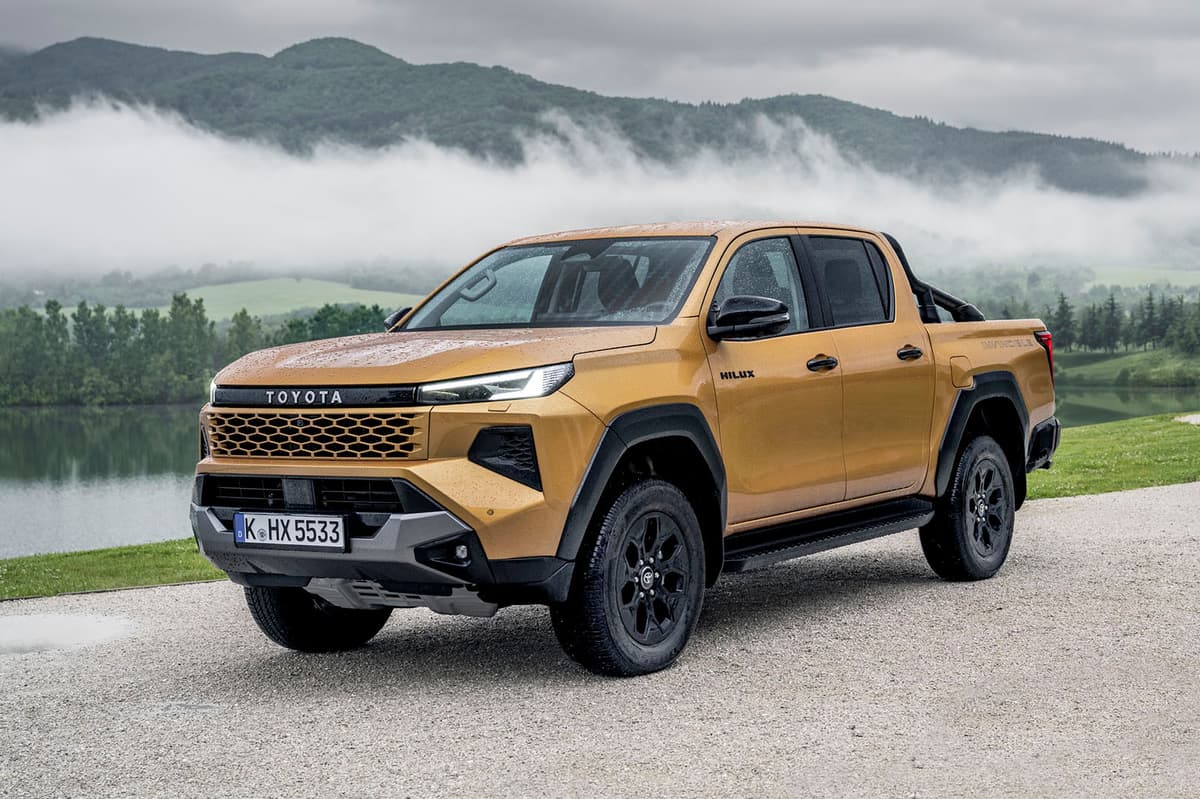
Why It Matters
The updated Hilux reinforces Toyota’s dominance in the rugged pickup market, offering a blend of durability and mild‑hybrid efficiency that appeals to commercial buyers seeking low‑total‑cost ownership. Its price and capability pressure rivals like the Ford Ranger to accelerate their own electrification and refinement efforts.
Key Takeaways
- •Ninth‑gen Hilux adds 48 V mild‑hybrid to 2.8 L diesel
- •Power remains 201 bhp and 369 lb‑ft torque, unchanged
- •Payload up to 1,015 kg and payload capacity exceeds 1 ton
- •Fuel economy around 29 mpg; mild‑hybrid gains are modest
- •Price starts at £54,095 (~$68,700), competitive in UK market
Pulse Analysis
The 2026 Hilbert marks Toyota’s strategic response to a tightening pickup market in Europe, where fleet operators demand both ruggedness and incremental efficiency. By integrating a 48‑volt mild‑hybrid system into the proven 2.8‑litre diesel, Toyota adds a modest fuel‑saving layer without sacrificing the torque and durability that have defined the Hilux brand. The chassis upgrades—thicker side‑rails, reinforced cross‑member, and electric power‑assist steering—enhance durability for demanding work sites while keeping the vehicle’s off‑road credentials intact, with a 700 mm wade depth and a 12.6 m turning circle that still outpaces many rivals.
From a commercial perspective, the Hilux’s pricing at roughly $68,700 undercuts many premium pickups while delivering a payload of over a metric ton and a towing capacity of up to 3.5 tonne when braked. These figures translate into a lower total cost of ownership for businesses that prioritize payload and durability over cabin luxury. The mild‑hybrid’s modest 29 mpg fuel figure, combined with an 80‑liter tank, yields an estimated 500‑mile range—adequate for long‑haul jobs without frequent refueling stops. However, the limited efficiency gain means fleet managers must weigh the hybrid premium against actual fuel savings, especially when operating in high‑load conditions where real‑world economy drops to the high‑teens.
Industry analysts view the Hilux update as a bridge between traditional diesel work trucks and the forthcoming fully electric models that will dominate the segment by the early 2030s. Toyota’s decision to retain a conventional diesel core while offering a mild‑hybrid option signals a cautious rollout, allowing the company to capture immediate market share while gathering data for future electrification. Competitors such as Ford and emerging Chinese entrants are accelerating their EV pickup programs, so the Hilux’s blend of proven durability and incremental tech may serve as a short‑term advantage, but long‑term relevance will hinge on how quickly Toyota can transition to zero‑emission powertrains.
Toyota Hilux
Comments
Want to join the conversation?
Loading comments...