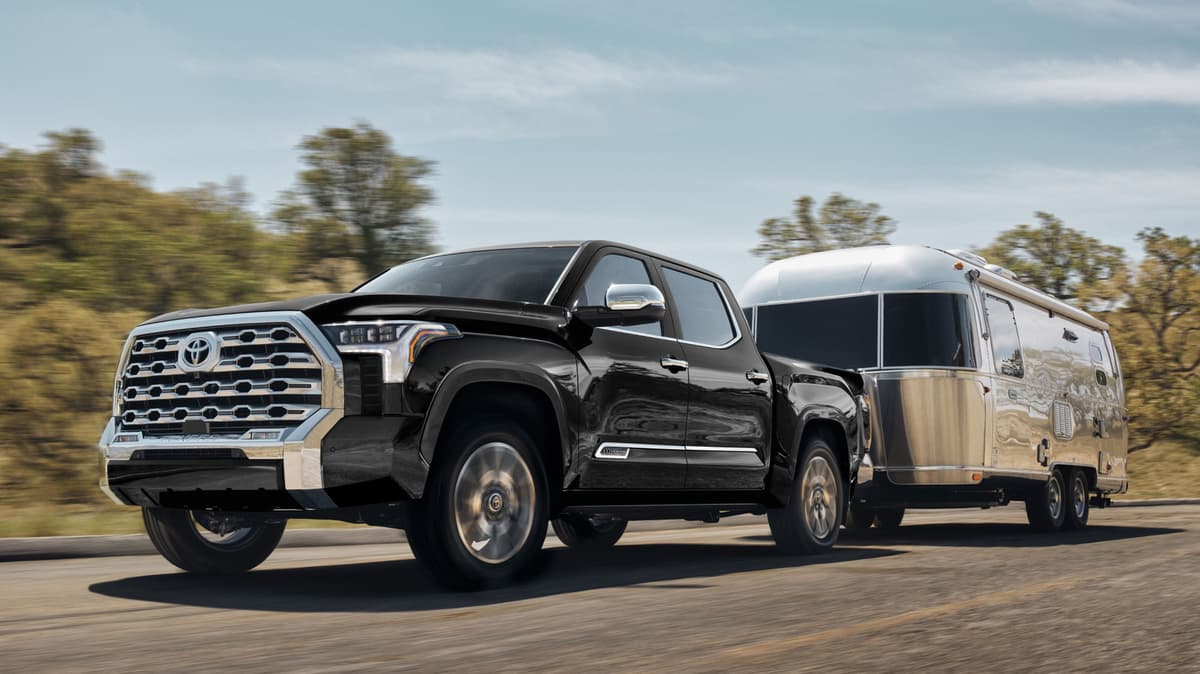
Toyota Knows Few Japanese Buyers Want A LHD Made-In-America Tundra Pickup, But It's Selling It There Anyway

Companies Mentioned
Why It Matters
Introducing a high‑priced, low‑volume American pickup into Japan highlights Toyota’s willingness to leverage global platforms for brand prestige, while exposing the financial risk of selling niche products in markets with little demand.
Key Takeaways
- •Toyota targets 80 Tundras per month in Japan
- •Tundra 1794 Edition priced around $75,500 in Japan
- •Only single trim offered for Tundra and Highlander
- •Vehicles will be right‑hand drive, limiting appeal
- •Projected annual sales under 1,500 units, far below U.S. volume
Pulse Analysis
Toyota’s decision to ship the American‑built Tundra to Japan underscores a strategic experiment in cross‑market product placement. While the full‑size pickup dominates the U.S. market, Japanese consumers favor compact, fuel‑efficient models and drive on the right side of the road. By limiting the offering to a single 1794 Edition trim and forecasting modest volumes, Toyota signals that the launch is less about immediate revenue and more about extending the brand’s global footprint, possibly to satisfy political allies or showcase engineering breadth.
Pricing the Tundra at roughly $75,500 places it at the top end of Toyota’s Japanese lineup, surpassing even the Land Cruiser 300 and far exceeding the Corolla or RAV4. This premium positioning makes the truck a status symbol rather than a practical vehicle for narrow city streets. The Highlander Limited ZR Hybrid, at $54,160, follows a similar pattern, offering a high‑end hybrid SUV that competes with domestic luxury models. The stark price gap highlights Toyota’s confidence that a niche segment of affluent buyers will pay for the novelty of an American pickup, despite the availability of more affordable, locally‑designed alternatives.
The broader implication for the automotive industry is a reminder that global platforms can be repurposed for niche markets, but only with careful cost management. Right‑hand‑drive conversion adds engineering complexity, and low sales volumes threaten profitability. Investors will watch Toyota’s ability to recoup development and logistics costs, while competitors may reconsider similar cross‑regional launches. Ultimately, the Tundra’s Japanese debut serves as a litmus test for how far manufacturers will stretch brand equity in pursuit of market diversification.
Toyota Knows Few Japanese Buyers Want A LHD Made-In-America Tundra Pickup, But It's Selling It There Anyway
Comments
Want to join the conversation?
Loading comments...