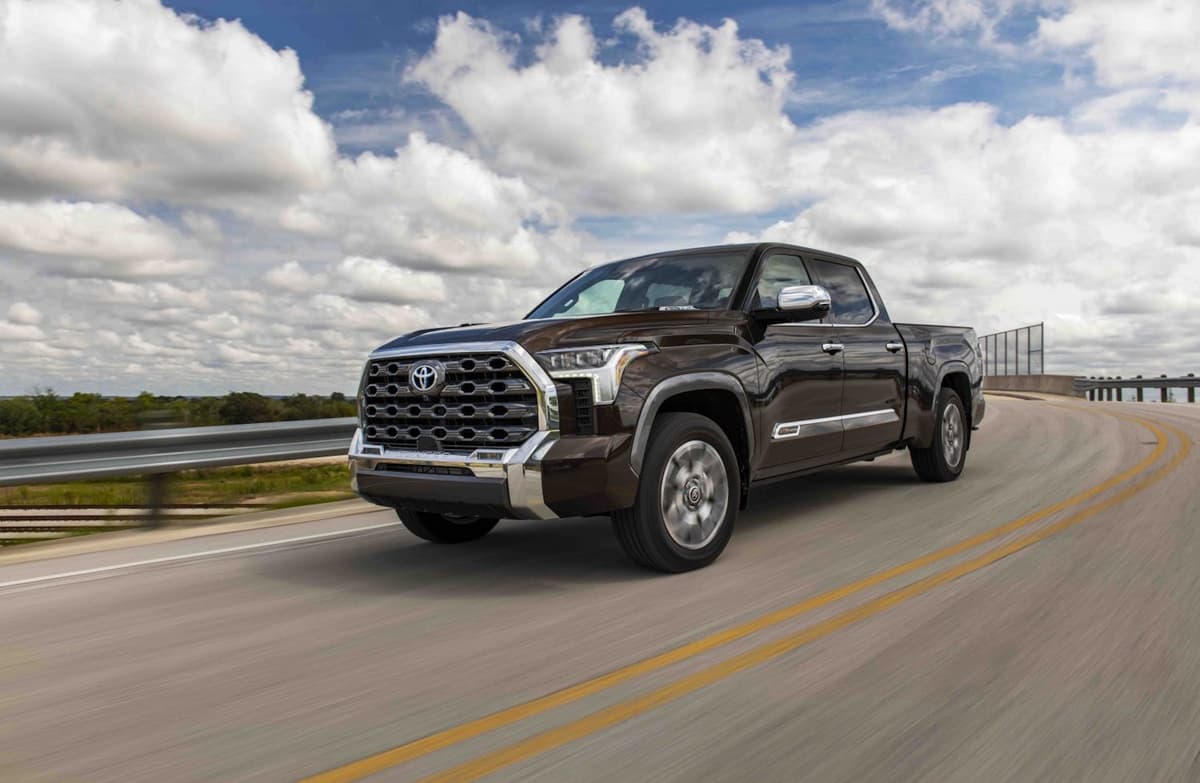
Toyota Recalls Almost 44,000 More Tundras for Potential Engine Failure
Companies Mentioned
Why It Matters
The recall highlights a recurring manufacturing defect that could damage Toyota’s reputation for reliability and generate significant repair costs, while also exposing consumers to engine failure risk.
Key Takeaways
- •Recall covers 43,566 2024 non‑hybrid Tundra trucks.
- •Issue stems from machining debris in 3.4‑L twin‑turbo V6.
- •Potential bearing failure can cause engine stall or no‑start.
- •Toyota has logged roughly 360 warranty claims for this engine.
- •Remedy under development; owners notified by July 20, free repair.
Pulse Analysis
Toyota’s latest recall of 43,566 2024‑model‑year Tundra pickups adds to a growing list of quality setbacks for the automaker’s flagship 3.4‑liter twin‑turbo V‑6. The engine, introduced to boost power and efficiency, has now been linked to machining debris that can remain trapped in the main bearing. When the bearing is subjected to high loads, the debris may cause premature wear, leading to knocking, rough running, or a complete stall. The recall follows earlier actions that affected hundreds of thousands of Toyota and Lexus vehicles, underscoring a systemic manufacturing flaw.
The technical root of the problem lies in the precision‑machining stage, where metal shavings of a specific size are not fully cleared before assembly. In the twin‑turbo V‑6, the bearing geometry amplifies pressure, making any residual particles a catalyst for failure. Similar bearing‑related recalls have plagued other manufacturers, but Toyota’s scale magnifies the risk. Engineers are now tasked with redesigning the cleaning process or adding post‑assembly inspections to ensure debris removal. Until a definitive fix is released, dealers will likely perform on‑site diagnostics to identify at‑risk units.
From a business perspective, the recall could cost Toyota tens of millions of dollars when factoring parts, labor, and logistics, especially given the 360 warranty claims already reported. The timing—just before the summer sales peak—may dampen demand for full‑size trucks, a segment where Toyota traditionally enjoys strong margins. Moreover, repeated engine‑related recalls can erode consumer confidence and invite heightened scrutiny from regulators such as NHTSA. Proactive communication and a swift, cost‑free remedy will be crucial for preserving brand reputation and limiting long‑term market share erosion.
Toyota Recalls Almost 44,000 More Tundras for Potential Engine Failure
Comments
Want to join the conversation?
Loading comments...