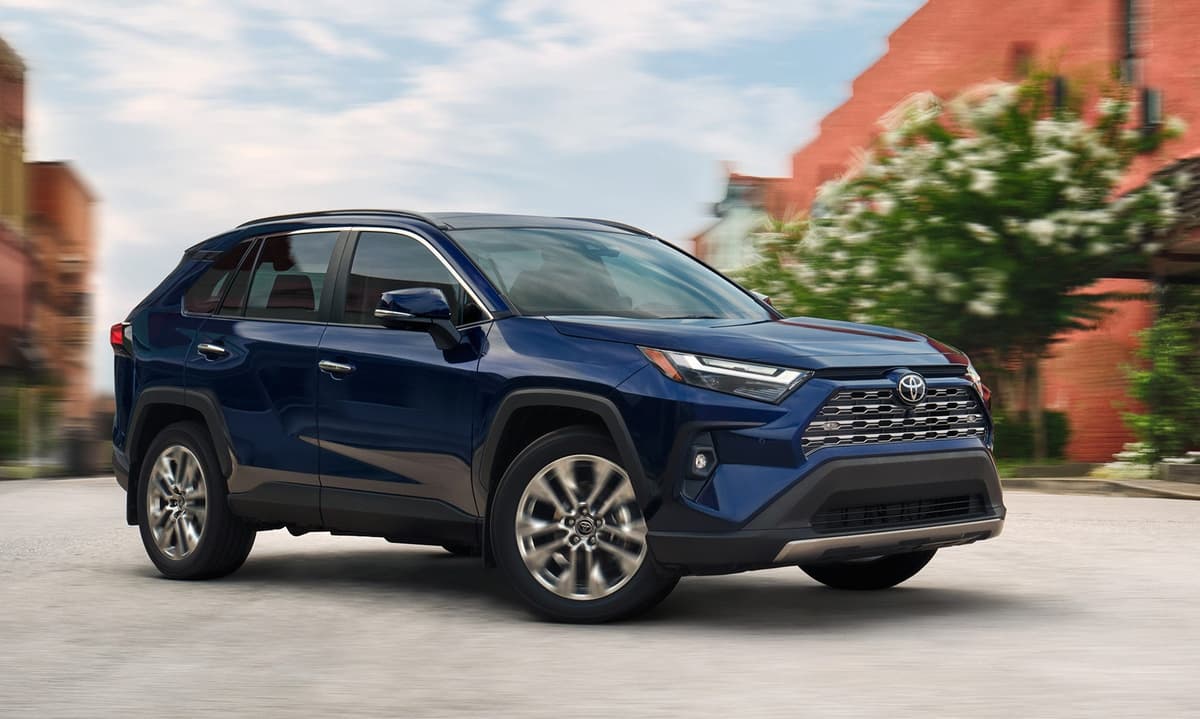
Toyota Sold Nearly 500,000 RAV4s in America Last Year, Now Recalling Exactly 4 of Them
Why It Matters
The recall, though affecting only four vehicles, signals Toyota’s proactive safety culture and its ability to detect isolated manufacturing flaws across a massive production run. It reassures consumers and regulators that quality oversight remains stringent even when defect rates are infinitesimal.
Key Takeaways
- •Toyota sold 479,288 RAV4s in the U.S. in 2025.
- •Recall covers exactly four 2025 RAV4s due to seat‑rail weld defect.
- •Fault stemmed from a mis‑installed shim on a supplier’s welding jig.
- •Recall demonstrates Toyota’s rigorous quality‑control despite low defect rate.
Pulse Analysis
The Toyota RAV4 continues to dominate the compact SUV segment, posting U.S. sales of 479,288 units in 2025—its strongest year in a decade. This volume represents roughly 12 % of all new‑vehicle registrations, cementing the model’s role as a revenue engine for Toyota Motor Corp. High sales volumes amplify the stakes of any quality issue, because even a single defect can affect millions of dollars in brand equity. Consequently, manufacturers invest heavily in statistical process control and real‑time monitoring to keep defect rates below one part per million.
The four‑vehicle recall stems from a mis‑installed shim on a supplier’s welding jig, which damaged a robotic arm and produced weak seat‑rail brackets. While the absolute number is negligible—less than 0.001 % of the 2025 RAV4 cohort—the root cause highlights vulnerabilities in outsourced component fabrication. Automotive OEMs increasingly rely on tier‑one suppliers for critical structural parts, making supply‑chain audit trails essential. Toyota’s decision to issue a recall after a routine inspection demonstrates the effectiveness of its defect‑detection protocols and its willingness to act before any warranty claims arise.
From a market‑perception standpoint, even a micro‑recall can reinforce a brand’s safety narrative if handled transparently. Regulators such as NHTSA monitor recall frequency as a proxy for manufacturing discipline, and Toyota’s prompt action may mitigate potential penalties or negative press. Moreover, the incident underscores the growing importance of digital twins and AI‑driven inspection systems that can flag anomalies in real time, reducing reliance on post‑production checks. As vehicle electrification and autonomous features add complexity, manufacturers will need to scale these technologies to maintain zero‑defect aspirations across ever‑larger fleets.
Toyota Sold Nearly 500,000 RAV4s in America Last Year, Now Recalling Exactly 4 of Them
Comments
Want to join the conversation?
Loading comments...