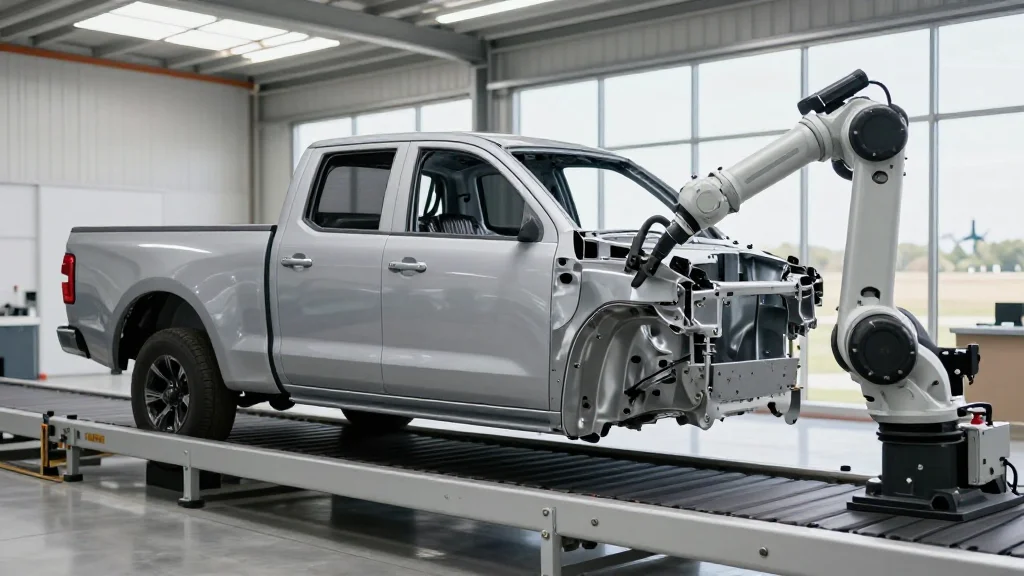
Toyota’s $2 Billion Texas Assembly Expansion Signals Major Shift in U.S. Truck Production Strategy
Companies Mentioned
Why It Matters
The expansion deepens Toyota’s commitment to U.S. truck manufacturing, enhancing supply‑chain resilience and capitalizing on strong pickup demand. It also highlights Texas’s growing competitive advantage in attracting large‑scale automotive investments.
Key Takeaways
- •Toyota invests $2 billion to add new assembly line in San Antonio
- •Expansion could create ~2,000 direct jobs and thousands more indirectly
- •Project leverages existing logistics, supplier base, and Interstate 35 access
- •Signals Texas’s rise as a hub for U.S. truck manufacturing
Pulse Analysis
Toyota’s decision to pour roughly $2 billion into a new assembly line at its San Antonio plant marks a decisive pivot in the automaker’s North American truck strategy. Rather than constructing a greenfield facility, the company is expanding within its existing footprint, preserving the logistics network that already supports Tundra and Sequoia production. This approach reduces capital risk, shortens time‑to‑revenue, and allows Toyota to scale capacity in line with the persistent demand for full‑size pickups. The move also underscores the brand’s confidence in the Texas market as a long‑term manufacturing anchor.
The investment reflects a broader trend of regionalizing vehicle production to mitigate cross‑border supply‑chain volatility. By clustering truck assembly in the southern United States, manufacturers can tap into a dense supplier ecosystem that spans Texas and northern Mexico, cutting transit times and buffering against tariff shocks. Texas, in particular, has sharpened its competitive edge through aggressive tax abatements, infrastructure grants, and workforce‑development programs, positioning the state alongside rivals such as Kentucky and Tennessee. Toyota’s Project Orca therefore serves as a litmus test for how state incentives shape future plant siting decisions.
Economic projections suggest the expansion will generate about 2,000 direct jobs and ripple through the region with thousands of indirect positions in logistics, parts manufacturing, and services. Cumulative output over the plant’s lifecycle could amount to billions of dollars in regional GDP, reinforcing San Antonio’s status as an automotive hub. More importantly, the project signals a consolidation of high‑volume truck production in a handful of strategically located hubs, a pattern that could accelerate as other OEMs chase similar cost, supply‑chain, and market advantages. Stakeholders should watch how this concentration reshapes competitive dynamics across the U.S. auto sector.
Toyota’s $2 Billion Texas Assembly Expansion Signals Major Shift in U.S. Truck Production Strategy
Comments
Want to join the conversation?
Loading comments...