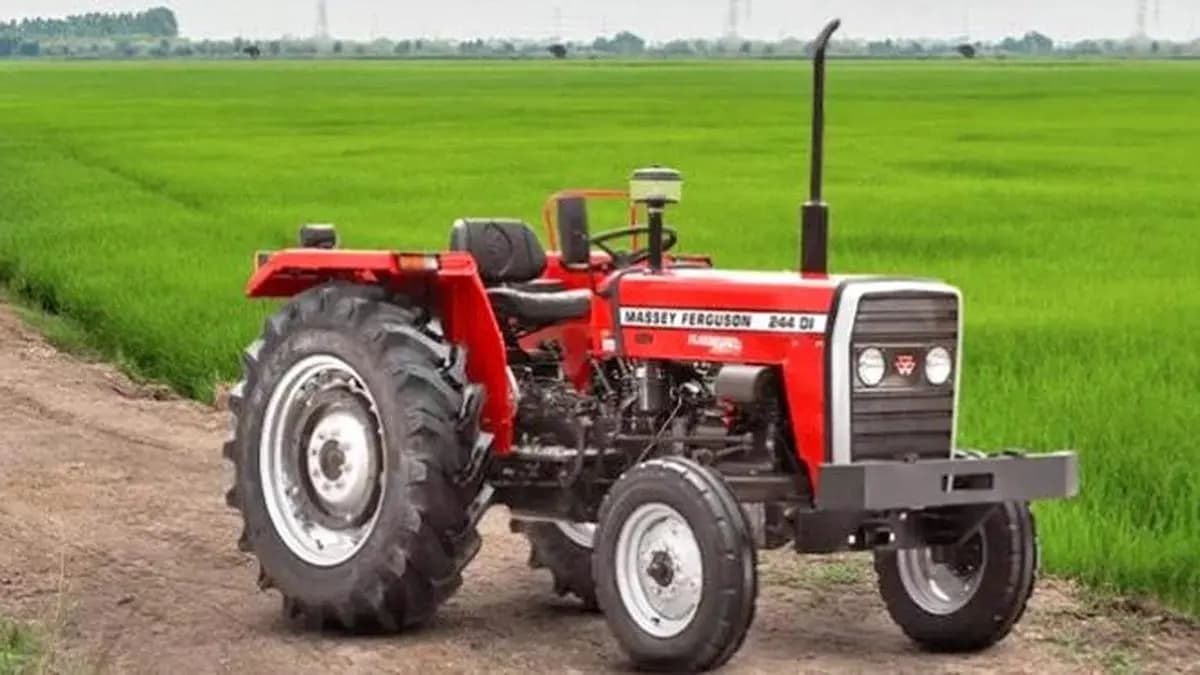
Tractor Sales Cross 10 Lakh Mark in FY26 on Strong Rural Demand, GST Cut
Why It Matters
The milestone underscores accelerating mechanisation in Indian agriculture, boosting farmer productivity and rural incomes. It also signals robust growth opportunities for tractor manufacturers and ancillary supply chains.
Key Takeaways
- •FY26 tractor sales hit 10.5 lakh units, 19% YoY growth.
- •GST cut to 5% spurred first‑time buyer demand.
- •Mahindra leads with 23.8% market share, TAFE second.
- •Record sales boost farm productivity and rural incomes.
- •Supply risks linger from fertiliser geopolitics.
Pulse Analysis
India’s tractor market has entered a new growth phase, crossing the one‑million‑unit threshold for the first time. The FY26 tally of 10.5 lakh units reflects a 19% year‑on‑year rise, propelled by a confluence of factors: a bountiful monsoon that lifted rabi sowing, stronger minimum support prices, and expanding credit access for smallholders. This demand surge is not merely seasonal; it signals deeper structural shifts as mechanisation reaches previously underserved farm segments, enhancing yields and reducing labor bottlenecks.
A pivotal policy lever was the reduction of the Goods and Services Tax on tractors from 12% to 5%, which lowered the effective purchase price and broadened affordability for first‑time buyers. Coupled with higher cash flows from a healthy harvest, the GST cut ignited both replacement cycles and new‑entry purchases. Industry players also benefited from improved financing terms, with banks extending longer tenures at competitive rates, further accelerating adoption. The combined effect has lifted overall farm productivity and contributed to rising rural disposable incomes, reinforcing the sector’s resilience.
Looking ahead, manufacturers must navigate emerging supply‑side challenges, notably potential disruptions in fertiliser imports due to geopolitical tensions. While the outlook remains positive, firms like Mahindra and TAFE will need to hedge against input volatility and invest in localized component sourcing. Continued policy support, such as credit incentives and possible further tax relief, will be crucial to sustain momentum, especially as the kharif season approaches. Stakeholders that can balance growth with supply‑chain robustness are poised to capture the expanding share of India’s agricultural mechanisation market.
Tractor sales cross 10 lakh mark in FY26 on strong rural demand, GST cut
Comments
Want to join the conversation?
Loading comments...