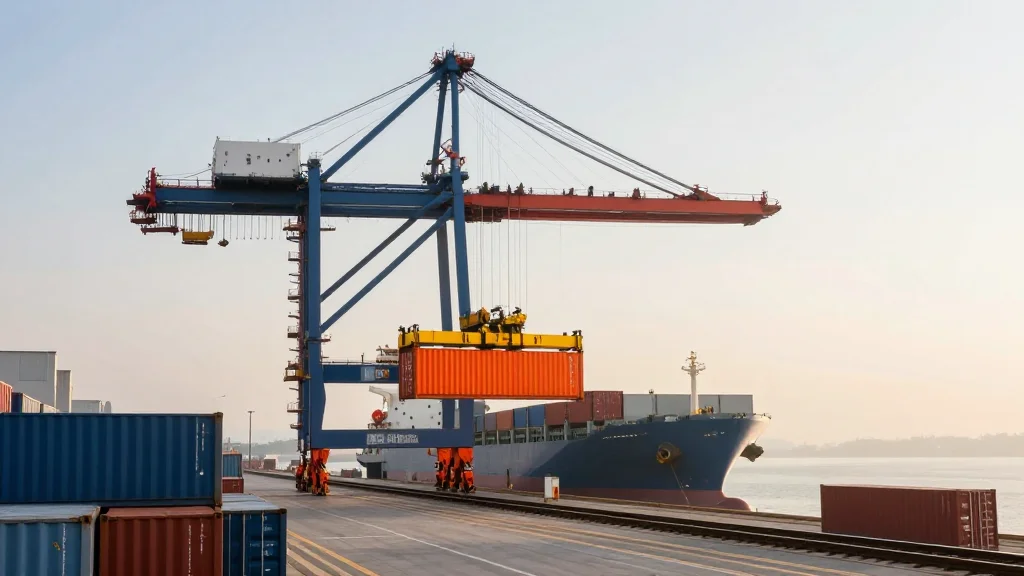
Tradepoint Atlantic and MSC Launch $1.2B Sparrows Point Container Terminal in Baltimore

Companies Mentioned
Why It Matters
The Sparrows Point Container Terminal introduces a new source of capacity on the East Coast at a time when U.S. ports are grappling with congestion, labor disputes, and aging infrastructure. By coupling a privately funded maritime hub with on‑dock rail, the project could reduce reliance on truck‑only drayage, lower emissions, and shorten supply‑chain lead times for manufacturers in the Midwest. If successful, the model may inspire additional private investments in other legacy port sites, accelerating modernization without waiting for federal appropriations. Furthermore, the involvement of MSC—a top global carrier—signals confidence in the terminal’s long‑term viability and could shift shipping patterns, drawing volume away from traditional ports. This redistribution of traffic may intensify competition, prompting other terminals to accelerate their own expansion plans and adopt similar private‑financing structures.
Key Takeaways
- •Tradepoint Atlantic and MSC’s Terminal Investment Ltd. broke ground on a $1.2 billion Sparrows Point Container Terminal in Baltimore.
- •The 168‑acre facility will have capacity for over 1 million TEU annually, with berths for two ultra‑large container vessels and seven cranes.
- •On‑dock rail will connect to an I‑95 east‑coast doublestack network, leveraging recent CSX clearance of the Howard Street tunnel.
- •First berth slated for completion in 2028; full terminal build‑out expected by 2030.
- •Project is the first privately financed U.S. container terminal in decades, potentially setting a new funding precedent.
Pulse Analysis
The Sparrows Point development arrives at a crossroads for U.S. maritime logistics. Historically, major East Coast ports have relied on public funding and political lobbying to secure expansion dollars. By contrast, Tradepoint Atlantic and MSC have marshaled private equity and carrier capital to fill the gap, a strategy that could become a template for future projects as federal budgets tighten. The $1.2 billion outlay, while sizable, is modest compared with the multi‑billion investments required for deep‑water upgrades at larger ports, suggesting that a network of mid‑size, privately financed terminals could collectively rival the capacity of a single mega‑port.
From a competitive standpoint, the terminal’s on‑dock rail integration is its most compelling asset. The recent CSX clearance of the Howard Street tunnel eliminates a historic chokepoint, enabling seamless doublestack service from Baltimore to Chicago. This rail advantage could attract shippers seeking to bypass congested truck corridors, especially as e‑commerce volumes continue to rise. However, the terminal must still secure liner commitments beyond MSC to achieve its projected throughput. If other carriers hesitate, the hub could face under‑utilization, undermining the private‑financing premise.
Looking ahead, the success of Sparrows Point will hinge on three factors: regulatory clearance, community acceptance, and the ability to deliver on its rail promise. Should these align, the project could catalyze a wave of private port development, reshaping the U.S. supply‑chain map and offering a more resilient, diversified gateway for trans‑Atlantic trade.
Tradepoint Atlantic and MSC Launch $1.2B Sparrows Point Container Terminal in Baltimore
Comments
Want to join the conversation?
Loading comments...