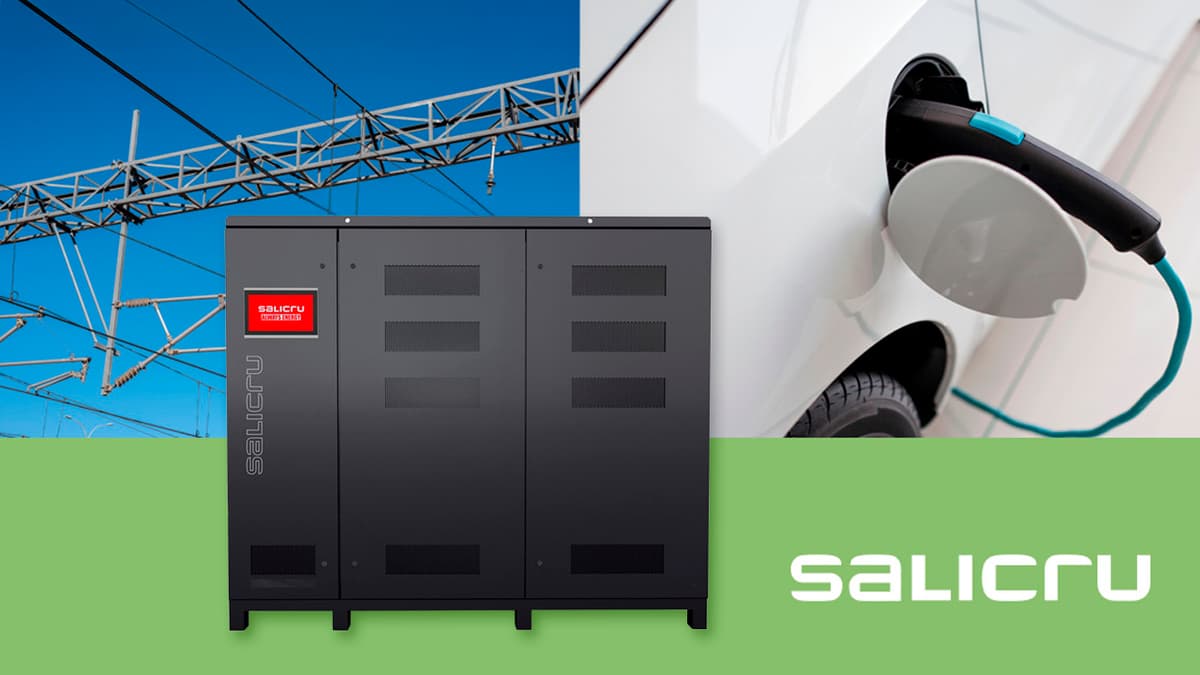
Train Braking, A Source of Energy
Why It Matters
Recovering braking energy cuts electricity costs and helps rail operators meet decarbonisation targets, while providing a reliable on‑site power source for emerging loads such as EV charging.
Key Takeaways
- •CS‑MV converts train braking energy into usable power for rail infrastructure
- •Supports both 3000 V DC and 25 kV AC lines, commuter and high‑speed
- •Enables on‑site EV charging and energy‑storage integration
- •Reduces reliance on external electricity, advancing rail decarbonisation
- •Salicru invests 6% of turnover in R&D, three times EU average
Pulse Analysis
The push toward full electrification of rail networks has turned a long‑standing inefficiency into a strategic opportunity. Every time a modern electric train applies its brakes, kinetic energy is fed back into the overhead catenary, but most legacy systems simply dissipate that power as heat. As utilities and railway operators grapple with tighter carbon caps and rising electricity costs, reclaiming this latent energy becomes a logical step toward both sustainability and cost reduction. Industry analysts now view regenerative braking not just as a feature, but as a potential internal power source for the rail ecosystem.
Salicru’s CS‑MV unit tackles the problem with a bidirectional DC/AC converter that can both absorb and inject power on the line. Designed to operate on 3 kV DC as well as 25 kV AC, the device fits commuter corridors and high‑speed routes without major infrastructure changes. Once captured, the energy can be routed to nearby substations, used to power on‑site electric‑vehicle charging stations, or stored in battery banks for peak‑shaving. By turning what was once waste into a dispatchable resource, operators can lower their grid purchases and improve overall network resilience.
The timing aligns with Europe’s aggressive decarbonisation roadmaps and the growing demand for rail‑based EV charging hubs. Salicru’s commitment of 6 % of turnover to research—three times the European average—signals a willingness to invest in next‑generation power‑electronics. Showcasing the CS‑MV at UK Rail 2026 positions the company as a pioneer in energy‑smart rail infrastructure, a niche that could attract utilities, transit agencies, and OEMs seeking to reduce carbon footprints while cutting operating expenses. As more networks adopt regenerative‑braking harvesters, the competitive edge will shift toward those offering integrated storage and distribution solutions.
Train Braking, A Source of Energy
Comments
Want to join the conversation?
Loading comments...