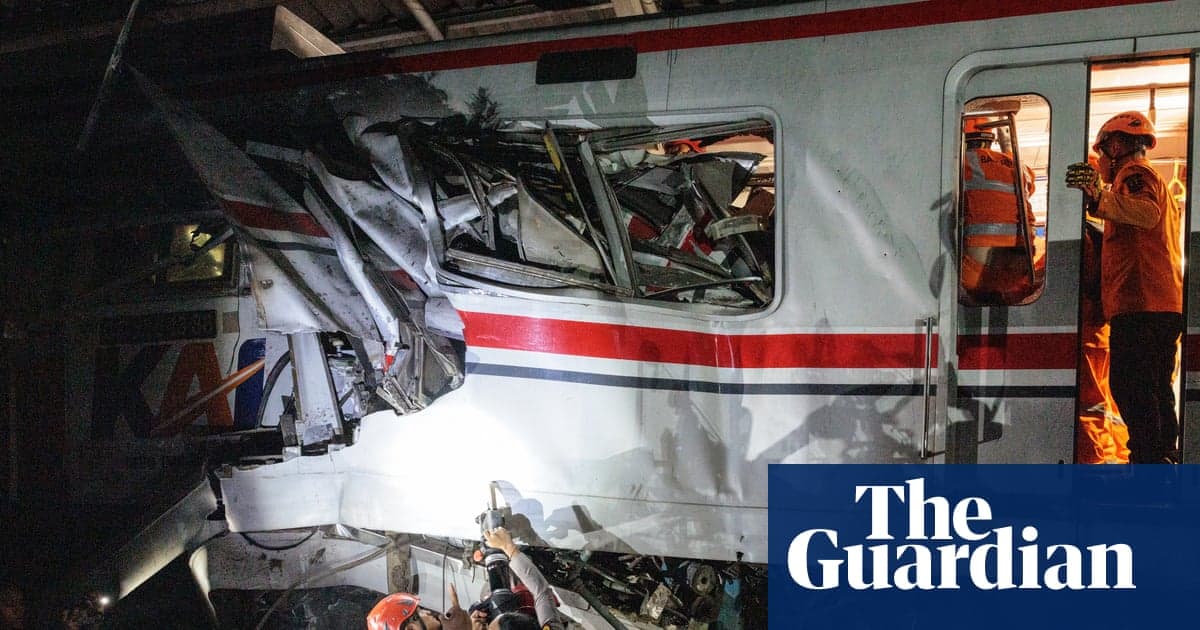
Train Collision in Indonesia Kills 14 as Rescuers Work to Reach Survivors
Why It Matters
The accident exposes critical safety gaps at Indonesia’s level crossings and puts pressure on regulators to improve rail oversight, potentially spurring costly infrastructure upgrades.
Key Takeaways
- •Collision killed 14, injured 84 at Bekasi Timur station.
- •Taxi at level crossing triggered commuter train stop, leading to crash.
- •Rescue teams used extrication equipment; two passengers still trapped.
- •All 240 long-distance train passengers evacuated safely; only commuter train victims.
Pulse Analysis
Indonesia’s rail network, the busiest in Southeast Asia, has long struggled with level‑crossing safety. Over 1,000 unprotected crossings crisscross the archipelago, creating collision hotspots where road vehicles intersect with high‑speed trains. The Bekasi crash underscores how a single vehicle—here a taxi—can cascade into a catastrophic event, especially when commuter services are halted on main lines. Authorities have previously cited inadequate signaling and limited barrier enforcement as systemic weaknesses that elevate risk for both passengers and nearby communities.
The emergency response mobilized a multi‑agency effort, involving the national search‑and‑rescue agency, military units, fire brigades, and the Red Cross. Extrication teams deployed hydraulic cutters and air‑bag lifts to reach victims trapped beneath twisted carriages, a delicate operation that delayed full clearance. While most survivors were evacuated, two passengers remain pinned, highlighting the challenges of rapid medical access in dense urban rail corridors. The human toll—14 dead and 84 injured—adds to a growing list of high‑profile rail incidents that have strained Indonesia’s healthcare facilities and prompted public outcry over safety standards.
In the wake of the disaster, policymakers are likely to revisit regulations governing level‑crossing design and enforcement. Proposals may include installing automated barriers, upgrading signaling systems, and accelerating the transition to grade‑separated crossings in high‑traffic zones. The incident also revives debate over investment in modern rolling stock and advanced train‑control technology, which could mitigate collision severity. As Indonesia eyes a rail expansion agenda worth billions of dollars, balancing rapid growth with rigorous safety oversight will be essential to restore public confidence and prevent future tragedies.
Train collision in Indonesia kills 14 as rescuers work to reach survivors
Comments
Want to join the conversation?
Loading comments...