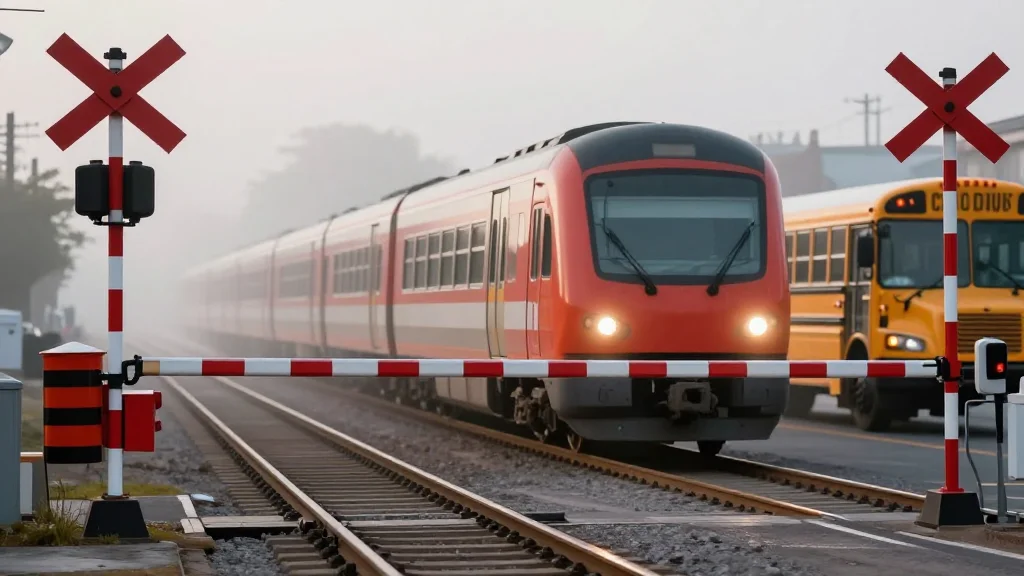
Train Hits School Bus in Buggenhout, Belgium, Killing Four Including Two Children

Why It Matters
The Buggenhout collision highlights the persistent risk posed by at‑grade railway crossings, especially where school transport is involved. With 4 fatalities, including two children, the accident underscores the need for faster modernization of crossing infrastructure across Europe. It also puts pressure on Belgian authorities to accelerate plans for grade‑separation projects and to adopt advanced safety technologies such as automatic train protection, which could prevent similar tragedies. Beyond the immediate human toll, the crash disrupts a major passenger corridor, affecting commuters and freight services. The incident may catalyze EU‑wide regulatory action, as the European Railway Safety Agency has already flagged crossing upgrades as a priority. A thorough investigation and transparent reporting will be essential to restore public confidence in rail travel and to guide policy reforms that could save lives.
Key Takeaways
- •Four dead, including two children aged 12 and 15, after train hit school minibus
- •Train traveling ~75 mph; crossing barriers were down and red lights were active
- •Bus driver appears to have ploughed through barrier despite closed crossing
- •Investigation launched by police, Infrabel, and the prosecutor’s office; CCTV under review
- •Rail services on Bruges‑Mechelen line suspended; alternative transport arranged
Pulse Analysis
The Buggenhout tragedy arrives at a crossroads for European rail safety policy. Historically, Belgium has relied on a dense network of level crossings to balance cost and connectivity, but the cost in human lives is now becoming untenable. The accident mirrors earlier incidents in the Netherlands and France, where a combination of driver error and outdated crossing technology led to fatal outcomes. What sets this crash apart is the involvement of a school bus, amplifying public scrutiny and political pressure.
From a market perspective, the incident could accelerate investment in crossing automation and grade‑separation projects, sectors where European manufacturers such as Siemens Mobility and Alstom stand to benefit. Private‑public partnerships may gain traction as governments seek to fund upgrades without overburdening national budgets. Moreover, the disruption to the Bruges‑Mechelen corridor—one of Belgium’s busiest passenger routes—highlights the economic ripple effects of safety lapses, from lost commuter productivity to potential freight delays.
Looking ahead, the investigation’s findings will likely shape the EU’s forthcoming railway safety directive, slated for adoption before the end of 2026. If the report attributes the crash primarily to human error, policymakers may focus on driver training and stricter enforcement. Conversely, if systemic technical failures are identified, we can expect a push for mandatory ATP systems and accelerated removal of at‑grade crossings on high‑speed lines. Either outcome will reshape the risk calculus for rail operators and could trigger a wave of retrofitting projects across the continent, redefining the safety landscape for years to come.
Train Hits School Bus in Buggenhout, Belgium, Killing Four Including Two Children
Comments
Want to join the conversation?
Loading comments...