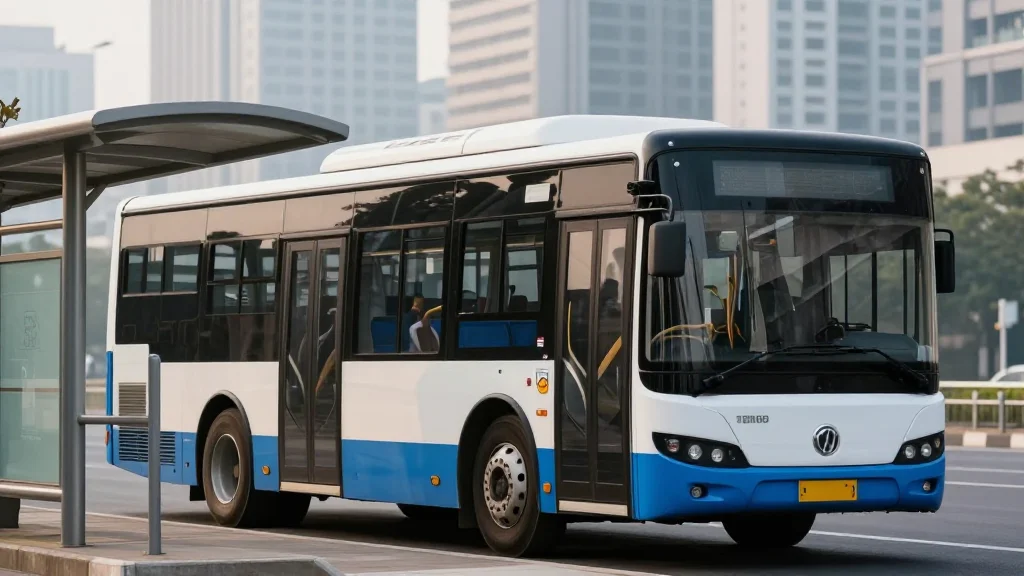
Transjakarta Delivers Major Economic Gains, Household Savings
Why It Matters
The findings prove that investing in reliable public transit yields strong economic multipliers, cost savings for commuters, and public‑health benefits, making it a compelling policy lever for fast‑growing megacities.
Key Takeaways
- •Each Rp1 trillion subsidy yields Rp3.2 trillion economic output
- •Jakartans save roughly $10 per month using Transjakarta
- •Transit expansion creates over 32,000 jobs annually
- •Healthcare costs drop $220 million from lower pollution
- •Every Rp1 trillion subsidy adds Rp1.5 trillion value
Pulse Analysis
Public‑transport subsidies are often judged by ridership numbers alone, yet the Transjakarta case illustrates a broader economic calculus. By converting Rp 23.1 trillion of public funds into $4.3 billion of output, the study reveals a 3‑to‑1 multiplier that rivals infrastructure projects in more developed markets. This efficiency stems from reduced vehicle operating costs, time savings, and the network’s ability to connect labor pools across Jakarta’s sprawling metropolitan area, thereby unlocking productivity that would otherwise remain dormant.
Household savings provide a tangible metric of the system’s impact. An average monthly reduction of Rp 174,400 translates to about $10, roughly 1.6 % of a typical family’s expenses, while commuters from Bogor, Depok, Bekasi and Tangerang see an extra $4 saved. Those modest figures compound across millions of riders, freeing disposable income for consumption or investment. Moreover, the environmental upside—lower emissions and cleaner air—cuts healthcare spending by an estimated $220 million, underscoring how transit policy can serve as a preventive health measure.
For policymakers, the Transjakarta model offers a template for scaling transit‑oriented development in other emerging megacities. The clear link between subsidy, economic output, job creation, and public‑health savings makes a strong fiscal case for expanding bus rapid transit corridors, integrating fare‑box reforms, and pairing transit with land‑use planning. As urbanization accelerates, cities that prioritize reliable, affordable mass transit are likely to capture higher productivity gains, reduce congestion costs, and improve residents’ quality of life, positioning themselves competitively in the global economy.
Transjakarta delivers major economic gains, household savings
Comments
Want to join the conversation?
Loading comments...