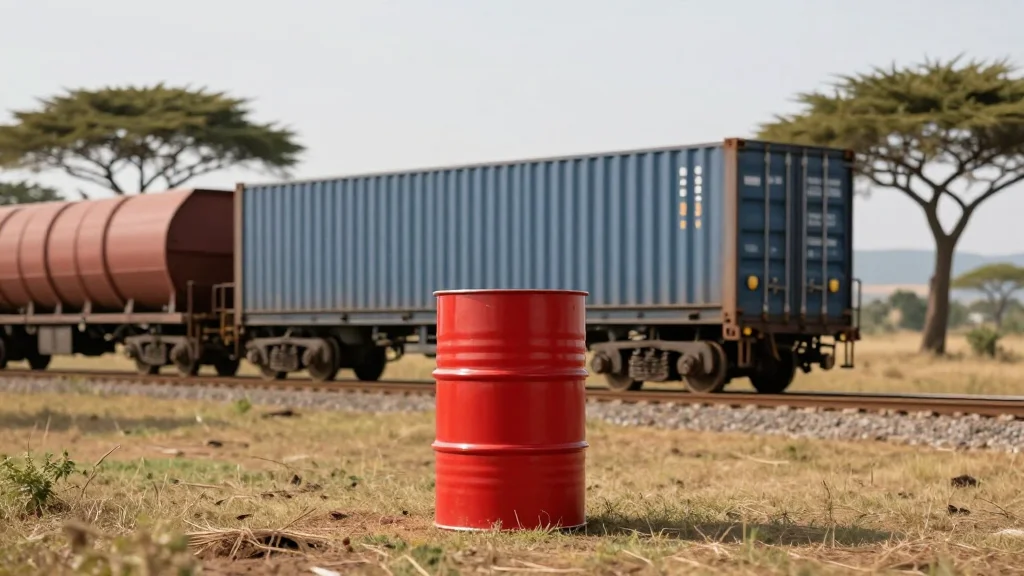
Transporters Feel the Heat as Diesel Costs Push Kenya Railways Freight Charges Up
Companies Mentioned
Why It Matters
The tariff hike directly raises logistics costs for East African supply chains, squeezing margins for exporters and importers. It also signals a shift toward dynamic pricing models that could reshape competitive dynamics between rail and road freight.
Key Takeaways
- •Kenya Railways freight rates rise 12% as diesel hits $1.88/L
- •New tariff ties rail charges to fuel price index, adjusting every $0.076
- •20‑ft container cost climbs to $550, up $50 per trip
- •Road haulers lift container fees 14% amid diesel surge
- •Free storage 14 days; thereafter $0.50 per tonne‑m³ weekly
Pulse Analysis
Kenya’s rail freight sector is feeling the heat of soaring diesel prices, which peaked at $1.88 per litre in Nairobi before easing to $1.80. In response, Kenya Railways Corporation (KRC) introduced a fuel‑indexed tariff on April 1, anchoring base rates to a $1.30 per litre benchmark. The formula triggers a 4% charge adjustment for every $0.076 change in fuel cost, resulting in a 12% overall freight increase. This mechanism aligns rail pricing with market realities, but it also transfers volatility directly to shippers who rely on the standard gauge railway for regional trade.
For logistics operators, the new rates translate into a $50 rise for a 20‑foot container, pushing the total to roughly $550 per trip from Mombasa to Nairobi. Road carriers are not immune; the Kenya Transporters Association has announced a 14% hike in haulage fees, reflecting similar fuel pressures. The dual surge in rail and road costs compresses profit margins for exporters moving goods to land‑locked neighbors such as Uganda, Rwanda, and South Sudan. Companies must now reassess modal choices, weighing the predictability of rail against the flexibility of road, while factoring in ancillary charges like storage ($0.50 per tonne‑m³ weekly after 14 free days) and handling fees.
Looking ahead, the tariff structure includes a built‑in relief clause: if diesel falls below $0.84 per litre, rates could drop by 12%. This creates a potential upside for shippers should global oil markets stabilize. Meanwhile, the recent GOE Act 2025 grants KRC greater commercial autonomy, allowing quicker tariff revisions. Logistics firms should monitor Epra’s fuel reviews closely and consider hedging strategies or longer‑term contracts to mitigate future price swings, ensuring supply‑chain resilience in a volatile energy environment.
Transporters feel the heat as diesel costs push Kenya Railways freight charges up
Comments
Want to join the conversation?
Loading comments...