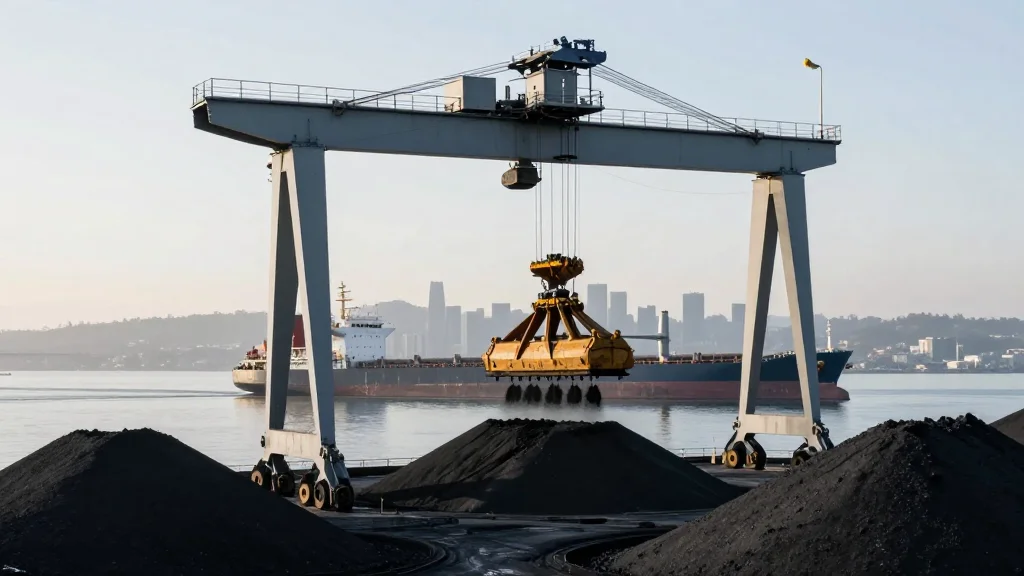
Trump Announces New Coal Export Terminal in Oakland
Why It Matters
The initiative signals a federal shift toward subsidizing fossil fuels under a security pretext, reshaping U.S. energy markets, climate policy, and local community health outcomes.
Key Takeaways
- •$75 million allocated for Oakland coal export terminal construction.
- •Terminal aims to ship 12 million tons of coal annually by 2028.
- •Defense Production Act invoked to label coal infrastructure as critical.
- •Environmental groups plan lawsuits over air quality and legal authority.
- •Coal plants remain costlier than new solar, wind, and storage projects.
Pulse Analysis
The Trump administration’s decision to invoke the 1950 Defense Production Act for a $75 million Oakland coal export terminal reflects a broader strategy to position coal as a strategic asset. By labeling coal infrastructure as "critical to national security," the White House seeks to bypass typical regulatory hurdles and accelerate construction at the former Army base. The West Gateway project, projected to handle 12 million tons of coal annually by 2028, is presented as a solution to perceived energy‑price volatility driven by AI data‑center demand, even as the U.S. coal sector contracts globally.
Economically, the move is at odds with recent analyses showing that existing coal plants are more expensive to operate than new solar, wind, or battery storage installations. Energy Innovation’s report indicates that 99 % of U.S. coal capacity is cost‑inefficient compared with clean‑energy alternatives, suggesting that the $700 million infusion may yield higher electricity bills rather than savings. The terminal could open new export pathways to Japan, South Korea, Taiwan, Vietnam and Malaysia, but the added supply may depress global coal prices without guaranteeing domestic rate reductions. Investors and utilities will weigh the short‑term political backing against long‑term market trends favoring renewables.
Environmental and legal opposition is already mobilizing. Local groups cite Oakland’s historic air‑quality challenges and argue that the project violates both municipal land‑use agreements and the spirit of the Defense Production Act. Lawsuits are expected to contest whether coal export infrastructure truly qualifies as a defense necessity. The controversy underscores a growing tension between federal fossil‑fuel bailouts and state‑level climate commitments, highlighting the political risk of betting on coal in an era where clean‑energy financing is accelerating and public sentiment increasingly favors decarbonization.
Trump announces new coal export terminal in Oakland
Comments
Want to join the conversation?
Loading comments...