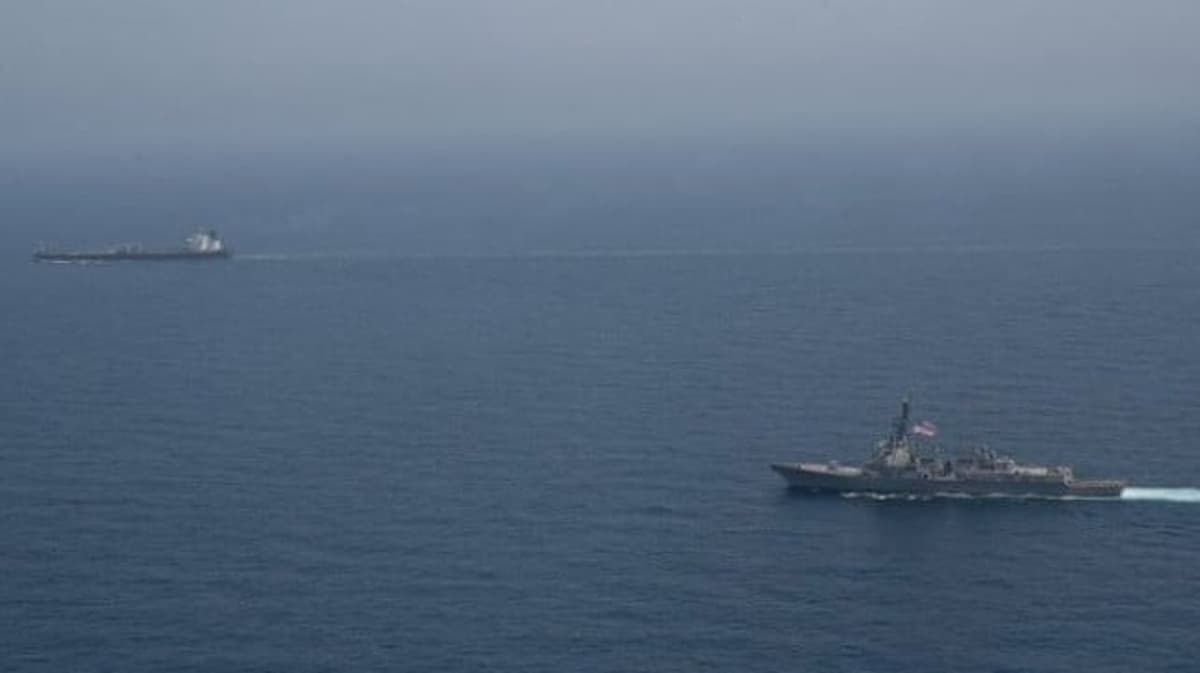
Trump Says U.S. Will End Naval Blockade of Iran
Why It Matters
Ending the blockade could restore a critical oil shipping lane, easing price pressure and stabilizing global supply chains, while the unresolved conditions keep geopolitical risk high.
Key Takeaways
- •Trump announced lifting of U.S. naval blockade on Iran’s Strait of Hormuz
- •Only 29 of 109 supertankers have exited the Persian Gulf so far
- •Around 60 million barrels (~$6 billion) of Iranian crude remain trapped
- •Iran demands U.S. force pullback and mine removal before reopening fully
Pulse Analysis
The U.S. naval blockade of the Strait of Hormuz, imposed in April, has choked one of the world’s most vital oil arteries, forcing tankers to reroute and inflating freight rates. Analysts estimate that the restriction has held back roughly 60 million barrels of Iranian crude, translating to about $6 billion in lost revenue, and has contributed to tighter global oil inventories. With only a fraction of the 109 supertankers freed, the bottleneck continues to ripple through energy markets, prompting the International Energy Agency and other bodies to warn of lingering price volatility and supply‑chain strain.
Trump’s declaration to lift the blockade hinges on a set of diplomatic conditions: Iran must forgo a nuclear weapon, allow U.S. and Chinese teams to retrieve or detonate remaining mines, and permit unrestricted shipping without tolls. He also claimed the U.S. has already neutralized most naval mines and that the International Atomic Energy Agency would oversee the destruction of any buried enriched uranium. While these demands aim to secure a broader cease‑fire, they introduce uncertainty, as Tehran insists on a U.S. force pullback before any lasting agreement, and no public Iranian response has emerged.
For businesses, the potential reopening of the Hormuz corridor could lower shipping costs, improve oil flow, and stabilize commodity prices, benefitting sectors from aviation to manufacturing. However, the lack of a clear timetable and the lingering military presence—about 20 U.S. warships—maintain a risk premium that could keep markets jittery. Stakeholders should monitor diplomatic talks, mine‑clearance progress, and any shifts in Iranian oil export policies, as these factors will shape the near‑term outlook for global energy supply and related financial markets.
Trump Says U.S. Will End Naval Blockade of Iran
Comments
Want to join the conversation?
Loading comments...