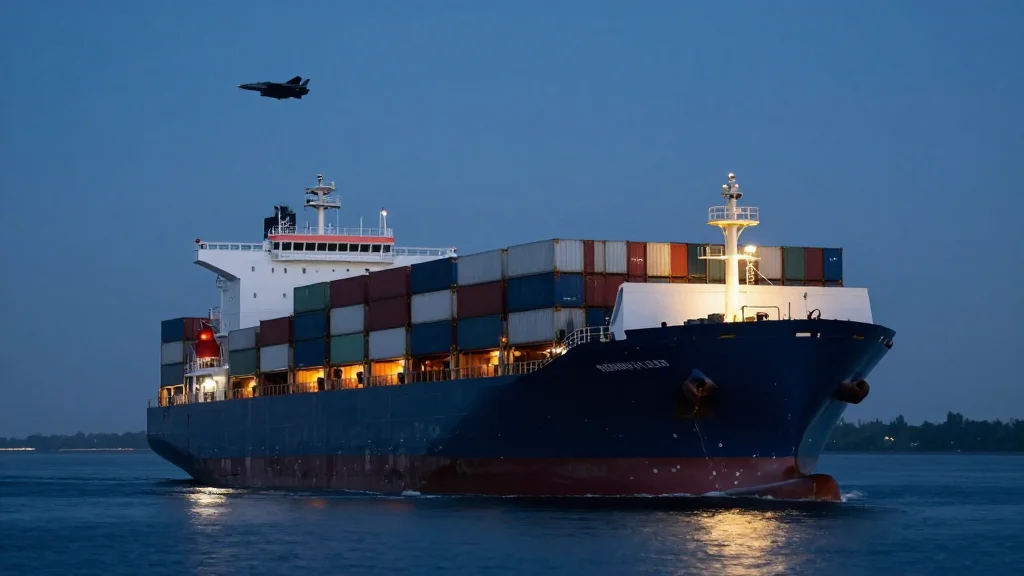
Trump ‘Secret’ Project Sees Ships Trickle Through Strait of Hormuz
Why It Matters
The limited but steady flow of oil through the Hormuz corridor eases immediate supply pressures, while the covert approach signals a shift in how the shipping sector manages security under US protection. It underscores the strategic importance of the strait and the evolving risk‑mitigation playbook for global trade.
Key Takeaways
- •200+ vessels used covert “Oman route” in five weeks
- •Transits equal under two days of pre‑war traffic levels
- •US provides air escort after Project Freedom cancellation
- •Ships disable AIS and lights, mirroring Iranian tactics
- •Initiative aims to keep oil flow despite regional tensions
Pulse Analysis
The Strait of Hormuz remains a chokepoint that handles roughly 20% of global oil shipments, making any disruption a headline‑grabbing event for markets worldwide. In recent months, escalating tensions between Iran and its regional rivals have prompted shippers to seek alternative pathways that reduce exposure to missile threats and naval confrontations. While traditional routes rely on full AIS visibility and standard lighting, the current climate has forced a reevaluation of safety protocols, prompting operators to adopt more clandestine navigation methods.
The newly observed “Oman route” represents a pragmatic response to the abrupt termination of Project Freedom, a US‑led naval escort initiative that promised dedicated protection for commercial vessels. Over a five‑week window, more than 200 ships slipped through the strait under the cover of darkness, turning off transponders and lights to mimic Iranian night‑time tactics. This covert approach, backed by intermittent US air patrols, has delivered a traffic volume comparable to just two days of normal pre‑war flow, highlighting both the limited capacity of the operation and the willingness of carriers to accept heightened risk for continued market access.
For the broader energy market, the modest but steady flow alleviates immediate supply anxieties, preventing a sharp spike in Brent and WTI prices that would follow a full shutdown. However, the reliance on low‑visibility transits raises concerns about maritime safety, insurance premiums, and the potential for accidental incidents in a heavily trafficked waterway. Stakeholders will be watching closely to see whether this ad‑hoc arrangement evolves into a more formalized security framework or if it merely serves as a stopgap until diplomatic channels restore a more predictable shipping environment.
Trump ‘secret’ project sees ships trickle through Strait of Hormuz
Comments
Want to join the conversation?
Loading comments...