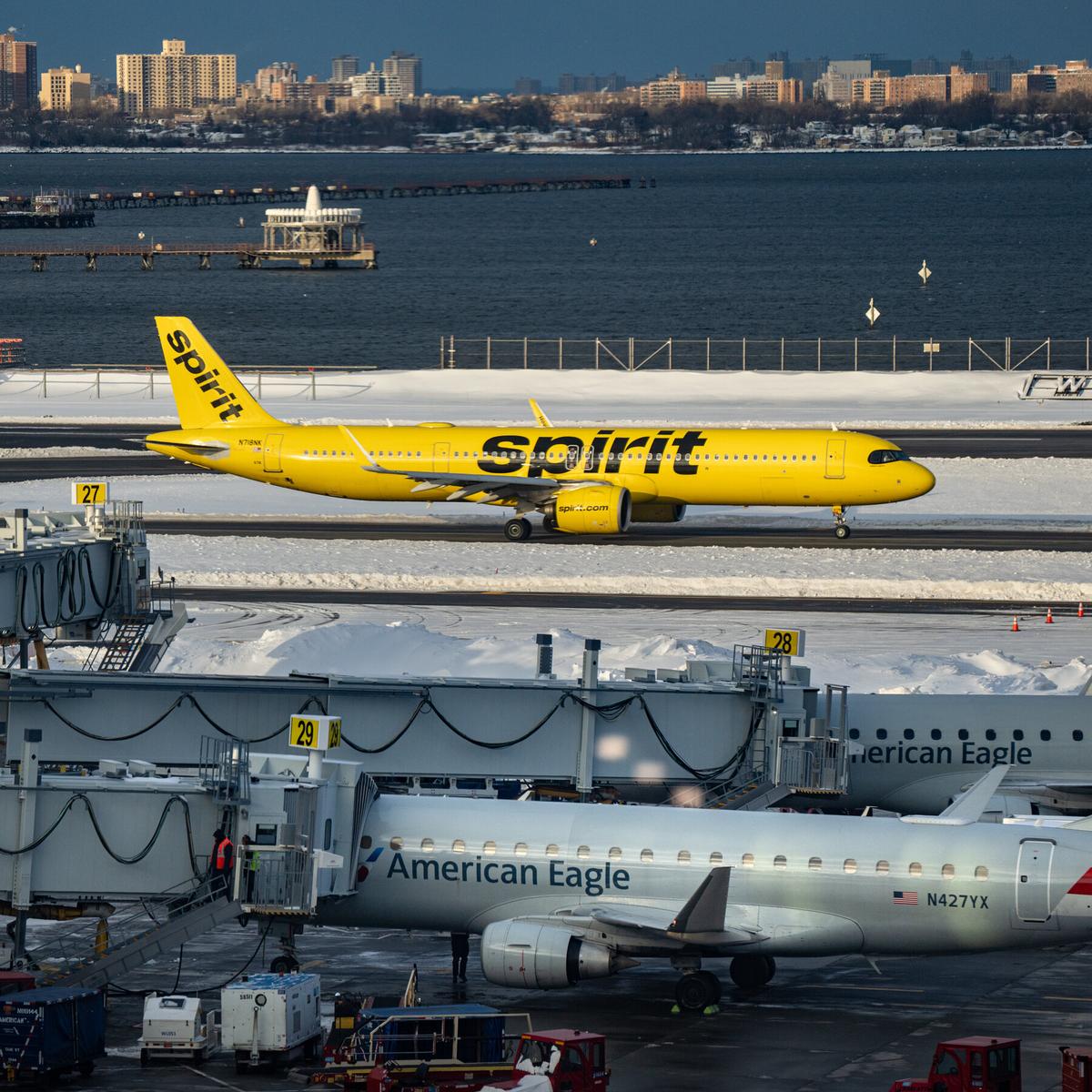
Trump Seeks Suitors for Spirit Airlines While Dismissing Another Merger
Companies Mentioned
Why It Matters
A government‑backed rescue of Spirit could preserve a key low‑cost competitor, sustaining fare discipline and protecting thousands of jobs. The stance also signals a shift toward more direct federal involvement in airline market dynamics.
Key Takeaways
- •Trump opposes United‑American merger, seeks buyer for Spirit
- •Spirit faces second bankruptcy, 14,000 jobs at risk
- •Administration may consider government aid, echoing past airline bailouts
- •Low‑cost carrier competition pressures legacy airlines, preserving Spirit maintains fare discipline
- •Prior Trump-era investments include stakes in Intel, U.S. Steel, critical minerals
Pulse Analysis
The airline industry is at a crossroads as legacy carriers contemplate consolidation while low‑cost rivals scramble for market share. President Trump’s dismissal of a United‑American tie‑up underscores concerns that a mega‑carrier could diminish competition and raise fares. At the same time, his openness to a Spirit sale reflects a broader strategic calculus: maintaining a vibrant ultra‑low‑cost segment that forces legacy airlines to offer cheaper basic‑economy tickets.
Spirit Airlines’ predicament illustrates the fragility of the ultra‑low‑cost model in a volatile environment. After two bankruptcies in two years, rising jet‑fuel costs linked to the Iran conflict, and a failed JetBlue acquisition, the carrier faces mounting pressure. Its 14,000 employees and price‑disciplining role make it a unique asset for consumers, yet its bankruptcy status complicates any direct government equity purchase. Historically, the U.S. government has intervened during crises—post‑9/11 and during COVID‑19—through legislative aid, setting a precedent that could be revived if political will aligns.
If the Trump administration pursues a rescue, it would mark a notable expansion of federal involvement in commercial aviation, echoing recent stakes in Intel, U.S. Steel, and critical‑minerals firms. Such a move could stabilize Spirit, preserve competition, and potentially generate taxpayer upside if the airline rebounds. However, it also raises questions about market distortion, precedent for future bailouts, and the political optics of using public funds to prop up a private carrier. Stakeholders will watch closely as policy discussions unfold, weighing the benefits of a more competitive fare landscape against the risks of government‑backed market intervention.
Trump Seeks Suitors for Spirit Airlines While Dismissing Another Merger
Comments
Want to join the conversation?
Loading comments...