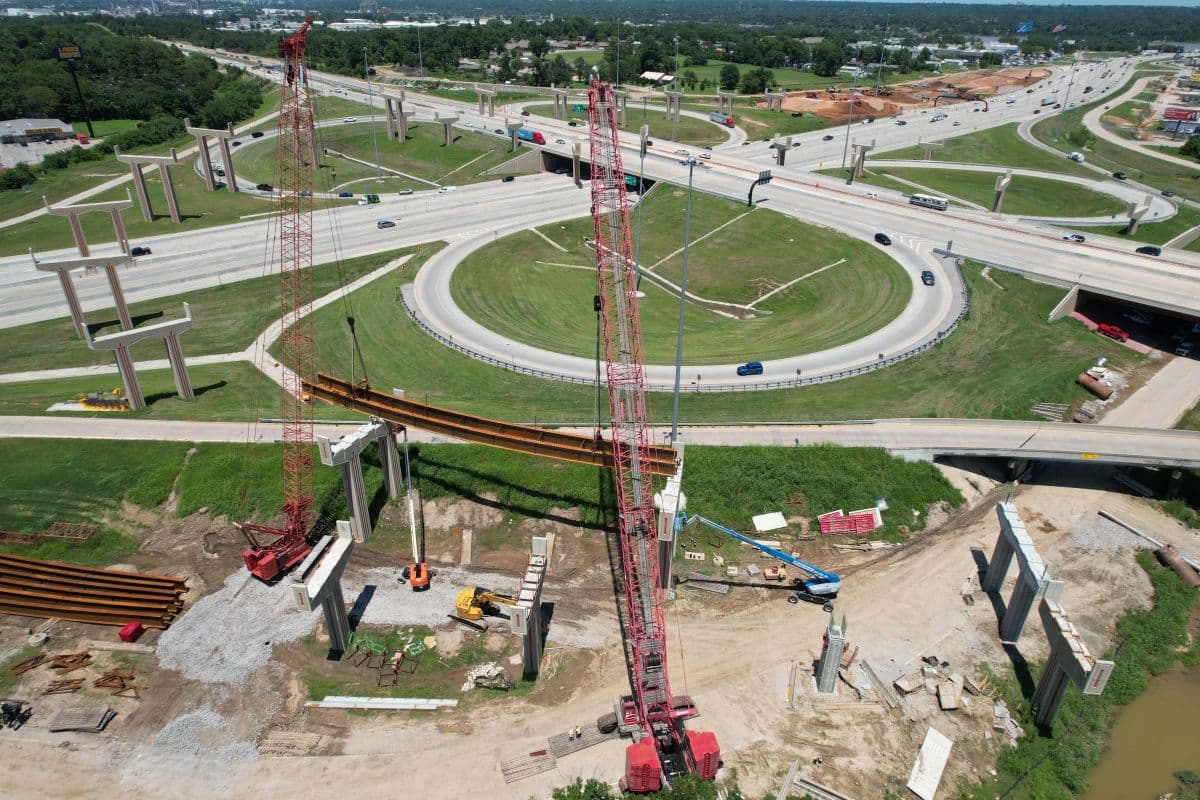
Tulsa's 'Stonehenge' Disappearing Under Freeway Flyovers
Why It Matters
Eliminating the unsafe cloverleaf will boost regional mobility, cut crash risk, and marks Oklahoma’s largest transportation investment, highlighting effective public‑private collaboration.
Key Takeaways
- •$252 M project combines three phases, slated complete summer 2028.
- •First flyover ramp opened May 7 2026; two more pending.
- •2,400‑ft curved bridge alone costs roughly $25 M.
- •Replaces unsafe 1960s cloverleaf, improving traffic flow and safety.
Pulse Analysis
Cloverleaf interchanges were once the hallmark of suburban road design, but they falter when urban traffic swells beyond their low‑volume intent. Tulsa’s U.S. 75/I‑44 junction exemplified this mismatch, with tight merge points that spurred congestion and accidents. By leveraging a $252 million budget—bolstered by federal grants—ODOT embarked on a three‑phase overhaul that consolidates multiple projects under a single public‑facing timeline. The strategy mirrors a broader shift in U.S. infrastructure, where agencies bundle related works to streamline permitting, reduce disruption, and extract greater value from limited funding.
The engineering feat is as complex as it is ambitious. Construction crews deployed a 900‑ton LTM 1750 crane, twelve cranes in total, and a fleet of dozers, forklifts, and loaders to erect a 2,400‑foot curved flyover bridge perched 80 feet above live traffic. Over 15,200 cubic yards of Class AA concrete, 6.5 million pounds of reinforcing steel, and 9.6 million pounds of structural steel are being placed, with the longest bridge segment alone costing roughly $25 million. Coordinating three design teams—Benham Design, Poe & Associates, and a third contractor—required meticulous alignment of piers built in the 2023 phase, ensuring the later structures could be securely anchored without re‑work.
When the interchange is fully operational, commuters will experience smoother flows, shorter travel times, and a markedly safer driving environment. The removal of the outdated cloverleaf eliminates the notorious “lane‑merging derby,” reducing crash potential and supporting the region’s economic growth by improving freight and commuter efficiency. Tulsa’s project serves as a template for other cities grappling with legacy designs, illustrating how strategic investment and phased execution can modernize critical corridors while minimizing public inconvenience.
Tulsa's 'Stonehenge' Disappearing Under Freeway Flyovers
Comments
Want to join the conversation?
Loading comments...