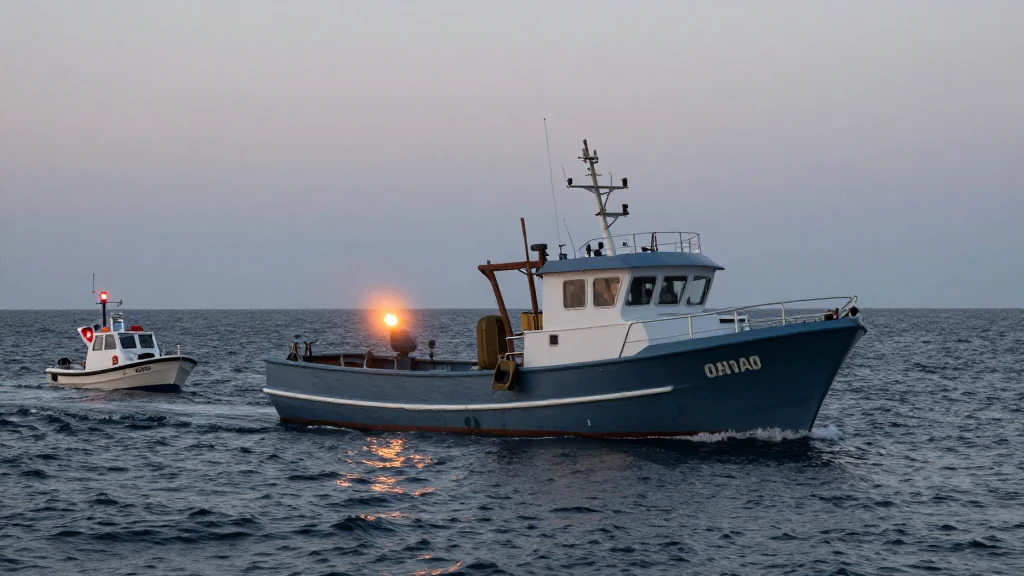
Turkish Fishing Vessel Sunk in Black Sea Near Crimea, One Sailor Killed

Why It Matters
The sinking of a Turkish‑flagged fishing boat in the Black Sea highlights the ongoing security challenges that threaten commercial navigation in a geopolitically contested corridor. As the Black Sea serves as a conduit for energy shipments, grain exports and regional trade, any escalation in attacks can disrupt supply chains, increase freight costs and force carriers to reroute around more distant passages. For Turkey, the incident underscores the need to balance its economic reliance on Black Sea fisheries and energy imports with the imperative to protect its citizens and assets. A pattern of unexplained attacks could push Ankara to seek stronger security guarantees from NATO or to negotiate de‑confliction mechanisms with Russia and Ukraine, reshaping the diplomatic calculus in the region. The broader maritime community will watch how insurers, ship operators and national navies adjust risk assessments in response to the latest incident, potentially leading to higher insurance premiums, more stringent vessel tracking requirements, and a reevaluation of the cost‑benefit of transiting the Black Sea amid heightened threats.
Key Takeaways
- •Turkish fishing vessel Duru 67 attacked and sank west of Sevastopol, killing one crew member
- •Four other sailors injured; one died after rescue
- •Rescued by trawler Burak Kaya and transferred to a Coast Guard medical vessel 115 nm north of Inebolu
- •No group has claimed responsibility for the attack
- •Incident adds to a series of Black Sea maritime attacks since Russia’s 2022 invasion of Ukraine
Pulse Analysis
The Black Sea has evolved from a commercial thoroughfare into a contested arena where state and non‑state actors can project power against civilian targets. The Duru 67 episode illustrates how even low‑profile vessels, such as fishing boats, are now exposed to the same threats that have plagued bulk carriers and tankers. Historically, maritime security in the region was managed through bilateral agreements and NATO patrols, but the proliferation of inexpensive, precision‑guided weapons and unmanned systems has lowered the barrier for hostile actors to strike at will.
From a market perspective, the incident is likely to trigger a short‑term spike in freight rates for routes that skirt the Black Sea, as shippers seek alternative corridors through the Mediterranean or the Danube. Insurance underwriters have already signaled tighter terms for Black Sea voyages, and the loss of a Turkish vessel may prompt a reassessment of the risk models that underpin those premiums. In the longer run, sustained attacks could erode confidence in the region’s safety, prompting a shift in trade patterns that would affect not only Turkey but also European grain exporters and energy suppliers that rely on Black Sea ports.
Strategically, Turkey faces a delicate balancing act. While it is a NATO member, it also maintains a pragmatic relationship with Russia, especially regarding energy imports and regional stability. The lack of an immediate claim of responsibility allows Ankara to avoid a direct confrontation, but the loss of a Turkish crew member will likely intensify domestic pressure for a robust response. Whether that response takes the form of increased naval patrols, diplomatic outreach, or a push for multilateral security frameworks will shape the next phase of Black Sea maritime governance.
Turkish Fishing Vessel Sunk in Black Sea Near Crimea, One Sailor Killed
Comments
Want to join the conversation?
Loading comments...