Twin-Turbo Vs. Twin-Charged Engines: What's The Difference?

Why It Matters
The choice between twin‑turbo and twin‑charged architectures determines how automakers balance power, fuel efficiency and vehicle cost, shaping the future of high‑performance and electrified powertrains.
Key Takeaways
- •Twin‑turbo uses two turbos, parallel or sequential.
- •Twin‑charged pairs a supercharger with a turbo for full‑range torque.
- •Electric superchargers reduce weight and parasitic loss.
- •Packaging, cost, complexity limit twin‑charged adoption.
- •Modern turbos mitigate lag, keeping twin‑turbo dominant.
Pulse Analysis
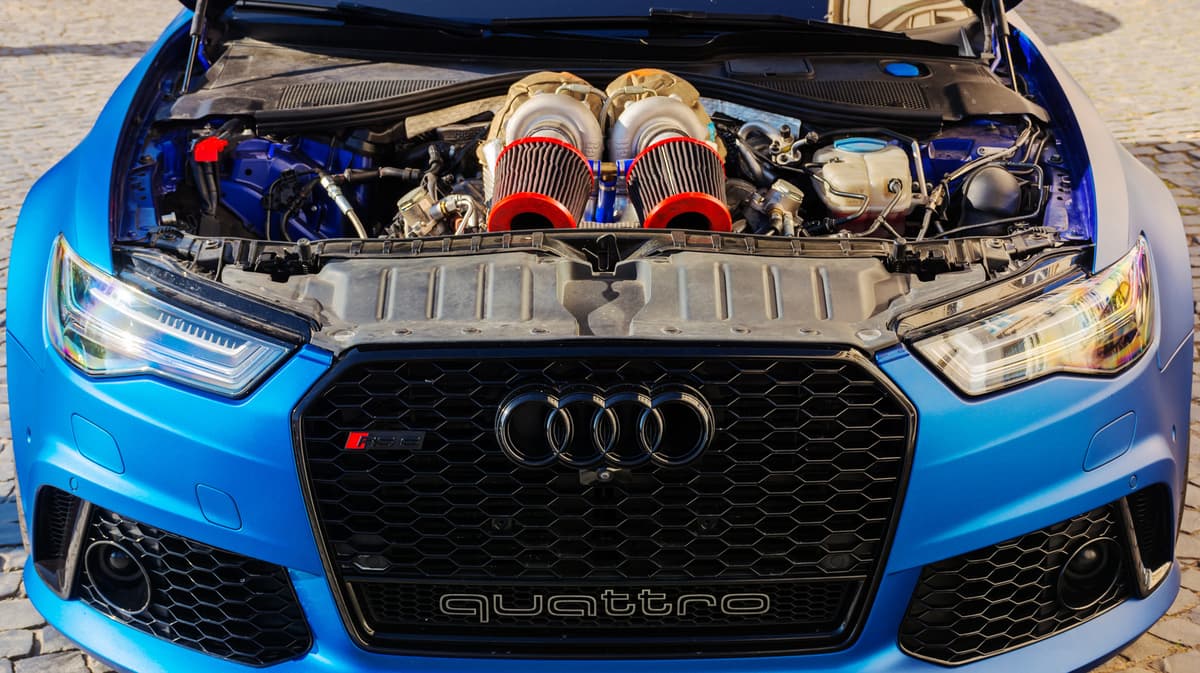
Twin‑turbo technology remains a cornerstone of performance engineering. By splitting airflow between two smaller compressors, manufacturers can achieve faster spool‑up and reduced turbo lag compared with a single large unit. Parallel configurations, common on V‑6 and V‑8 platforms such as the Nissan GT‑R, allocate one turbo per cylinder bank, while sequential designs use a small turbo for low‑rpm response and a larger one for high‑rpm power, delivering a broader, more flexible powerband.
Twin‑charged engines address the low‑rpm weakness of pure turbocharging by adding a supercharger that provides immediate boost from idle. The classic Lancia Delta S4 rally car demonstrated how a belt‑driven supercharger and turbo could produce a flat torque curve across the rev range. However, the dual‑system approach introduces significant packaging challenges: extra plumbing, intercoolers, and control electronics add weight and cost, limiting its adoption to niche applications.
Recent advances are reshaping the equation. Electric superchargers, powered by 48‑volt architectures, spin up to 70,000 rpm in fractions of a second, delivering instant boost without the parasitic drag of belt‑driven units. Coupled with modern low‑inertia turbos and sophisticated wastegate control, they enable a hybrid twin‑charged strategy that rivals traditional twin‑turbo performance while improving efficiency. As automakers pursue stricter emissions standards and electrified powertrains, the flexibility of electric‑assisted twin‑charging could become a compelling alternative, though twin‑turbo remains the cost‑effective benchmark for most high‑output vehicles.
Twin-Turbo Vs. Twin-Charged Engines: What's The Difference?
Comments
Want to join the conversation?
Loading comments...