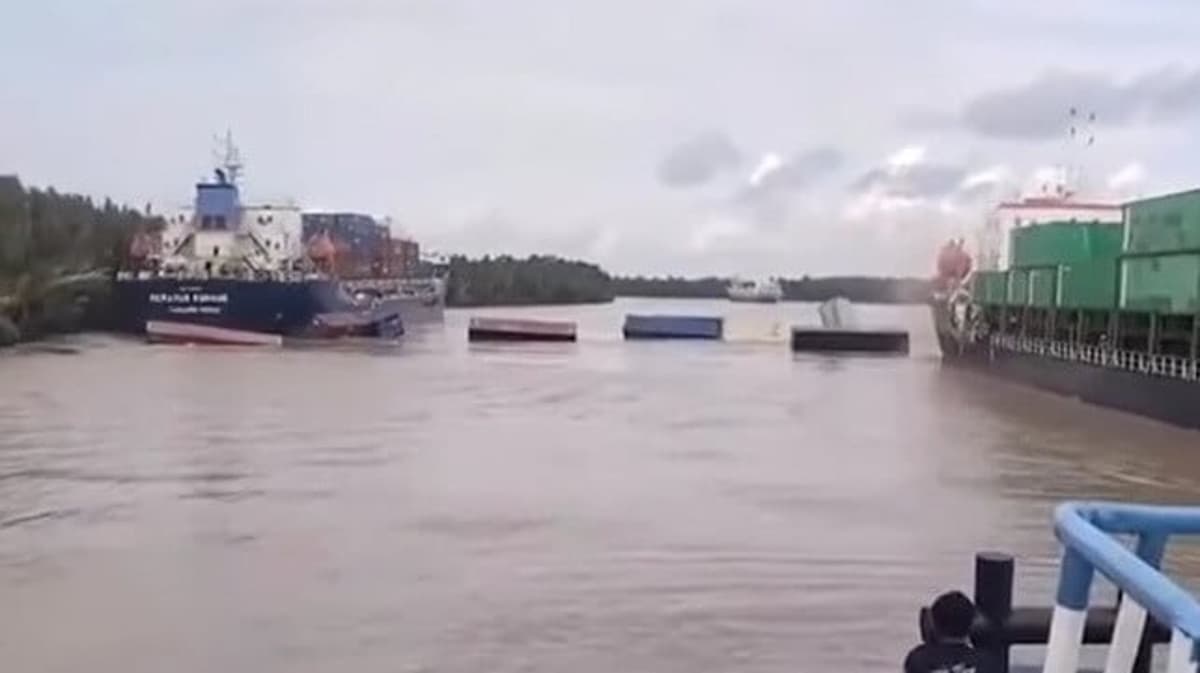
Two Container Feeders Collide in East Kalimantan
Why It Matters
The crash exposes safety gaps in Indonesia’s growing inland maritime trade, potentially increasing insurance costs and prompting tighter regulatory oversight. Reliable river transport is essential for regional supply chains, so such incidents can affect cargo reliability and market confidence.
Key Takeaways
- •Two 8,000 dwt Indonesian feeders collided on Mahakam River
- •Collision caused hull damage above waterline and loss of eight containers
- •No injuries, spills, or environmental impact reported
- •Incident highlights navigation risks on Indonesia’s growing domestic shipping lanes
Pulse Analysis
The Mahakam River in East Kalimantan has become a vital artery for Indonesia’s burgeoning domestic cargo market. Stretching from the interior of Borneo to the Makassar Strait, the waterway serves the industrial hub of Samarinda and surrounding mining and palm‑oil operations. Container feeders such as the Meratus Kolaka and Spil Ratna, each around 8,000 deadweight tonnes, ferry hundreds of TEUs each month, linking smaller ports to larger trans‑shipment centers. As trade volumes rise, the river’s narrow channels and shifting sandbanks pose growing navigational challenges for operators.
On May 13, the two feeders collided during a port‑to‑port passing, with Spil Ratna turning starboard and striking the starboard bow of Meratus Kolaka. The impact ripped hull plating above the waterline on the Kolaka and damaged the forecastle and bridge wing of the Spil Ratna. Eight containers fell overboard, but swift crew response prevented injuries and any oil spill. The incident underscores the importance of precise maneuvering protocols, real‑time traffic monitoring, and crew training in confined riverine environments where visibility and maneuvering space are limited.
From a business perspective, the collision raises questions about risk exposure for shippers and insurers operating in Indonesia’s inland waterways. Frequent incidents can erode confidence in the reliability of domestic supply chains, prompting cargo owners to seek alternative routes or demand higher freight premiums. Regulators may respond with stricter vessel traffic services, mandatory pilotage, or upgraded navigation aids along the Mahakam delta. For the broader maritime sector, the event serves as a reminder that rapid growth in regional trade must be matched by proportional investments in safety infrastructure and operational oversight.
Two Container Feeders Collide in East Kalimantan
Comments
Want to join the conversation?
Loading comments...