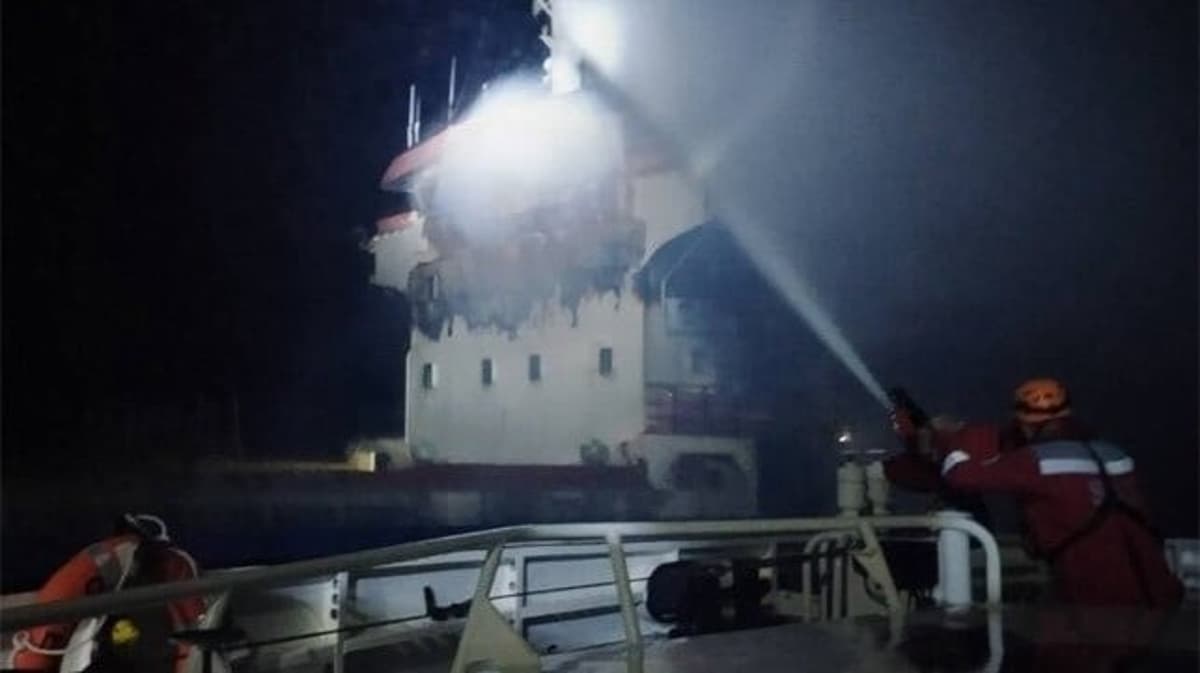
Two Crew Injured as Russia Continues Attacks on Merchant Ships Near Odesa
Why It Matters
The attack underscores the growing threat to commercial shipping in the Black Sea, raising insurance costs and prompting calls for stronger maritime security measures. It also highlights the escalating use of drones and missiles that can disrupt global supply chains.
Key Takeaways
- •Turkish cargo ship Ant hit by Russian attack near Odesa
- •Two crew members suffered minor injuries, evacuated by Ukrainian navy
- •Turkey urges safe navigation in Black Sea amid escalating conflict
- •Ukraine shot down 217 of 232 drones in same night
- •Ant being towed for repairs; previous incidents highlight vessel’s risk profile
Pulse Analysis
Russia’s intensified campaign against merchant vessels in the Black Sea is reshaping risk calculations for global shippers. By targeting the Ant, a modest‑size cargo ship en route from Odesa to Turkey, Moscow signaled that even smaller, non‑strategic vessels are vulnerable. The Black Sea corridor, a critical conduit for grain and energy commodities, now faces heightened insurance premiums and rerouting pressures as carriers weigh the cost of potential damage against time‑sensitive deliveries.
The Ant incident illustrates the immediate human and operational fallout of such attacks. Two crew members sustained minor injuries before Ukrainian naval forces rescued them and contained the blaze. Turkey’s foreign ministry swiftly condemned the strike, urging all parties to safeguard civilian navigation. For ship owners, the episode raises questions about vessel flag choices, emergency response protocols, and the adequacy of existing anti‑drone defenses, especially as the vessel’s flag of Vanuatu offers limited protection against regional hostilities.
Beyond the single ship, the broader night‑time barrage—232 drones and a ballistic missile—demonstrates Russia’s reliance on unmanned systems to pressure Ukraine’s maritime infrastructure. NATO’s condemnation of a stray Russian drone in Romania further illustrates the spillover risk to neighboring states. Shipping firms are now compelled to invest in advanced detection and counter‑drone technologies, while insurers reassess exposure models. The evolving threat landscape suggests that commercial operators must adopt more resilient routing strategies and collaborate closely with naval authorities to mitigate disruptions in an increasingly contested maritime domain.
Two Crew Injured as Russia Continues Attacks on Merchant Ships Near Odesa
Comments
Want to join the conversation?
Loading comments...