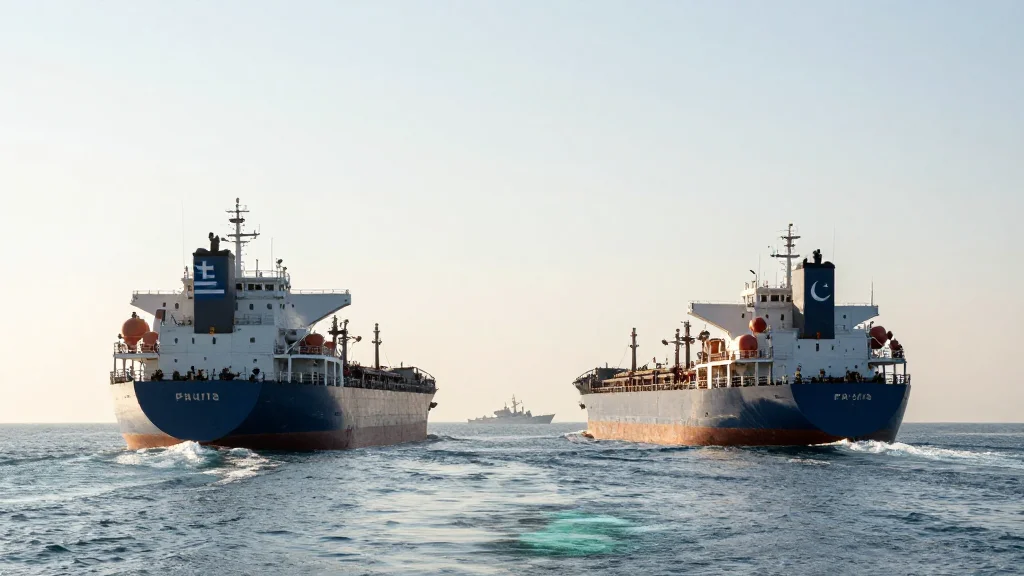
Two Supertankers Including Pakistan-Flagged Ship Take a U-Turn at Hormuz as US-Iran Talks Collapse
Why It Matters
The aborted transits highlight how geopolitical volatility can instantly disrupt one of the world’s most critical energy chokepoints, threatening oil supply stability and freight costs. Investors and shippers must monitor diplomatic developments closely, as any escalation could reverberate through global energy markets.
Key Takeaways
- •Two empty VLCCs aborted Hormuz transit as US‑Iran talks collapsed.
- •Pakistan‑flagged Shalamar and Greek‑flagged Agios Fanourios I turned back near Larak Island.
- •Third VLCC, Mombasa B, passed through Iran‑approved channel without disclosed destination.
- •Ongoing security uncertainty threatens global oil flow and raises freight rates.
Pulse Analysis
The Strait of Hormuz remains a strategic bottleneck for roughly 20% of global oil shipments, making its security a barometer for worldwide energy stability. Recent US‑Iran negotiations, aimed at de‑escalating a six‑week conflict, have repeatedly hinged on assurances of safe passage for civilian vessels. When talks falter, the risk of sudden route closures spikes, prompting ship owners to reassess routing decisions and insurance premiums.
On Sunday, ship‑tracking data showed two empty very large crude carriers—Agios Fanourios I and the Pakistan‑flagged Shalamar—turning back near Iran’s Larak Island just as diplomatic talks in Islamabad ended without an agreement. A third VLCC, Mombasa B, continued through the Iran‑approved channel, but its opaque destination fuels speculation about hidden cargo movements. The mixed outcomes illustrate the unpredictable nature of maritime operations in the Hormuz corridor, where even vessels without direct Iranian links must weigh the threat of mines, naval confrontations, and sudden policy shifts.
For markets, the incident reinforces the premium placed on geopolitical risk in oil pricing. While the United States imports less Gulf oil than Europe, rising prices affect global fuel costs and inflation pressures. Continued deadlock in US‑Iran talks could prompt insurers to raise premiums, push freight rates higher, and incentivize alternative routing, such as around the Cape of Good Hope. Stakeholders—from energy traders to logistics firms—must therefore track diplomatic signals closely, as any breakthrough or setback could swiftly reshape supply dynamics and price trajectories.
Two supertankers including Pakistan-flagged ship take a u-turn at Hormuz as US-Iran talks collapse
Comments
Want to join the conversation?
Loading comments...