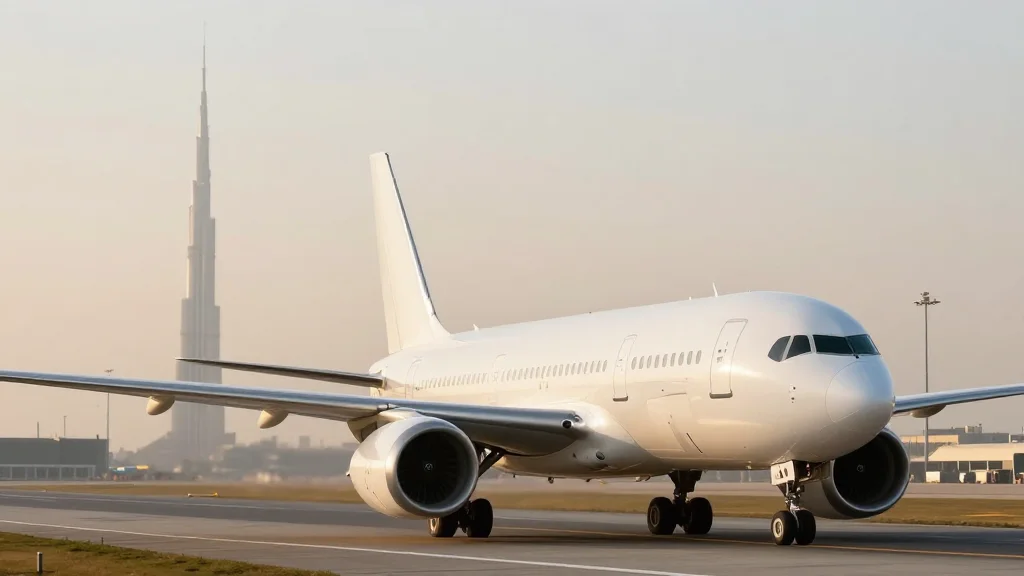
UAE Airspace Reopens, Triggering Flight Surge Across Gulf Hubs

Companies Mentioned
Why It Matters
Restoring full airspace in the UAE removes the most significant bottleneck that has constrained Middle Eastern connectivity for the past three months. The region’s airlines rely on Dubai and Abu Dhabi as trans‑continental transfer points; their downtime forced carriers to reroute flights, increasing costs and travel times for passengers and shippers alike. Re‑opening the skies not only revives revenue streams for Emirates, Etihad and flydubai, but also restores the UAE’s strategic advantage as a logistics hub linking Europe, Africa and Asia. The move also has geopolitical implications. By signaling confidence in regional security despite ongoing tensions, the UAE reinforces its position as a stable investment destination for airlines and logistics firms. This stability is likely to attract new route proposals, boost tourism, and stimulate ancillary sectors such as hospitality and retail that depend on steady passenger flows.
Key Takeaways
- •UAE’s General Civil Aviation Authority lifted all airspace restrictions on May 4, 2026
- •Dubai and Abu Dhabi airports return to “normal status” after a three‑month shutdown
- •Emirates, Etihad and flydubai plan to add frequencies to capture pent‑up demand
- •Passenger traffic could rebound 30‑40 % in the first quarter post‑reopening
- •The reopening restores the UAE’s role as a primary hub for Europe‑Asia connections
Pulse Analysis
The UAE’s airspace reopening is more than a logistical fix; it is a strategic reset for the Gulf’s aviation ecosystem. Historically, Dubai International has acted as the linchpin for long‑haul carriers seeking a midway stop between Europe and the Asia‑Pacific. The three‑month hiatus disrupted that model, forcing airlines to over‑rely on Doha and Istanbul, which in turn eroded the UAE’s pricing power and slot leverage. By reinstating unrestricted operations, the UAE can immediately re‑assert its slot‑rich advantage, allowing carriers to negotiate more favorable terms and re‑capture high‑yield traffic.
From a market perspective, the timing aligns with a global resurgence in travel demand following the pandemic and recent geopolitical shocks. Airlines that were forced to suspend routes now have a captive pool of travelers who postponed trips, creating a surge in booking windows that could translate into higher yields for premium cabins. Cargo operators, too, stand to benefit as supply‑chain firms re‑establish just‑in‑time routes through the Gulf, where infrastructure capacity—especially at Dubai’s Al Maktoum International expansion—remains under‑utilized.
Looking forward, the real test will be how quickly airlines can secure the necessary slots and crew resources to meet the pent‑up demand without compromising safety. If the UAE can balance rapid scaling with operational reliability, it will not only recover lost revenue but also set a new benchmark for resilience in a region prone to geopolitical volatility. Competitors will need to innovate—whether through pricing, service differentiation, or strategic alliances—to keep pace with a revitalized Gulf hub network.
UAE Airspace Reopens, Triggering Flight Surge Across Gulf Hubs
Comments
Want to join the conversation?
Loading comments...