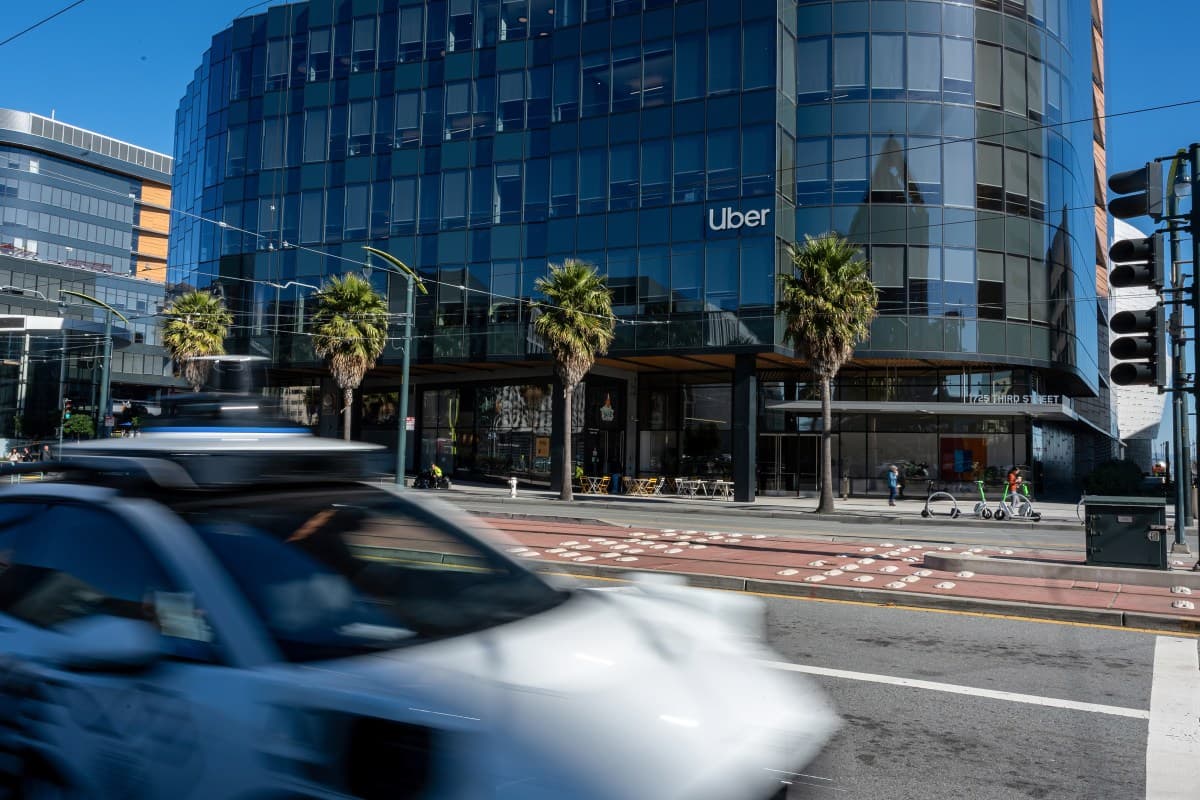
Uber Wants to Turn Its Millions of Drivers Into a Sensor Grid for Self-Driving Companies
Why It Matters
By supplying scalable, high‑quality driving data, Uber can become the de‑facto data layer for the AV industry, giving it bargaining power over manufacturers and shaping the future of autonomous mobility.
Key Takeaways
- •Uber plans to equip driver cars with sensors for data collection
- •AV Labs currently uses a small fleet before scaling to millions
- •Uber partners with 25 autonomous vehicle firms, offering an AV cloud
- •Data bottleneck, not technology, limits autonomous vehicle development
- •Uber may leverage data to gain influence over AV ecosystem
Pulse Analysis
Uber’s pivot from building its own self‑driving cars to becoming a data aggregator reflects a broader industry realization: the hardest problem for autonomous vehicles is not perception algorithms but the sheer volume and diversity of real‑world scenarios needed for training. By retrofitting its existing driver fleet with lidar, radar and camera suites, Uber can capture billions of miles of edge‑case footage that would be prohibitively expensive for any single AV startup to collect on its own. This approach leverages Uber’s core asset—its massive, globally dispersed driver network—turning a cost center into a strategic data source.
The AV Labs initiative serves as the testing ground for this vision. A dedicated fleet of sensor‑rich vehicles gathers raw data, which Uber then labels and stores in an "AV cloud" accessible to its 25 partner companies, including Wayve in London. The platform also enables "shadow mode" testing, where partner models run against live Uber trips without ever taking the wheel, providing immediate performance feedback. Regulatory hurdles remain, as each state must clarify rules around sensor deployment and data sharing, but Uber’s CTO emphasizes a phased rollout to ensure compliance while scaling the sensor kits.
Strategically, Uber’s data layer could reshape the competitive dynamics of the autonomous‑driving market. With proprietary, high‑resolution datasets, Uber can negotiate equity stakes, preferential access, or revenue‑sharing agreements with AV firms, effectively becoming a gatekeeper to the most valuable training material. This leverage may translate into new revenue streams, from data licensing to joint‑venture investments, while also insulating Uber from the risk of being sidelined as driverless fleets replace traditional rides. As the AV ecosystem matures, the ability to supply consistent, diverse, and labeled sensor data will be a decisive advantage, positioning Uber as an indispensable partner rather than a mere ride‑hailing platform.
Uber wants to turn its millions of drivers into a sensor grid for self-driving companies
Comments
Want to join the conversation?
Loading comments...