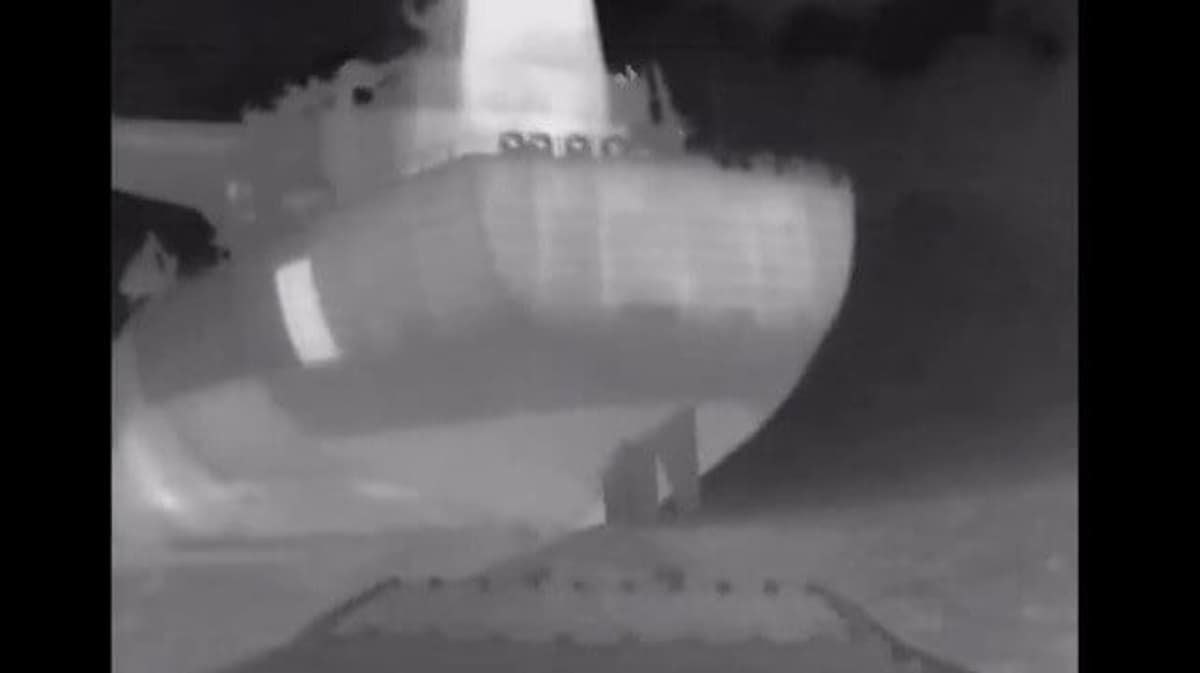
Ukraine Hits Two Tankers at Novorossiysk and Three Vessels at Primorsk
Why It Matters
The strikes directly threaten Russia’s oil export capacity and revenue, while showcasing Ukraine’s expanding long‑range strike capability, potentially altering the strategic balance in the energy‑war front.
Key Takeaways
- •Ukraine disabled two shadow‑fleet tankers at Novorossiysk port.
- •Three vessels, including a Karakurt corvette, hit at Primorsk.
- •Drone attacks targeted ballast tankers to avoid oil spills.
- •Russian air defenses failed to stop multiple coordinated drone waves.
- •Ukraine’s long‑range strikes pressure Russia’s energy revenue streams.
Pulse Analysis
Ukraine’s recent drone raids on Novorossiysk and Primorsk mark a significant escalation in its asymmetric warfare against Russia’s energy infrastructure. The so‑called “shadow fleet”—a collection of aging tankers that evade sanctions—has long been a lifeline for Moscow’s oil exports. By striking ballast‑loaded vessels, Ukrainian forces cripple propulsion without risking catastrophic spills, a tactic that maximizes economic damage while minimizing environmental fallout. The successful penetration of two geographically distant ports in a single weekend signals a maturation of Ukraine’s unmanned systems, supported by the Security Service of Ukraine (SBU) and the Unmanned Systems Forces.
The economic ramifications are immediate. Russia derives roughly $10‑12 billion annually from oil shipments through Black Sea and Baltic terminals; each disabled tanker reduces that flow and erodes state revenue. Moreover, the loss of a Karakurt‑class corvette—a vessel equipped with anti‑ship missiles—weakens Russia’s naval deterrence in the Baltic, potentially opening the region to further Allied surveillance. The apparent failure of layered air‑defense systems to intercept multiple drone waves suggests a need for Russia to re‑evaluate its protective posture, possibly diverting resources from frontline operations to shore‑based counter‑UAV measures.
Looking ahead, Ukraine’s ability to launch coordinated, long‑range strikes could reshape the broader energy market. Persistent disruptions to Russian oil exports may tighten global supply, nudging prices upward and prompting buyers to seek alternative sources, thereby accelerating Europe’s diversification away from Russian energy. For policymakers, the attacks underscore the growing relevance of unmanned aerial technology in modern conflict and the strategic value of targeting revenue‑generating assets. As Ukraine refines its drone tactics, further pressure on Russia’s fiscal stability is likely, reinforcing the link between battlefield successes and macro‑economic outcomes.
Ukraine Hits Two Tankers at Novorossiysk and Three Vessels at Primorsk
Comments
Want to join the conversation?
Loading comments...