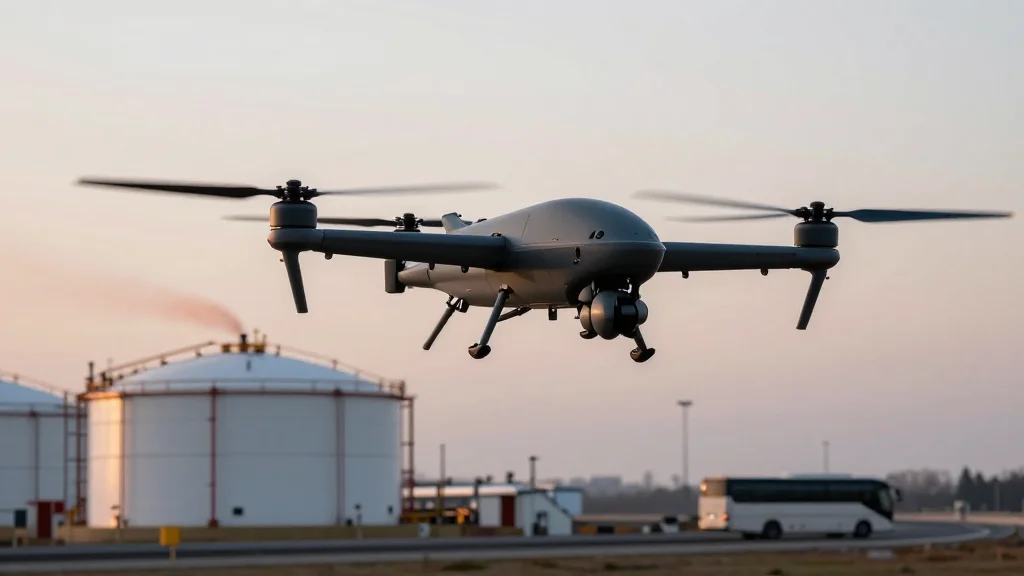
Ukraine's Drone Strikes Hit Russian Oil Hub and Bus Route, Threatening Supply Corridors

Why It Matters
The attacks illustrate how modern warfare increasingly blurs the line between combat and logistics, turning transport corridors into high‑value targets. By striking oil infrastructure and a major passenger route, Ukraine not only inflicts immediate human and material losses but also forces Russia to divert troops and assets to protect supply lines, thereby weakening its operational tempo on the battlefield. The disruption of fuel flows can ripple through civilian markets, raising energy prices and amplifying public discontent within Russia. Moreover, the ability to project drone strikes across hundreds of kilometers challenges traditional notions of territorial security. If Kyiv can reliably threaten Russian logistics hubs, it may compel Moscow to invest heavily in air‑defense systems and harden transport nodes, diverting scarce resources from frontline operations. This dynamic could accelerate a shift toward more decentralized, resilient supply networks on both sides, reshaping the logistics landscape of the conflict.
Key Takeaways
- •Ukrainian drones hit St Petersburg oil terminal, forcing airport shutdown
- •Seven killed, 11 injured when a UAV struck a Moscow‑Simferopol coach
- •President Zelenskyy called the strikes part of "long‑range sanctions"
- •Oleg Vyugin warned Russia faces a choice between recession and military spending
- •Attacks timed with the St Petersburg International Economic Forum, highlighting strategic messaging
Pulse Analysis
The recent Ukrainian drone strikes signal a strategic escalation in the use of unmanned systems to target logistics rather than purely tactical battlefield assets. Historically, supply chain interdiction has been a hallmark of conventional warfare—think of the Allied bombing of German rail yards in World War II—but the precision, low cost, and deniability of drones represent a new paradigm. Kyiv’s ability to reach the Baltic coast suggests a maturation of its UAV capabilities, likely supported by Western intelligence and commercial off‑the‑shelf technology.
From a market perspective, the disruption of Russian oil infrastructure can tighten global energy supplies, especially as sanctions already constrain Russian exports. While short‑term price spikes may benefit oil producers elsewhere, the longer‑term effect could be a more volatile energy market, prompting buyers to seek alternative sources and hedge against geopolitical risk. Simultaneously, the hit on a civilian coach underscores the human cost of targeting transport routes, potentially eroding public support for the war within Russia and its occupied territories.
Looking forward, both sides are likely to double down on protecting and attacking logistics. Russia may accelerate the hardening of rail and highway nodes, invest in electronic warfare to jam UAV control links, and expand its own drone fleet for counter‑UAV missions. Ukraine, meanwhile, could expand its drone arsenal, integrate loitering munitions, and coordinate strikes with cyber operations to amplify disruption. The contest over supply corridors will become a decisive factor in the conflict’s trajectory, shaping not only military outcomes but also the broader economic resilience of the region.
Ukraine's Drone Strikes Hit Russian Oil Hub and Bus Route, Threatening Supply Corridors
Comments
Want to join the conversation?
Loading comments...