Understanding The Physics And Prevention Of Jackknife Accidents
Why It Matters
Jackknife events jeopardize driver safety, disrupt freight movement, and expose carriers to significant legal and financial exposure.
Key Takeaways
- •Sudden hard braking can lock tractor wheels, causing jackknife
- •Wet or icy roads reduce traction, increasing jackknife risk
- •Properly maintained ABS prevents wheel lock during emergency stops
- •Excessive speed amplifies centrifugal forces, destabilizing trailer
- •Liability falls on drivers and carriers for negligence
Pulse Analysis
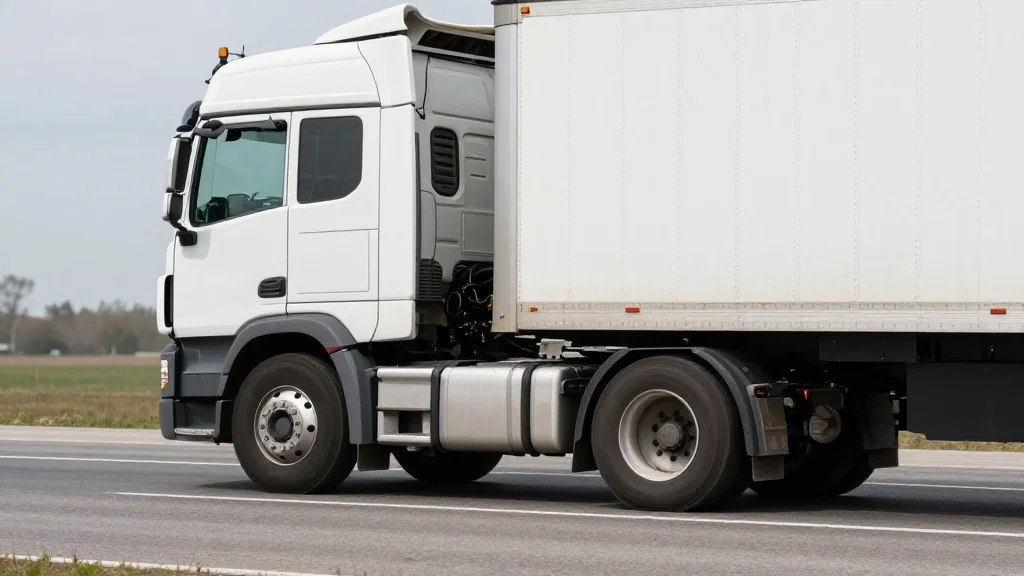
Understanding the physics behind jackknife accidents is essential for any fleet operator. A tractor‑trailer functions as two linked masses rotating around a fifth‑wheel pivot. When the tractor’s drive wheels decelerate faster than the trailer—often due to abrupt brake application—the trailer’s momentum forces the pivot to swing, creating a V‑shaped fold. This mechanical chain reaction is amplified by centrifugal forces during turns, turning a single loss of control into a multi‑lane hazard.
Prevention hinges on disciplined braking, robust anti‑lock braking systems (ABS), and environmental awareness. Drivers should apply brake pressure progressively, allowing both tractor and trailer to decelerate uniformly. Modern ABS technology monitors wheel speed and modulates brake force to avoid lock‑up, but its effectiveness depends on regular maintenance and prompt attention to warning indicators. Adjusting speed for rain, ice, or snow preserves tire traction, while maintaining safe following distances gives operators the reaction window needed to correct a drift before it escalates.
Beyond immediate safety, jackknife incidents ripple through the supply chain and legal landscape. A single folded rig can block several highway lanes for hours, delaying deliveries and increasing fuel costs for countless shippers. When accidents occur, investigators scrutinize vehicle data logs, driver conduct, and carrier maintenance practices to determine negligence. Courts often assign fault to both the driver—if reckless braking or speeding is evident—and the carrier—if brake systems were inadequately serviced. Understanding these dynamics helps companies implement stricter training, maintenance protocols, and risk‑management strategies, ultimately protecting lives and preserving profitability.
Understanding The Physics And Prevention Of Jackknife Accidents
Comments
Want to join the conversation?
Loading comments...