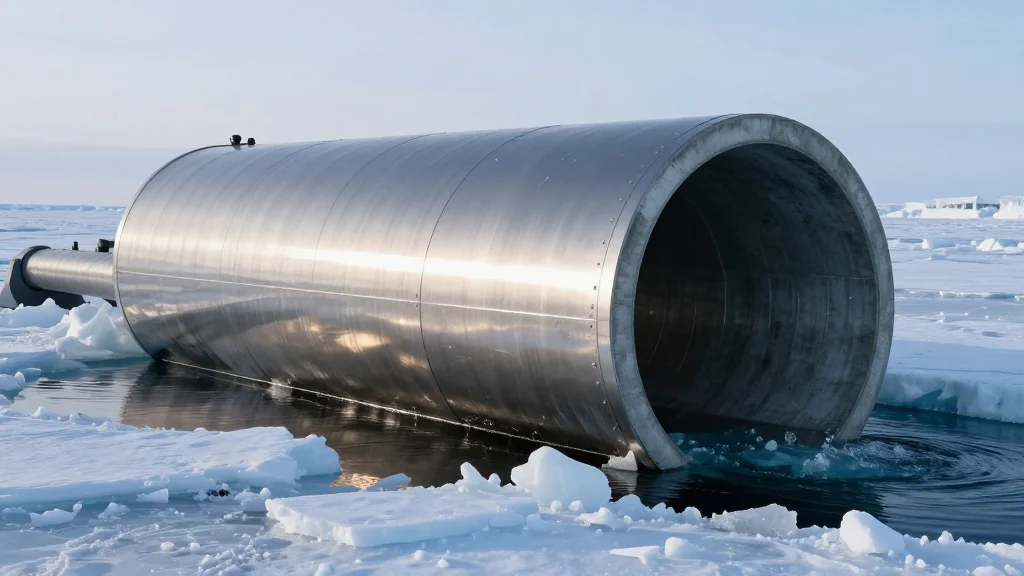
Underwater Tunnel From Russia to Alaska Will Be Built: Putin Envoy
Companies Mentioned
Why It Matters
The tunnel could create a new over‑land trade corridor between Asia and North America, altering logistics and geopolitical dynamics. Its progress also signals a tentative thaw in U.S.–Russia economic dialogue despite ongoing tensions.
Key Takeaways
- •Tunnel spans ~50 miles across Bering Strait, shallow water.
- •Estimated cost $65B conventional, under $8B with Boring tech.
- •Agreement aims to resume design work between Russia and U.S.
- •Project faces extreme Arctic temperatures and regulatory hurdles.
- •Could reshape trans‑Pacific trade routes if realized.
Pulse Analysis
The Bering Strait has long been a geographic curiosity, separating Russia and Alaska by roughly 50 miles of relatively shallow water. By bridging this gap, a fixed link would provide a direct over‑land conduit between the Eurasian continent and North America, potentially reshaping freight flows that currently rely on maritime routes through the Panama Canal or the Suez. Analysts see strategic value not only in reduced shipping times but also in enhanced energy and resource transport, positioning the tunnel as a catalyst for a new trans‑Pacific trade corridor.
From an engineering perspective, the tunnel’s feasibility hinges on cost and technology. Conventional tunneling estimates exceed $65 billion, reflecting the challenges of Arctic conditions, permafrost, and seismic activity. Proponents point to Elon Musk’s Boring Company, which claims to cut costs to under $8 billion through proprietary tunnel‑boring machines and modular construction. Yet the Boring Company’s recent legal and safety scrutiny in the United States raises questions about regulatory approval, environmental impact assessments, and the ability to operate in extreme cold where ice and shifting sea floors add complexity.
Politically, the project serves as a barometer for U.S.–Russia relations. While Moscow frames the tunnel as a confidence‑building economic gesture, Washington has yet to officially acknowledge the discussions, reflecting lingering mistrust after years of sanctions and geopolitical rivalry. If the agreement moves forward, it could open channels for broader cooperation, but it also risks becoming a flashpoint if security concerns—such as dual‑use infrastructure or military logistics—are raised. The tunnel’s ultimate fate will depend on whether diplomatic overtures can outweigh strategic apprehensions, making it a litmus test for future bilateral engagement.
Underwater tunnel from Russia to Alaska will be built: Putin envoy
Comments
Want to join the conversation?
Loading comments...