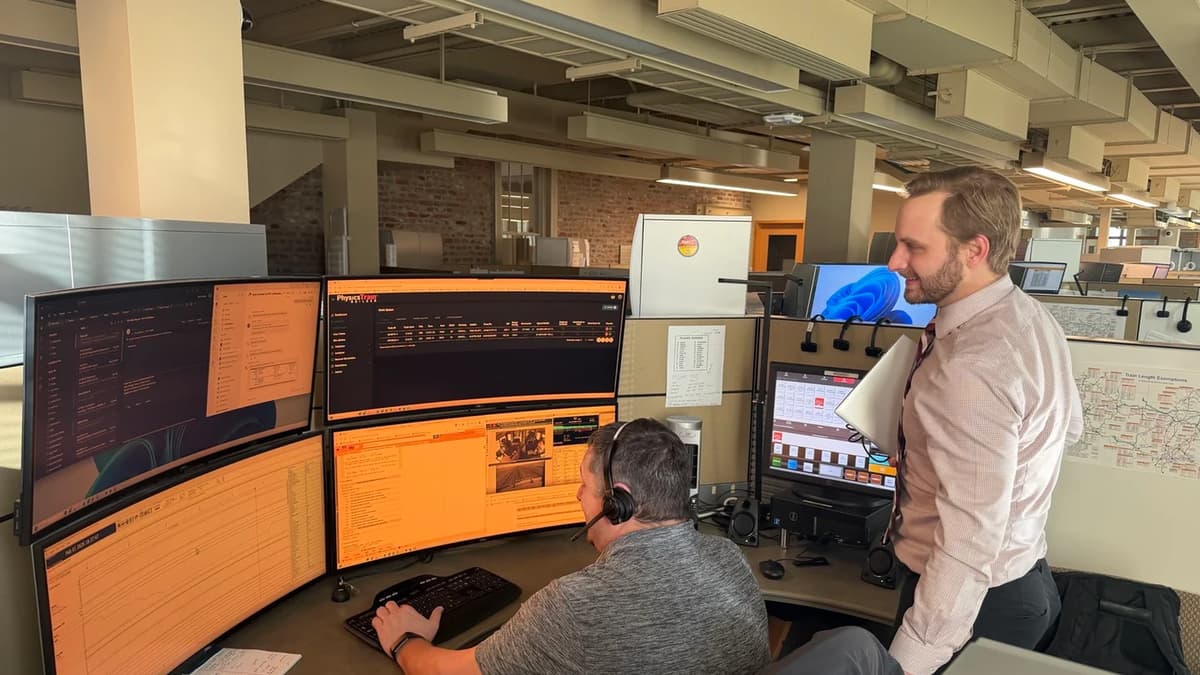
Union Pacific Deploys Advanced Modelling Platform to Enhance Rail Safety and Efficiency
•March 3, 2026
0
Companies Mentioned
Why It Matters
By delivering instant, simulation‑backed insights, the platform boosts safety and operational efficiency while cutting reliance on external vendors. This accelerates Union Pacific’s digital transformation and strengthens its competitive edge in freight logistics.
Key Takeaways
- •Physics Train Builder simulates thousands of daily train movements.
- •Optimizes weight distribution, wagon placement, and locomotive positioning.
- •Generates real‑time alerts for speed and route adjustments.
- •Cuts root‑cause analysis from weeks to minutes.
- •Supports $3.3 billion 2026 technology investment.
Pulse Analysis
Railroads are increasingly turning to high‑fidelity digital twins to manage complex, high‑volume networks, and Union Pacific’s Physics Train Builder is a prime example of that shift. Built on physics‑based simulation, the platform models the movement of thousands of trains across hundreds of miles of track, accounting for variables such as weight distribution, wagon sequencing, track gradient and locomotive placement. By reproducing real‑world forces in a virtual environment, the tool offers a granular view of risk that traditional planning methods cannot match, positioning the company at the forefront of rail technology innovation.
The immediate operational impact is striking. Real‑time alerts generated by the system guide engineers on speed adjustments and route changes before a train leaves the yard, directly reducing derailment risk and wear on infrastructure. Tasks that once required external consultants and weeks of analysis are now completed in minutes, freeing staff to focus on strategic initiatives. Moreover, the platform’s feedback loop captures performance data from each journey, continuously refining its predictive algorithms and delivering ever‑more accurate recommendations, which translates into higher asset utilization and lower fuel consumption.
Union Pacific’s decision to allocate $3.3 billion in 2026 toward infrastructure, technology and network expansion underscores the strategic weight of digital tools like Physics Train Builder. The investment not only accelerates the railroad’s safety agenda but also strengthens its service reliability, a critical factor for shippers demanding on‑time delivery. As regulators and investors place greater emphasis on environmental, social and governance (ESG) metrics, the ability to demonstrate data‑driven risk mitigation and efficiency gains becomes a competitive differentiator. Industry peers are likely to watch closely, potentially spurring broader adoption of physics‑based modelling across the freight sector.
Union Pacific deploys advanced modelling platform to enhance rail safety and efficiency
0
Comments
Want to join the conversation?
Loading comments...