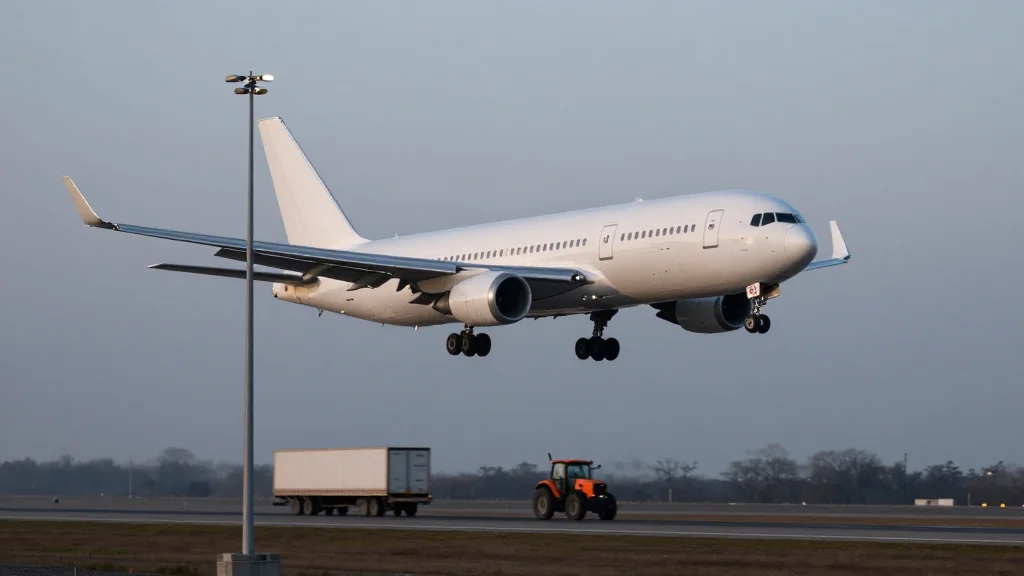
United Jet Hit Pole, Truck During Newark Landing Approach
Why It Matters
The incident underscores lingering safety gaps in approach procedures and automated flight‑control reliance, prompting regulators and airlines to reassess training and infrastructure safeguards. It adds pressure on United and the FAA to demonstrate concrete safety improvements amid heightened public concern.
Key Takeaways
- •United 767‑400 clipped light pole and truck on Newark approach
- •All 231 aboard unharmed; crew taken off duty for review
- •FAA and NTSB launch accident investigation focusing on automation reliance
- •Incident adds to recent US commercial aviation safety scrutiny
- •Preliminary NTSB report expected within 30 days
Pulse Analysis
The Newark touchdown incident highlights how even a brief deviation during final approach can cascade into a multi‑vehicle collision on a busy highway. While the Boeing 767‑400’s robust design allowed it to land without passenger injury, the contact with a light pole and a tractor‑trailer exposed vulnerabilities in runway‑side clearance zones. Investigators from the FAA and NTSB are now scrutinizing flight‑deck data, weather conditions, and air‑traffic control communications to determine whether procedural lapses or sensor misreadings contributed to the low‑altitude strike. This granular analysis will feed into broader safety recommendations for airports that share adjacent roadways with active runways.
The event arrives on the heels of the March LaGuardia crash involving an Air Canada Express jet and a fire truck, marking three major commercial accidents in the United States within 15 months. Industry experts point to an over‑reliance on automated landing systems, which, while reducing pilot workload, can erode manual flying proficiency. Past incidents, such as the 2014 Asiana Airlines crash, prompted airlines to revamp hand‑flying training; however, the recurrence of approach‑related mishaps suggests that further reforms are needed. Regulators are likely to examine the adequacy of runway‑side obstacle clearance standards and the effectiveness of acoustic warning systems that alert crews to proximity breaches.
For United Airlines, the incident is a reputational test and a catalyst for operational introspection. The airline has already placed the crew off duty and pledged a rigorous safety review, signaling a proactive stance to regulators and passengers. The forthcoming NTSB preliminary report, due within 30 days, will shape any mandated corrective actions, potentially influencing pilot training curricula, aircraft maintenance protocols, and airport infrastructure upgrades. As the aviation community watches, the outcome will inform how airlines balance automation benefits with the imperative of maintaining manual piloting competence in critical flight phases.
United Jet Hit Pole, Truck During Newark Landing Approach
Comments
Want to join the conversation?
Loading comments...