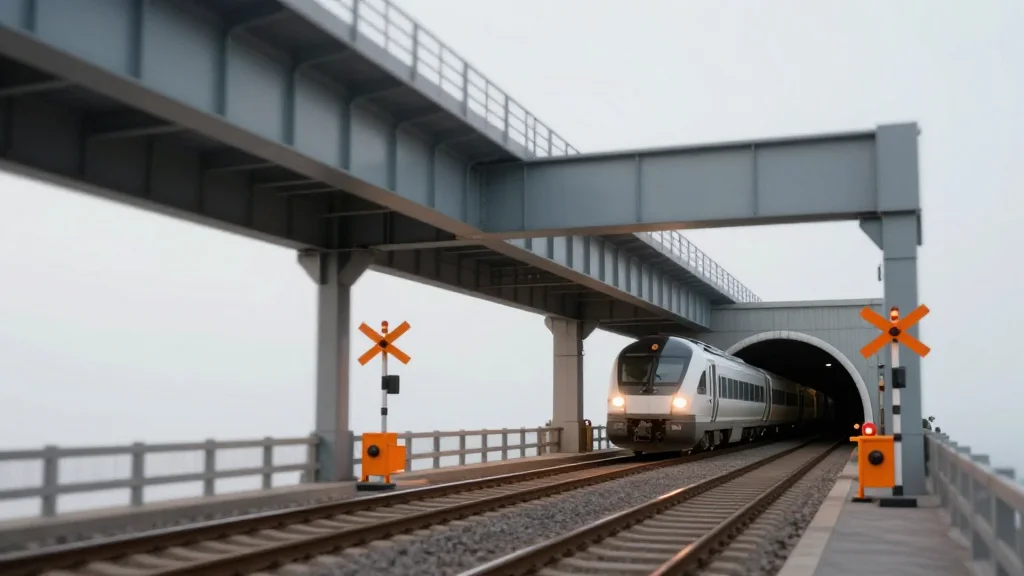
US: $1.1 Billion to Be Invested Into Railroad Crossing Safety Improvements
Why It Matters
Reducing crossing accidents safeguards lives and minimizes costly freight disruptions, directly supporting economic productivity and infrastructure resilience.
Key Takeaways
- •$1.1 B allocated for crossing overpasses, underpasses, and tech upgrades.
- •FRA grants target high‑risk grade crossings nationwide.
- •Projects aim to reduce collisions and improve freight mobility.
- •Education component seeks to lower pedestrian accidents at tracks.
- •Funding supports infrastructure resilience and economic productivity.
Pulse Analysis
The United States records roughly 1,300 railroad‑crossing collisions each year, resulting in over 200 fatalities and significant freight delays. Many incidents occur at at‑grade crossings where road traffic and trains intersect, a legacy of early 20th‑century rail expansion. As freight volumes surge—projected to grow 30% by 2035—congestion at these choke points threatens supply‑chain reliability. The new safety push arrives amid mounting pressure from state transportation agencies and industry groups demanding modernized infrastructure to keep pace with higher train frequencies and heavier loads.
The Federal Railroad Administration’s Railroad Crossing Elimination Grant Program will channel the $1.1 billion allocation into a mix of overpasses, underpasses, advanced warning systems, and track realignments. Grants prioritize high‑risk sites identified through accident data and traffic volume analyses. By separating road and rail traffic, overpasses and underpasses eliminate the possibility of vehicle‑train collisions entirely, while upgraded signal technology reduces human error. State and local jurisdictions can apply for funding, with matching‑fund requirements designed to leverage additional private‑sector investment.
Beyond saving lives, the investment bolsters economic productivity by reducing delays for freight carriers that move an estimated $1.5 trillion of goods annually by rail. Improved crossing safety also enhances community confidence in rail transport, supporting broader decarbonization goals as rail remains a low‑emission freight mode. Analysts anticipate that the program will stimulate construction jobs and spur innovation in sensor‑based warning systems. As the administration emphasizes resilient infrastructure, the crossing upgrades signal a long‑term commitment to modernizing America’s transportation network.
US: $1.1 Billion to be Invested Into Railroad Crossing Safety Improvements
Comments
Want to join the conversation?
Loading comments...