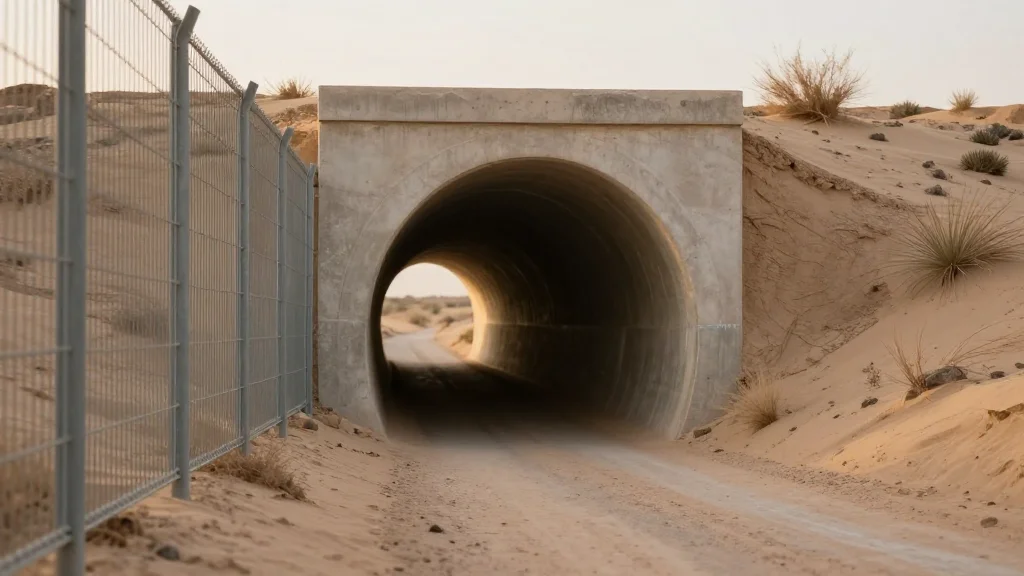
U.S. and Mexican Agents Bust $45 M Cocaine Tunnel Linking Tijuana to San Diego

Why It Matters
The tunnel’s size and engineering reveal that transnational criminal organizations view border crossings as a transportation system they can manipulate, threatening not only drug enforcement but also the safety of legitimate freight movement. By exposing a conduit that could have facilitated the rapid transfer of high‑value narcotics and weapons, the bust forces federal, state and local agencies to reassess the adequacy of current border‑security infrastructure, especially in high‑traffic commercial zones like Otay Mesa. Beyond immediate law‑enforcement gains, the case may catalyze policy shifts toward advanced detection methods—such as ground‑penetrating radar, seismic sensors, and AI‑driven analytics—to identify hidden tunnels before they become operational. It also raises diplomatic stakes, as U.S. and Mexican authorities must coordinate investigations across jurisdictions, balancing sovereignty concerns with the shared goal of disrupting sophisticated smuggling networks that exploit transportation corridors.
Key Takeaways
- •HSI uncovered a 1,933‑ft tunnel from Tijuana to a San Diego warehouse, equipped with rail, ventilation and a hydraulic lift.
- •Agents seized over 1,029 kg (2,269 lb) of cocaine, valued at about $45 million.
- •Four suspects were charged with conspiracy to use a cross‑border tunnel and drug‑distribution offenses.
- •The tunnel is the latest of 99 discovered passages in Southern California since 1993, 28 of which are classified as sophisticated.
- •Officials cite the bust as a catalyst for upgraded tunnel‑detection technology and tighter cross‑border logistics oversight.
Pulse Analysis
The discovery of this tunnel signals a turning point in how law‑enforcement perceives border logistics. Historically, interdiction efforts focused on surface routes—vehicles, pedestrian crossings, and maritime shipments. This case, however, demonstrates that cartels are investing in infrastructure that mirrors legitimate freight systems, effectively creating a clandestine rail line beneath the border. The engineering sophistication—reinforced walls, lighting, ventilation, and a hydraulic lift—suggests a long‑term operational plan rather than a temporary conduit, indicating that cartels are willing to allocate capital comparable to legitimate supply‑chain investments.
From a market perspective, the bust could have ripple effects on cross‑border trade. Freight operators at Otay Mesa may face heightened inspections and potential delays as agencies deploy new detection technologies. While short‑term disruptions could increase costs for shippers, the long‑term benefit may be a more secure corridor that protects legitimate commerce from being piggybacked by illicit flows. Moreover, the case may spur private‑sector innovation; firms specializing in underground detection and infrastructure monitoring could see increased demand from both U.S. and Mexican authorities.
Policy‑makers are likely to grapple with balancing security enhancements against civil‑liberty concerns. Proposals for expanded ground‑penetrating radar networks or continuous seismic monitoring raise questions about privacy, cost, and jurisdictional authority. Yet the sheer scale of the seizure—$45 million in cocaine—provides a compelling fiscal argument for investment: each dollar spent on detection could potentially prevent multi‑million‑dollar drug shipments and associated societal costs. The tunnel bust thus serves as both a warning and an opportunity: a warning that criminal logistics are evolving, and an opportunity for governments and industry to modernize border transportation security in tandem.
U.S. and Mexican agents bust $45 M cocaine tunnel linking Tijuana to San Diego
Comments
Want to join the conversation?
Loading comments...