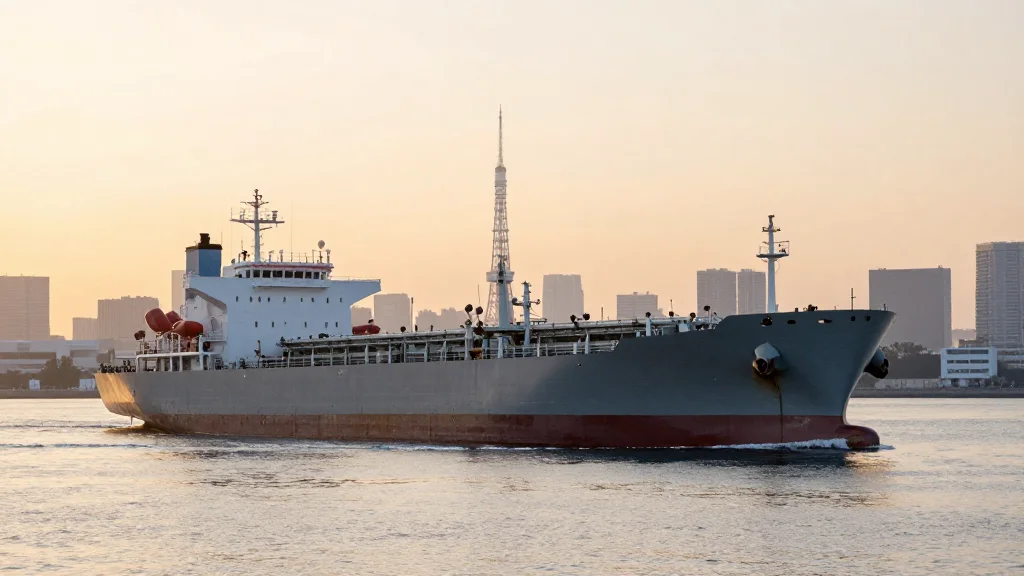
U.S. Crude Tanker Delivers 910,000 Barrels to Japan, First Shipment Since Iran Crisis

Why It Matters
The delivery marks a tangible pivot in Japan’s energy sourcing strategy, reducing its exposure to Middle‑Eastern supply shocks and signaling a willingness to absorb higher logistics costs for greater security. For the broader transportation sector, the successful use of the Panama Canal for long‑haul crude shipments highlights the canal’s role as a critical alternative corridor when traditional routes become risky. This shift could spur infrastructure upgrades, influence freight pricing, and reshape the competitive dynamics among oil exporters targeting the Asian market. In the longer term, sustained U.S. crude flows to Japan may encourage other Asian refiners to diversify their supply mix, potentially reshaping global oil trade patterns that have been dominated by Middle‑Eastern exporters for decades. The move also underscores how geopolitical events can rapidly alter logistics decisions, prompting shippers to re‑evaluate route risk, cost, and reliability in real time.
Key Takeaways
- •M/V Otis delivered 910,000 barrels of U.S. crude to Japan after a 35‑day Panama Canal voyage.
- •First direct U.S. crude shipment to Japan since the Iran crisis began in late February 2026.
- •Japan aims to diversify oil imports, which historically exceed 90% from the Middle East.
- •Panama Canal transit fees and waiting times have surged as tankers avoid the Strait of Hormuz.
- •Analysts expect more U.S. crude shipments to Asia if the pilot proves economically viable.
Pulse Analysis
The Otis delivery is less a one‑off event and more a litmus test for a new trade corridor that could redefine Asia’s oil import matrix. Historically, the Gulf‑to‑Japan pipeline has been dominated by Middle‑Eastern crude because of shorter transit times and lower freight costs. The current geopolitical climate, however, has elevated supply security above pure economics, prompting buyers like Cosmo Oil to absorb the extra cost of a month‑long Panama route. If the price differential remains within a manageable range—say, a $2‑$3 per barrel freight premium—U.S. exporters could capture a meaningful share of Japan’s annual 3‑million‑barrel import requirement.
From a transportation perspective, the surge in Panama Canal usage underscores the canal’s strategic elasticity. Operators have already reported near‑capacity levels, and any further increase in oil traffic could pressure the canal authority to accelerate its expansion projects, such as the recently completed third set of locks. This infrastructure pressure may, in turn, create a feedback loop: higher fees could push shippers back toward the Hormuz route once tensions ease, or drive investment in alternative passages like the Arctic or the Suez Canal’s new deep‑draft lanes.
Looking forward, the key variables will be the duration of Middle‑East tensions, the evolution of Panama Canal fees, and the willingness of Asian refiners to lock in longer‑term contracts with U.S. producers. Should the geopolitical risk persist, we may see a gradual rebalancing of global oil flows, with the United States emerging as a more prominent supplier to East Asia—a development that could reshape not only commodity markets but also the logistics networks that underpin them.
U.S. Crude Tanker Delivers 910,000 Barrels to Japan, First Shipment Since Iran Crisis
Comments
Want to join the conversation?
Loading comments...