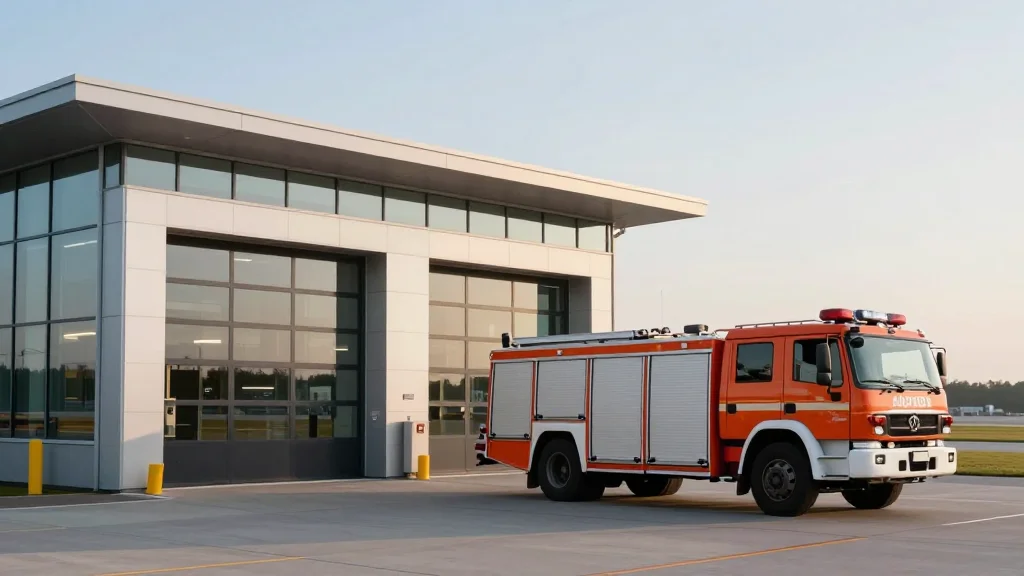
US: DFW Celebrates Opening of New East ARFF Station
Why It Matters
The upgrade strengthens DFW’s safety infrastructure, supporting its role as a major North Texas gateway and setting a new benchmark for airport emergency response efficiency.
Key Takeaways
- •$130M ARFF upgrade consolidates four stations into two hubs
- •New East station features 10 bays, hybrid fleet, and training facilities
- •$75M FAA funding supports DFW’s fire safety modernization
- •$3M mobile command post enhances real‑time incident coordination
Pulse Analysis
Dallas Fort Worth International Airport (DFW) has long been a linchpin of North Texas’s economy, handling more than 70 million passengers annually. The recent inauguration of its East Aircraft Rescue and Firefighting (ARFF) Station marks a decisive step in modernizing the airport’s emergency response framework. By allocating $130 million—partly funded by $75 million in FAA Airport Improvement Program grants—DFW is aligning its safety infrastructure with the demands of larger, more technologically advanced aircraft and higher traffic volumes. This investment reflects a broader industry trend where legacy fire stations are being replaced with consolidated, high‑capacity hubs that can deliver faster, more coordinated responses.
The new East station is designed for operational agility. Ten high‑speed, multi‑fold doors enable simultaneous deployment of multiple ARFF vehicles, while the inclusion of a hybrid fleet from Oshkosh reduces emissions and operational costs. On‑site amenities such as 21 dorm rooms, dedicated training zones, and specialized hazardous‑materials support areas ensure crews remain ready around the clock. The $3 million mobile command post, equipped with advanced cameras, satellite links, and interoperable radios, adds a layer of situational awareness that can be critical during large‑scale incidents, allowing coordination with regional first‑responders from any point on the airfield.
For the aviation sector, DFW’s modernization underscores the growing emphasis on resilience and sustainability in airport operations. As airports compete for airline routes and cargo contracts, robust emergency services become a differentiator, influencing airline decisions and passenger confidence. The consolidation model, paired with hybrid technology, offers a blueprint for other hubs seeking to balance safety, cost efficiency, and environmental goals. With the West ARFF station slated to open later this year, DFW is poised to complete a comprehensive upgrade that could set a new standard for emergency preparedness across U.S. airports.
US: DFW Celebrates Opening of New East ARFF Station
Comments
Want to join the conversation?
Loading comments...