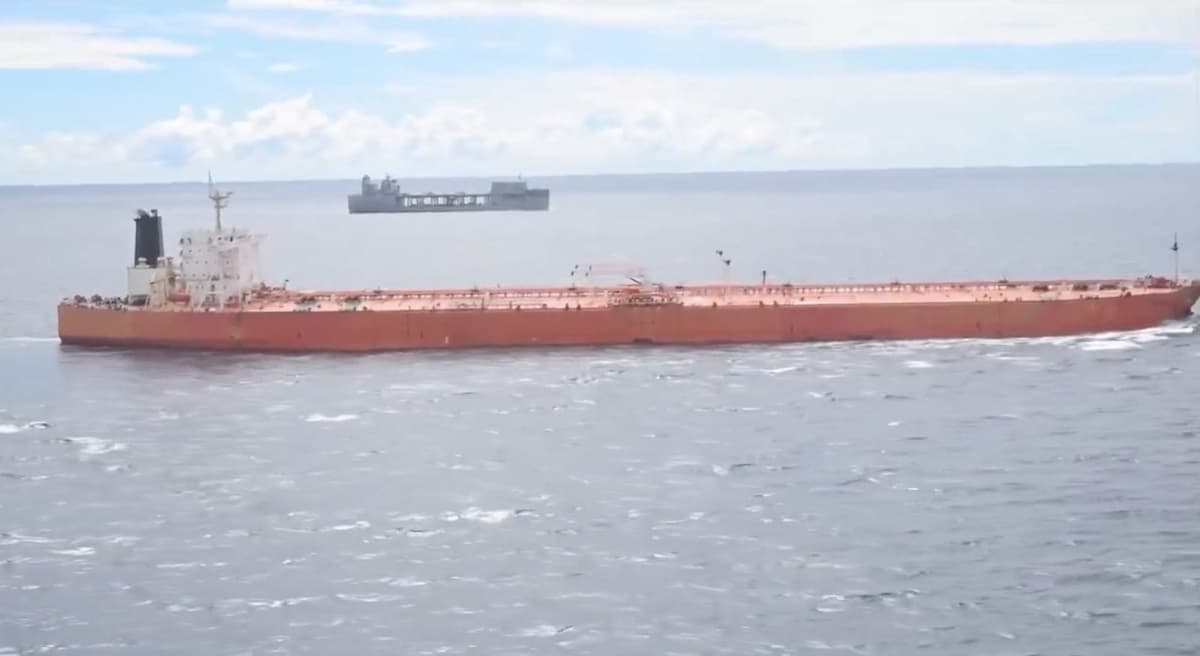
U.S. Forces Board Sanctioned Tanker in Indian Ocean as Iran Crackdown Expands Beyond Hormuz
Why It Matters
The boarding demonstrates Washington’s intent to police Iranian oil shipments wherever they travel, raising compliance costs and operational uncertainty for global shipowners. It also underscores the expanding geopolitical contest over critical maritime corridors beyond the Hormuz chokepoint.
Key Takeaways
- •U.S. boarded sanctioned tanker Tifani in the Indian Ocean.
- •Vessel falsely flew Botswana flag after loading ~2 M barrels Iranian crude.
- •Boarding expands U.S. maritime interdiction beyond the Strait of Hormuz.
- •Tifani sanctioned under EO 13846 for transporting Iranian petroleum.
- •Global enforcement heightens compliance risk for worldwide shipping operators.
Pulse Analysis
The United States’ decision to board the Tifani in the Bay of Bengal reflects a strategic pivot from regional containment of Iranian oil flows to a worldwide interdiction posture. By invoking a right‑of‑visit in international waters, Washington signals that flag fraud and AIS manipulation will no longer provide safe harbor for sanctioned vessels. This move builds on the July 2025 sanctions package, which targeted twenty entities and ten ships, and aligns with broader efforts to choke off revenue streams that fund Tehran’s nuclear ambitions.
For commercial operators, the Tifani episode introduces a new layer of regulatory complexity. Vessels that deliberately avoid the Persian Gulf to sidestep the Hormuz blockade may still encounter U.S. forces in distant corridors such as the Bay of Bengal or the Malacca Strait. The incident highlights the growing importance of transparent flag registration and real‑time AIS data, as U.S. authorities have demonstrated a willingness to board ships with disabled transponders or falsified flags. Shipping firms must now invest in robust compliance programs that can quickly assess sanction risk across all routes, not just the traditional Gulf theater.
Geopolitically, the boarding amplifies pressure on Iran’s oil export network and could tighten global crude supplies, especially if additional vessels are intercepted. While the immediate impact on oil prices may be modest, the precedent of global enforcement may deter other actors from facilitating illicit transfers, thereby reshaping trade patterns in the Indo‑Pacific. As the cease‑fire in the Gulf remains fragile, stakeholders should monitor further U.S. actions that could redefine the risk calculus for maritime trade worldwide.
U.S. Forces Board Sanctioned Tanker in Indian Ocean as Iran Crackdown Expands Beyond Hormuz
Comments
Want to join the conversation?
Loading comments...