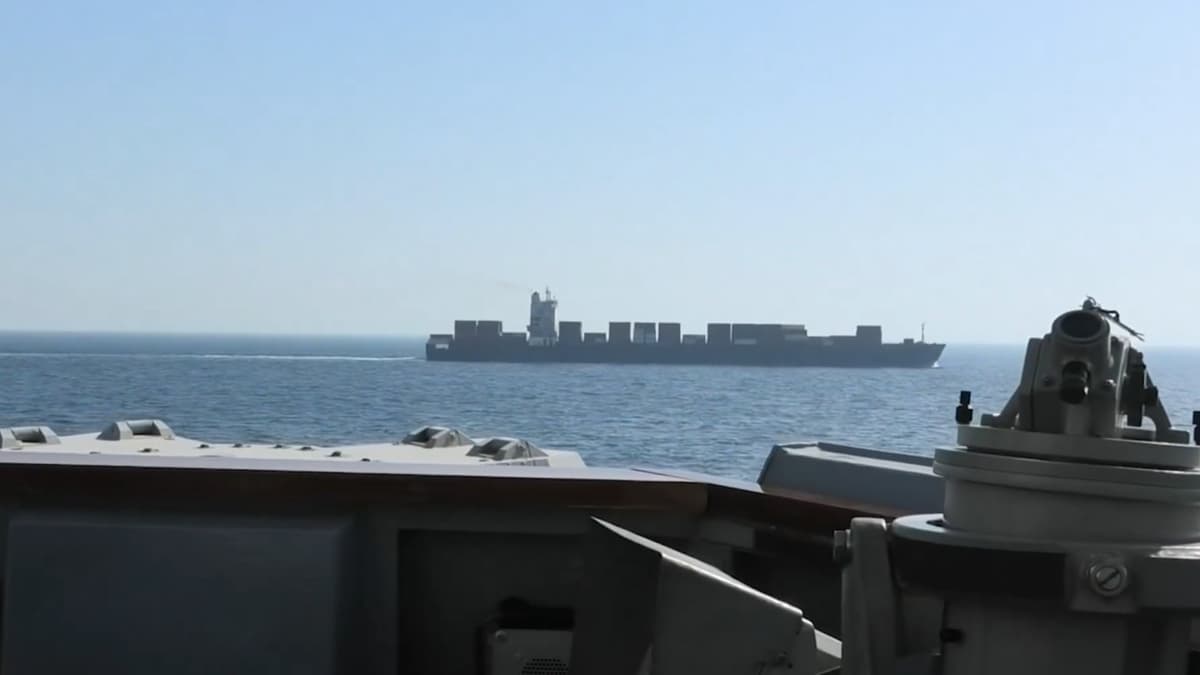
US Navy Fires upon and Boards Iranian Container Ship Touska
Why It Matters
The seizure demonstrates the U.S. willingness to enforce sanctions at sea, signaling heightened maritime security risks for vessels linked to Iran and potentially disrupting regional trade routes.
Key Takeaways
- •US Navy used 5‑inch gun to disable Iranian vessel engine room
- •USS Spruance intercepted Touska 40 nm from Chabahar after six‑hour warnings
- •Touska under OFAC sanctions since 2020 for ties to Iranian shipping line
- •Incident escalates US‑Iran tensions in Strait of Hormuz region
- •Iran threatens retaliation following US boarding of sanctioned container ship
Pulse Analysis
The United States has maintained a naval blockade around Iran’s key ports since early 2023, leveraging OFAC sanctions to restrict the flow of goods that could support Tehran’s military programs. By targeting the Touska, a 900‑foot container ship flagged to Iran, the Navy underscored its commitment to interdict vessels that violate the embargo, even when they operate in international waters near the Arabian Sea. This action aligns with a broader strategy of using maritime power to enforce economic pressure, a tactic that has grown more assertive as diplomatic channels have stalled.
The tactical execution involved a five‑inch gun strike on the ship’s engine room, a measured use of force designed to immobilize rather than sink the vessel. After a six‑hour warning period, the USS Spruance boarded the disabled ship, seizing it under the authority of the 2020 OFAC designation. Shipping companies now face heightened scrutiny, as ports of call in Malaysia, China and elsewhere are being examined for indirect links to Iran’s ballistic‑missile supply chain. The incident raises complex questions about the application of international maritime law, particularly the balance between a nation’s right to enforce sanctions and the principle of freedom of navigation.
Regionally, the seizure adds another flashpoint to the already volatile Strait of Hormuz, a chokepoint that handles roughly a fifth of global oil trade. Iran’s promise of retaliation signals a possible escalation that could threaten commercial shipping and raise insurance premiums across the Middle East corridor. Stakeholders in the maritime industry must monitor the evolving security environment, as further interdictions could prompt rerouting of vessels, increased naval patrols, and a reassessment of risk management strategies for cargoes transiting the Persian Gulf.
US Navy fires upon and boards Iranian container ship Touska
Comments
Want to join the conversation?
Loading comments...