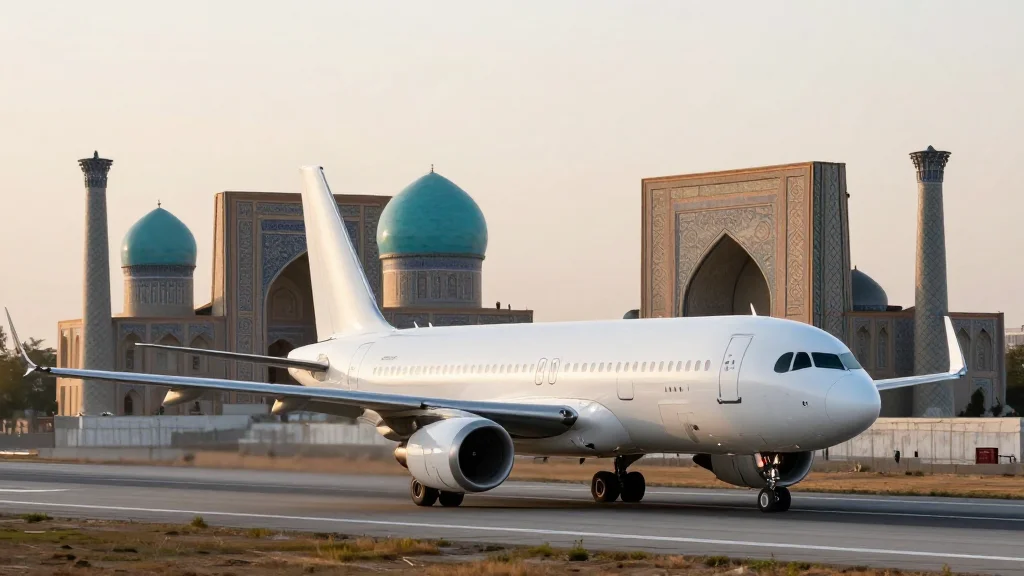
Uzbekistan’s Tourism Takeoff: Silk Road Ambitions Meet Aviation Reality
Companies Mentioned
Why It Matters
The tourism surge hinges on aviation reforms; without continued airport upgrades and airline competition, Uzbekistan’s 2030 economic diversification targets may fall short, reshaping Central Asia’s tourism hierarchy.
Key Takeaways
- •International arrivals rose from 1M (2016) to 8M (2024)
- •Samarkand Airport capacity tripled after 2022 reconstruction
- •Uzbekistan Airways added Boeing 787s and Airbus A321neos
- •Open‑skies policy attracted low‑cost carriers like Silk Avia
- •2030 goal: 15M tourists and $5B tourism revenue
Pulse Analysis
Uzbekistan’s tourism renaissance is rooted in a strategic pivot from Soviet‑era isolation to open‑border marketing. Visa‑free access for dozens of countries and a concerted UNESCO‑driven heritage campaign have lifted global awareness of Samarkand, Bukhara and Khiva. Yet policymakers quickly recognized that cultural allure alone cannot sustain visitor growth; seamless air connectivity is the linchpin for converting curiosity into bookings. By aligning tourism with broader economic diversification, the nation is reshaping its post‑independence narrative into a modern Silk Road gateway.
Aviation reforms have become the engine of this transformation. The state carrier’s fleet refresh—introducing Boeing 787 Dreamliners and Airbus A321neo jets—has expanded long‑haul capacity to Europe, the Middle East and Asia. Simultaneously, airport upgrades, notably Samarkand International’s capacity tripling in 2022, and the adoption of an open‑skies regime have invited private and low‑cost airlines such as Silk Avia and Centrum Air. These moves not only increase flight frequencies but also position Tashkent and Samarkand as potential transit hubs linking Europe, China and Gulf markets, diversifying visitor sources beyond traditional Russian and CIS flows.
Despite rapid gains, the sector faces structural headwinds. Airport congestion in Tashkent, aircraft delivery delays, and uneven hospitality standards risk eroding the visitor experience. Regional rivals—Kazakhstan’s expanding hubs and Gulf carriers dominating long‑haul routes—add competitive pressure. Uzbekistan’s 2030 blueprint, targeting 15 million tourists and $5 billion in revenue, will depend on deepening liberalization, sustaining airline competition, and elevating service quality across the tourism value chain. Success would cement the country’s role as Central Asia’s premier cultural‑plus‑logistics crossroads, while failure could relegate it to a niche heritage stop rather than a true global gateway.
Uzbekistan’s Tourism Takeoff: Silk Road Ambitions Meet Aviation Reality
Comments
Want to join the conversation?
Loading comments...