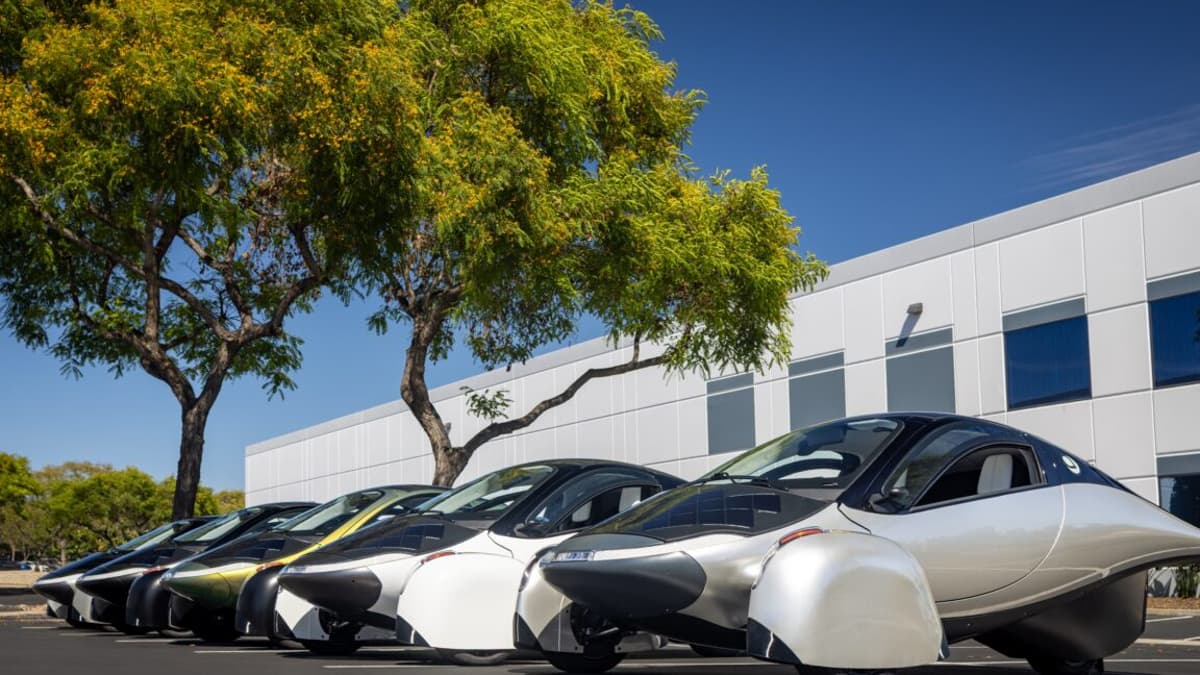
Vaporware or Not? Aptera Assembles Its First Five Validation Models.
Companies Mentioned
Why It Matters
Validating the build process proves Aptera can move from prototype to limited‑run production, potentially reshaping ultra‑efficient EV offerings and challenging conventional manufacturers on range and aerodynamics.
Key Takeaways
- •Aptera assembled five validation EVs on its new Carlsbad line.
- •The three‑wheel model targets 400‑mile range with 44 kWh battery.
- •Drag coefficient of 0.13 makes it among the most aerodynamic cars.
- •Solar panels on the roof can add up to 40 miles daily.
- •Nearly 50,000 reservations indicate strong consumer interest despite past delays.
Pulse Analysis
Aptera’s latest milestone—five validation units rolling off a dedicated low‑volume line—signals a shift from perpetual prototyping to a repeatable manufacturing cadence. After more than 20 years of pivots, funding gaps, and intellectual‑property transfers, the company now has a data‑rich production loop that can fine‑tune tolerances, reduce waste, and accelerate quality assurance. This operational credibility is crucial for investors and early adopters who have watched the project’s long‑term viability waver.
The vehicle’s technical credentials set it apart in a crowded EV market. A drag coefficient of 0.13, rivaling the most aerodynamic concepts ever built, combined with a lightweight three‑wheel architecture, yields an impressive 10 miles per kilowatt‑hour—far surpassing typical electric sedans. The 44 kWh battery promises 400 miles of range, while integrated photovoltaic skin can replenish up to 40 miles each day, effectively extending usable mileage without charging stops. Priced at $40,000 for the launch edition, Aptera positions itself as a cost‑effective alternative to premium EVs, targeting eco‑conscious commuters who value efficiency over size.
If Aptera can translate these validation runs into reliable deliveries, the ripple effects could be significant. A successful low‑volume strategy may inspire other niche manufacturers to adopt similar modular assembly lines, reducing capital expenditures while maintaining high precision. Moreover, the vehicle’s ultra‑efficient profile could pressure mainstream automakers to prioritize aerodynamics and solar integration, accelerating industry‑wide sustainability goals. With nearly 50,000 reservations already secured, Aptera appears poised to convert latent demand into real‑world market share, potentially reshaping consumer expectations for range, price, and environmental performance in the electric vehicle sector.
Vaporware or not? Aptera assembles its first five validation models.
Comments
Want to join the conversation?
Loading comments...