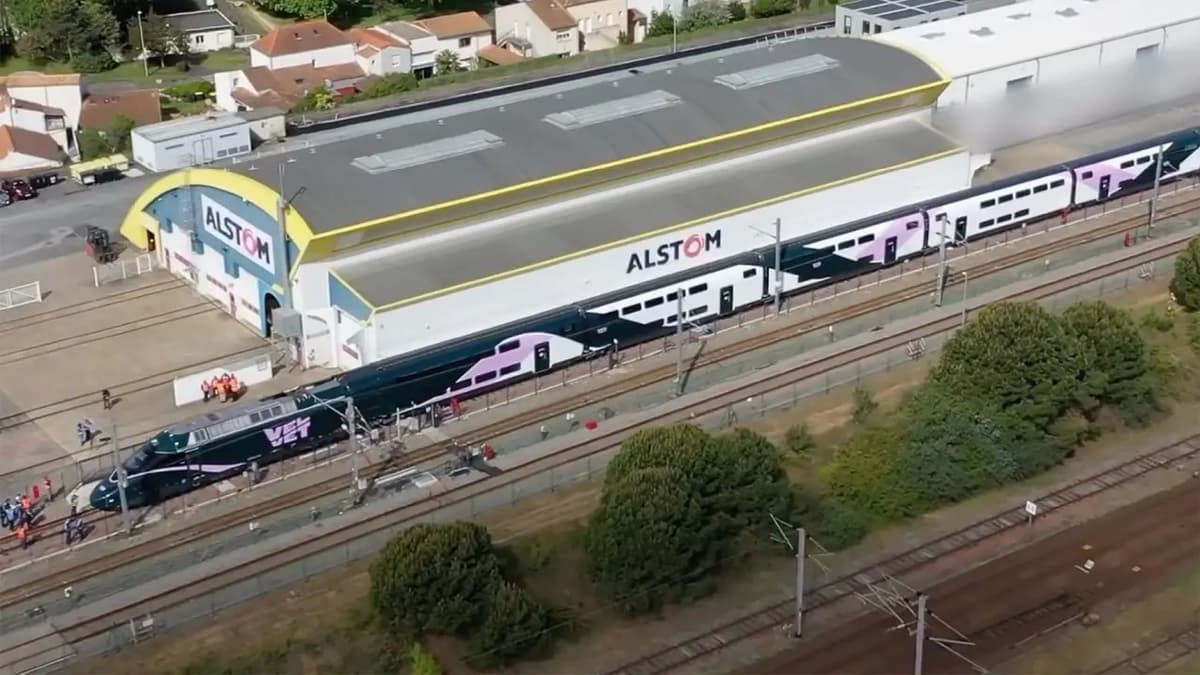
Velvet Has Unveiled Its First TGV, with Which It Aims to Compete with SNCF
Why It Matters
By injecting private capacity into France’s high‑speed network, Velvet could relieve chronic seat shortages and pressure SNCF to lower prices, reshaping the country’s rail market dynamics. Its entry also signals a broader shift toward liberalization in European passenger rail.
Key Takeaways
- •Velvet orders 12 Avelia Horizon trainsets, ~€850M ($930M) investment
- •Aims to add 10 million seats annually on western France routes
- •First private French high‑speed operator targeting SNCF‑congested lines
- •Expected service launch Paris‑Bordeaux in 2028, full fleet by 2029
- •Anticipated fare competition could cut westbound ticket prices
Pulse Analysis
France’s rail sector has long been dominated by state‑owned SNCF, which operates the majority of high‑speed services but struggles with chronic capacity constraints on popular westbound corridors. The Paris‑Bordeaux, Rennes, Nantes and Angers routes regularly run at full occupancy, leaving an estimated 15 % of would‑be passengers without seats. This market gap has attracted private players, most notably Velvet, which is leveraging the Avelia Horizon platform—already proven on SNCF’s TGV M—to quickly bring new capacity online without the bespoke technical features that have delayed public‑sector deliveries.
Velvet’s business case rests on a €1 billion ($1.09 billion) financing package that funds a 12‑trainset order worth over €850 million ($930 million). Each train will carry at least 600 seats, allowing the operator to introduce roughly 10 million additional seats per year on the Atlantic‑coast network. The rollout schedule is aggressive: static testing this year, dynamic trials next, a Paris‑Bordeaux launch in 2028, and a full fleet operational by 2029. By paying an estimated €200 million ($218 million) annually in network access fees, Velvet also contributes to the upkeep of France’s rail infrastructure, positioning itself as a responsible market entrant.
The competitive implications are significant. When Trenitalia entered the Paris‑Lyon corridor, average fares fell by about 10 %. Velvet hopes to replicate that effect on the westbound side, potentially driving down ticket prices for both business and leisure travelers. While SNCF warns that private operators may cherry‑pick profitable routes, Velvet’s focus on high‑demand, capacity‑strained lines could force the incumbent to re‑evaluate pricing, service frequency, and investment priorities. This development reflects a broader European trend toward rail liberalization, where private entrants are increasingly seen as catalysts for efficiency, innovation, and consumer‑friendly pricing.
Velvet has unveiled its first TGV, with which it aims to compete with SNCF
Comments
Want to join the conversation?
Loading comments...