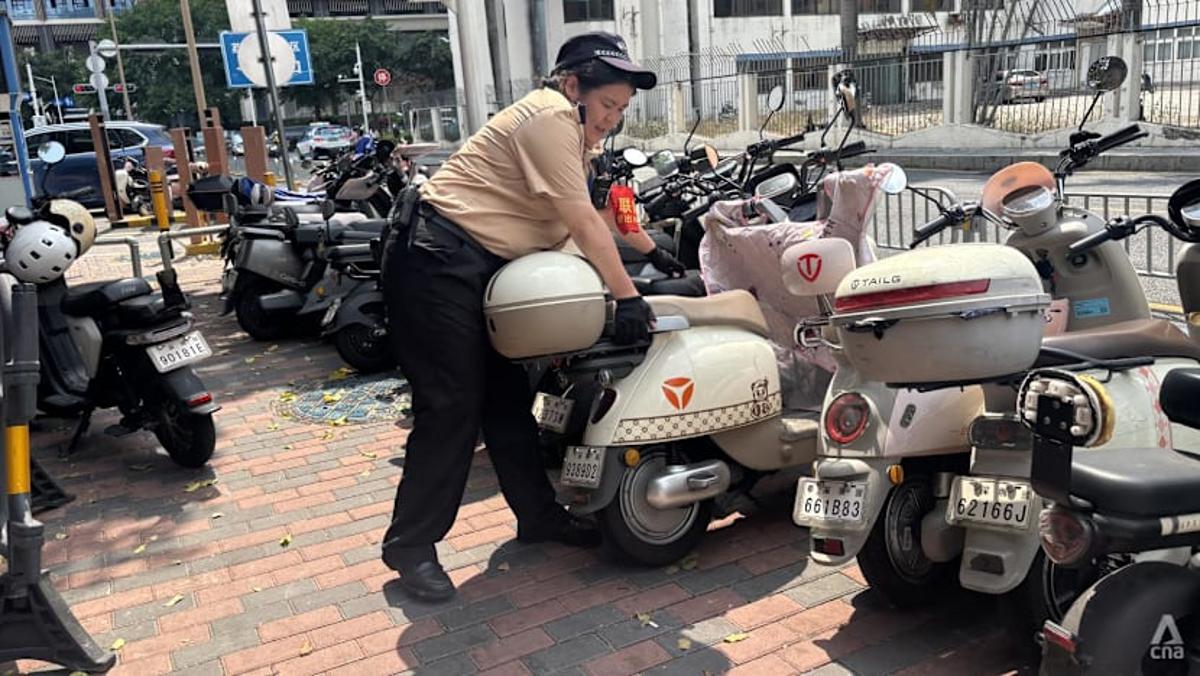
‘Very Troublesome’: Shenzhen’s E-Scooter Clampdown Before APEC Summit Disrupts Routines, Exposes Gaps
Why It Matters
Tightening e‑scooter use aims to improve safety and traffic order before hosting global leaders, while exposing a broader challenge for Chinese megacities to balance rapid micro‑mobility growth with inadequate infrastructure.
Key Takeaways
- •Shenzhen introduced fines up to 2,000 yuan ($290) for e‑scooter violations.
- •Over 6 million e‑scooters now outnumber cars by 1.27 million in the city.
- •New barriers force riders into narrow lanes, limiting non‑essential trips.
- •Only 36% of roads have dedicated non‑motorised lanes, far below Beijing.
- •Delivery riders report 30‑minute parking limits and reduced trip efficiency.
Pulse Analysis
The rapid adoption of electric two‑wheelers has reshaped daily travel across China’s megacities. In Shenzhen alone, registered e‑scooters have surged from roughly 800,000 in 2013 to over 6 million today, making them the dominant mode for short‑haul commutes and parcel deliveries. Their low purchase price—typically 1,500 to 4,000 yuan (about $220‑$580)—and flexibility fill the gap left by limited metro coverage and sprawling industrial zones. However, the speed of adoption has outpaced the build‑out of dedicated lanes, contributing to a spike in accidents that accounted for 62% of traffic crashes last year.
Facing the high‑profile APEC summit in November, Shenzhen’s municipal government introduced a sweeping set of rules on 1 April. Fines of up to 2,000 yuan ($290) now apply to violations, and scooters are barred from highways, tunnels and most pedestrian streets. Physical barriers and wardens have been deployed in high‑traffic districts such as Huaqiangbei, forcing riders into narrow central lanes and limiting non‑essential stops to 30 minutes. Couriers like Chen Mingli report fewer trips and longer travel times, underscoring the tension between safety enforcement and the logistics sector that depends on rapid micro‑mobility.
The crackdown highlights a pivotal policy crossroads for Chinese cities: how to integrate micro‑mobility without sacrificing safety or economic efficiency. Shenzhen’s current dedicated‑lane coverage sits at just 36% of its road network, far below the 90%+ levels seen in Beijing and Shanghai, suggesting a substantial infrastructure gap that must be closed. Experts argue that temporary restrictions can buy time for systematic lane expansion, smarter parking solutions, and clearer traffic rules. If successful, Shenzhen could set a template for other urban centers grappling with the same surge in e‑scooter usage, balancing innovation with public‑space management.
‘Very troublesome’: Shenzhen’s e-scooter clampdown before APEC summit disrupts routines, exposes gaps
Comments
Want to join the conversation?
Loading comments...