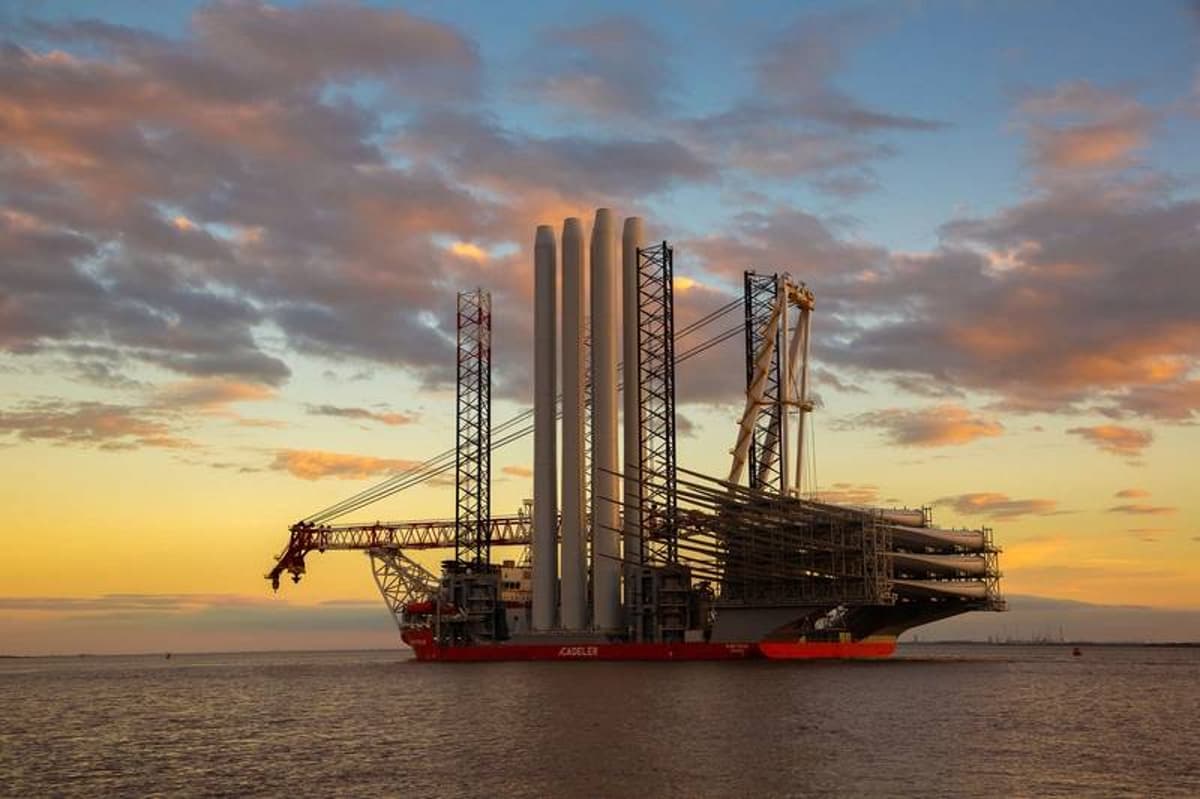
Vessel Sector Deep Dive: WTIVs
Companies Mentioned
Why It Matters
Tight vessel supply and uncertain utilization will compress day rates, affecting shipbuilders, financiers and offshore wind developers alike; the balance of supply and demand will be a decisive factor in achieving the sector’s ambitious capacity targets.
Key Takeaways
- •Europe provides >70% of 2035 offshore wind capacity additions
- •WTIV fleet for ≥15 MW turbines hits 25 vessels by 2028
- •FFIV supply stays at 8‑9 vessels, insufficient for global demand
- •Market outlook sensitive to auction schedules, grid connections, turbine size
- •Political shifts may redirect investment from renewables to oil & gas
Pulse Analysis
The offshore wind sector is at a crossroads as the energy trilemma pivots toward security and affordability, prompting governments in Europe, the EAPAC region and emerging markets to accelerate bottom‑fixed turbine deployments. Forecasts now show roughly 230 GW of capacity by 2035, with Europe contributing over 70% of new builds. This surge is driven by larger turbines and longer‑term contracts, yet the market faces headwinds from inflation, higher financing costs and wavering political support that have already delayed or cancelled projects in key jurisdictions.
Vessel supply dynamics are equally complex. The specialist FFIV segment, essential for installing monopiles and jackets, will only grow to nine units by 2028—far short of the projected global demand. Meanwhile, the WTIV fleet capable of handling the next generation of ≥15 MW turbines is expected to reach 25 vessels, but Europe may experience a shortfall as early as 2032. In contrast, EAPAC and North America appear oversupplied, creating regional imbalances that could force operators to charter vessels at premium rates or delay projects while waiting for suitable assets.
Investors, shipyards and offshore wind developers must monitor a suite of sensitivities that could reshape the market. Auction timing, grid‑connection bottlenecks, the speed of turbine‑size adoption, and the political climate surrounding Chinese OEM participation all influence vessel utilization and profitability. Moreover, the oil‑and‑gas sector’s demand for multi‑purpose jack‑up vessels adds another layer of competition for limited assets. Understanding these variables is critical for stakeholders aiming to secure reliable vessel capacity, protect day‑rate revenues, and ultimately deliver the offshore wind capacity needed to meet global decarbonization goals.
Vessel Sector Deep Dive: WTIVs
Comments
Want to join the conversation?
Loading comments...