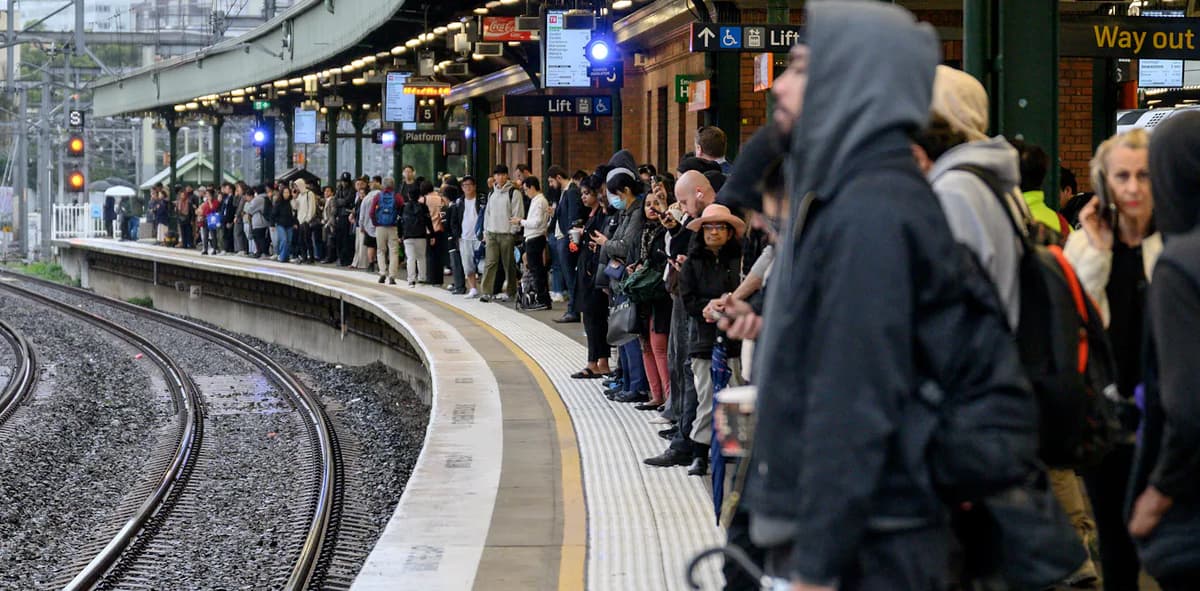
Victoria Has Made Public Transport Free – NSW Hasn’t. Has There Been Any Difference in Uptake?
Why It Matters
The research shows that free public transport is popular but, on its own, is a weak lever for reducing car dependence, highlighting the need for broader infrastructure and service improvements to achieve meaningful modal shifts.
Key Takeaways
- •42% of respondents cut driving after fuel price surge
- •26% in Victoria shifted commuting trips to public transport
- •Access barriers limit mode shift despite free fares
- •78% support free public transport during fuel price spikes
- •Difference between Victoria and NSW shifts modest, not dramatic
Pulse Analysis
The March surge in global oil prices pushed Australian pump prices to record highs, prompting the federal government to trim fuel excise only partially. In response, the Victorian and Tasmanian governments rolled out free public‑transport schemes, while Queensland already operated a 50‑cent flat fare and New South Wales kept fares unchanged. A week after Victoria’s policy launch, researchers surveyed nearly 2,000 commuters across Victoria, NSW and Queensland to capture real‑time behavioural shifts. The study offers a rare natural experiment that isolates fare policy effects from the simultaneous fuel‑price shock.
Across the three states, 42 % of respondents reported driving less, indicating strong price sensitivity. Yet the share of commuters swapping car trips for public transport rose only modestly: 26 % in Victoria, 24 % in NSW and 21 % in Queensland. Non‑work trips showed an even smaller shift, hovering around 17‑19 %. The data reveal that fare elimination alone does not drive large‑scale mode change; instead, limited network coverage, insufficient park‑and‑ride capacity, longer travel times and service disruptions emerged as dominant deterrents. Roughly half of respondents rated public‑transport access as poor.
The findings carry clear implications for policymakers. While 78 % of surveyed Australians favour free transit during fuel crises, the marginal uptake suggests that fare relief is more a political win than a decisive climate lever. To translate popularity into measurable emissions cuts, governments must pair price incentives with infrastructure upgrades—expanding service frequency, improving first‑ and last‑mile connectivity, and guaranteeing reliable schedules. In this blended approach, fare policy can complement, rather than replace, the broader suite of measures needed to shift car dependence in a high‑fuel‑price environment.
Victoria has made public transport free – NSW hasn’t. Has there been any difference in uptake?
Comments
Want to join the conversation?
Loading comments...