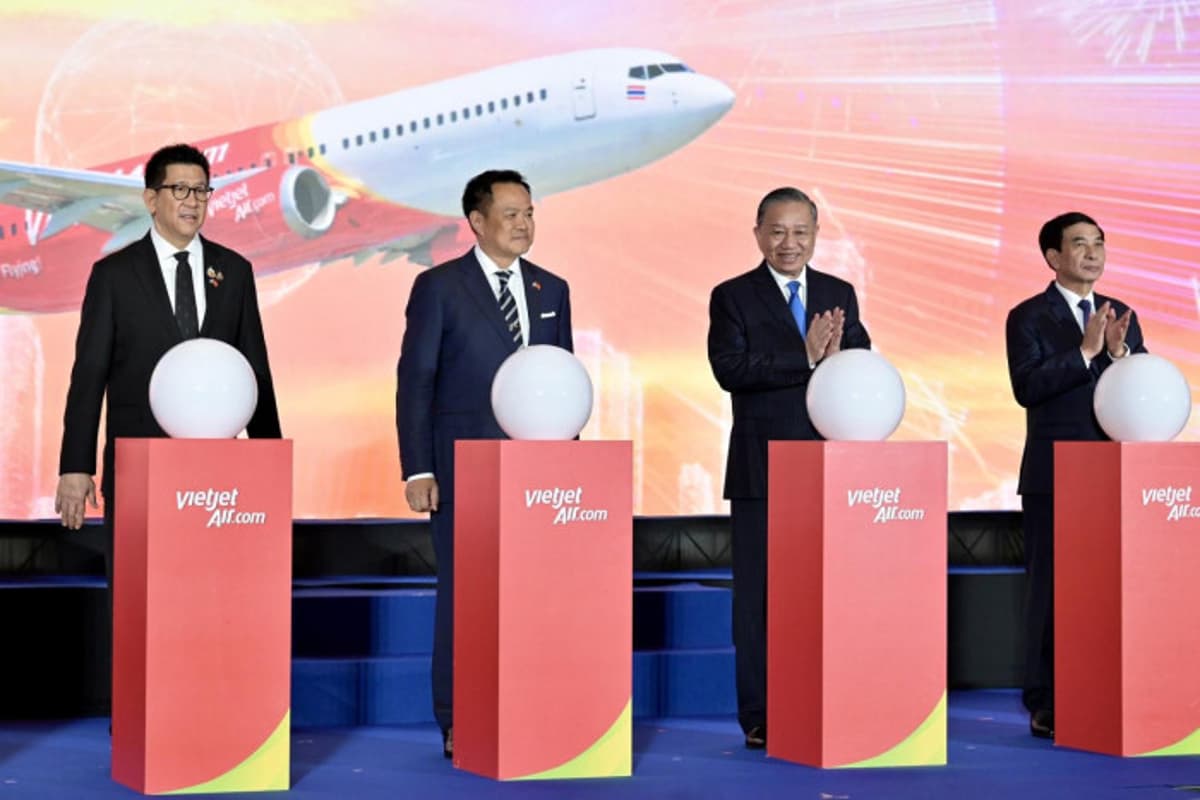
VietJet Commits to New Aircraft Despite Turbulence
Companies Mentioned
Why It Matters
The move secures cost efficiency and capacity growth for VietJet amid volatile fuel prices, positioning it to capture rising demand in Southeast Asia and potentially enter the lucrative Europe market. It signals that low‑cost carriers can sustain expansion despite macro‑economic headwinds.
Key Takeaways
- •Replacing Airbus fleet with 50 Boeing 737‑8s by 2028
- •Fuel burn down 20%; on‑time performance exceeds 80%
- •Airfares up ~20% as jet fuel stays above $80/barrel
- •Exploring wide‑body A330neo for Europe, adding long‑haul routes
Pulse Analysis
VietJet Thailand’s fleet strategy reflects a broader shift among low‑cost carriers toward single‑type, fuel‑efficient aircraft. By committing to 50 Boeing 737‑8s, the airline not only standardizes maintenance and crew training but also leverages the 737‑8’s 20% lower fuel burn to blunt the impact of jet‑fuel prices that have steadied near $120 per barrel. This operational discipline mirrors moves by rivals in the region, where airlines are retiring older Airbus models to achieve economies of scale and improve on‑time performance, a metric increasingly tied to passenger loyalty and ancillary revenue.
The carrier’s pricing response underscores the delicate balance between cost recovery and market competitiveness. With average fares on Japan routes rising from roughly $455 to $606—a 20% jump—VietJet is relying on promotional offers to retain price‑sensitive travelers while protecting margins. Unlike many competitors, VietJet eschews fuel‑hedging, opting instead for currency hedges to manage exchange‑rate risk, a choice that could expose it to further volatility if oil prices spike again. Nonetheless, the airline’s fuel‑efficiency gains and higher on‑time reliability position it to sustain profitability even as the industry grapples with post‑pandemic demand recovery.
Looking ahead, VietJet’s ambition to launch wide‑body A330neo service to Europe and add long‑haul routes such as Bangkok‑Phuket‑Perth signals a strategic pivot toward higher‑yield markets. The extended range of the new fleet enables direct flights to Tokyo and potential fifth‑freedom rights that can capture transit traffic. If executed, this expansion could elevate VietJet from a regional low‑cost player to a contender in the intercontinental arena, challenging incumbents and reshaping the competitive dynamics of Asian aviation.
VietJet commits to new aircraft despite turbulence
Comments
Want to join the conversation?
Loading comments...