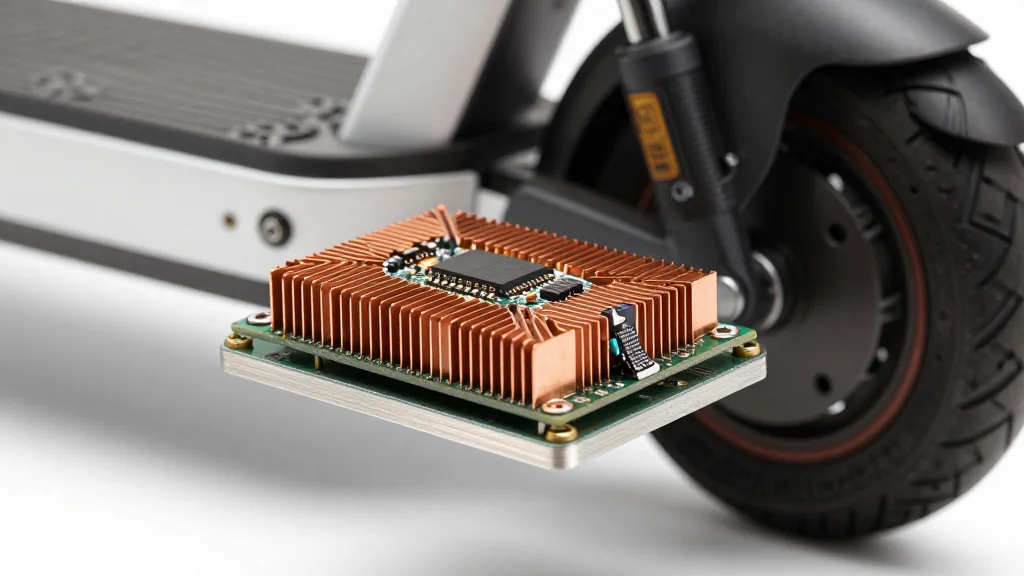
Vishay Launches 200 A Power Module for 48 V EV Systems
Why It Matters
The module enables more compact, efficient 48 V powertrains, accelerating the rollout of mild‑hybrid and light‑EV architectures that are critical for meeting tighter emissions targets.
Key Takeaways
- •200 A module fits 48 V traction inverters for LEVs and MHEVs.
- •0.45 mΩ MOSFET RDS(on) cuts conduction loss up to 32%.
- •Integrated shunt, capacitors, NTC reduce component count and PCB area 15%.
- •FlatPAK HC0 package tolerates –55 °C to +175 °C, meeting AQG‑324.
- •13‑week lead time; available for sampling and volume production.
Pulse Analysis
The 48‑volt electrical architecture is rapidly becoming the sweet spot for automakers seeking a cost‑effective bridge between conventional internal‑combustion powertrains and full‑electric platforms. By delivering higher voltage than 12 V while avoiding the weight and cost penalties of 400‑volt systems, 48 V enables modest power‑boost functions such as belt‑starter generators, regenerative braking and auxiliary loads. Market analysts project that mild‑hybrid deployments will exceed 30 million units annually by 2030, creating a strong demand for compact, high‑current power conversion blocks.
Vishay’s VS‑HOT200C080 addresses that demand with a highly integrated solution. The module’s 0.45 mΩ MOSFET on‑resistance translates to a 32% reduction in conduction loss, directly improving overall inverter efficiency and lowering thermal stress. By embedding a current‑sense shunt, bypass capacitors and an NTC thermistor, designers can eliminate three separate components, shrinking PCB real estate by up to 15% and simplifying layout routing. The FlatPAK HC0 package, built on an insulated transfer‑molded DBC substrate, survives the –55 °C to +175 °C automotive temperature envelope and satisfies AQG‑324 reliability criteria, making it suitable for the rigorous power‑cycling cycles of vehicle operation.
For OEMs and tier‑1 suppliers, the module’s availability shortens development cycles and reduces bill‑of‑materials costs, which are crucial as the industry races to meet stricter CO₂ regulations. The 13‑week lead time balances the need for rapid prototyping with the scale required for volume production, positioning Vishay as a key enabler of the next wave of electrified vehicle platforms. Competitors will need comparable integration and efficiency gains to stay relevant in the fast‑growing 48 V market.
Vishay Launches 200 A Power Module for 48 V EV Systems
Comments
Want to join the conversation?
Loading comments...