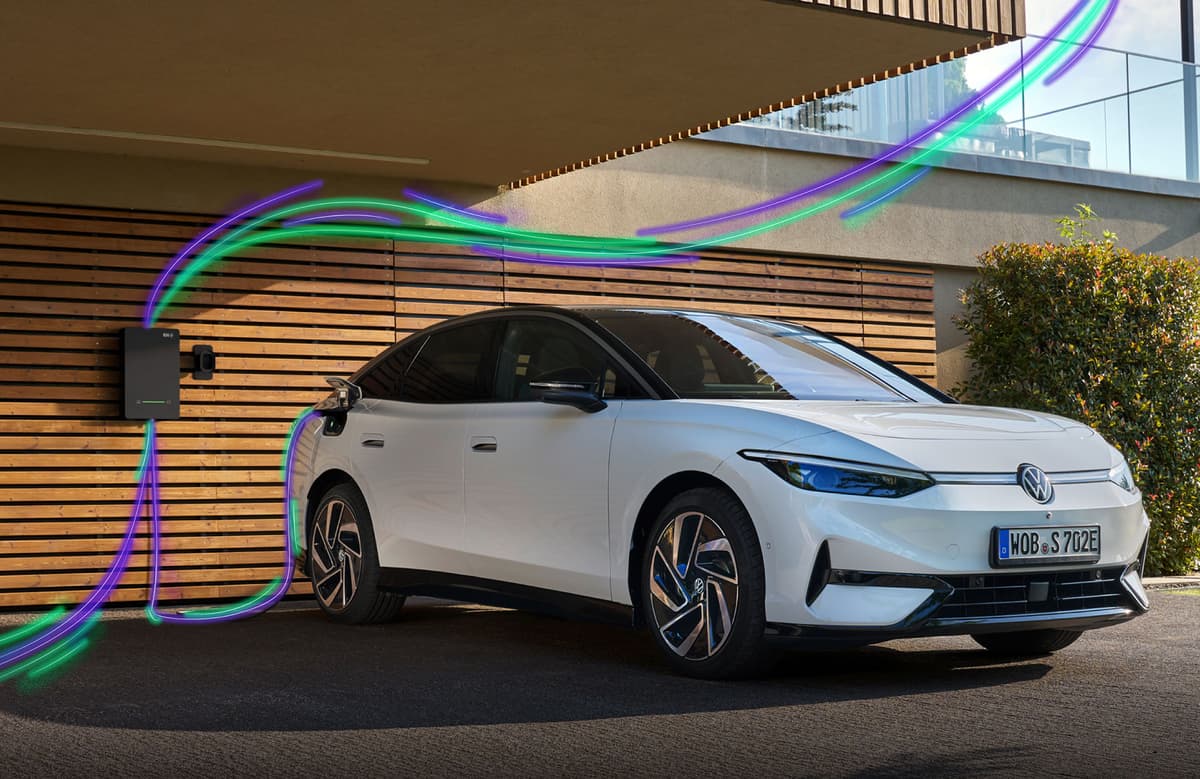
Volkswagen Readies Bidirectional Charging for Germany
Companies Mentioned
Why It Matters
The launch monetises idle EV battery capacity, offering owners a new revenue stream while bolstering grid stability, a key step toward large‑scale V2G adoption in Europe.
Key Takeaways
- •VW and Elli start V2G pilot for German households Q4 2026
- •Pre‑registration opens June; includes bidirectional DC charger and smart meter
- •Customers could earn €700‑€900 annually for battery flexibility
- •Over 1 million VW EVs already bidirectional‑ready on MEB platform
- •Offer will expand to other European markets after Germany launch
Pulse Analysis
Volkswagen’s entry into the vehicle‑to‑grid market reflects a broader industry shift toward using electric‑vehicle batteries as distributed energy resources. By pairing a bidirectional DC charger with a smart meter and a dynamic tariff, VW creates a seamless interface that lets owners sell excess stored electricity back to the grid. The company’s MEB platform has already equipped roughly one million European vehicles with the hardware needed for two‑way power flow, and the upcoming ID. Software 6 update will unlock this capability for newer, larger‑capacity models, positioning VW as a pioneer in the nascent V2G ecosystem.
The economic model hinges on compensating drivers for the flexibility they provide rather than the actual volume of energy traded. Estimates suggest participants could net €700‑€900 per year, effectively offsetting home‑charging costs and, over time, approaching near‑free electricity for owners. This approach aligns with utilities’ growing demand for responsive load resources to balance intermittent renewable generation. By aggregating thousands of VW batteries, the program could deliver meaningful grid services—frequency regulation, peak‑shaving, and emergency backup—while creating a new revenue channel for consumers.
Looking ahead, the German rollout serves as a testbed for broader European expansion. Success could accelerate regulatory frameworks that recognise V2G as a grid asset, prompting other automakers to launch comparable offerings. As battery costs continue to fall and renewable penetration rises, the convergence of automotive and energy sectors is likely to intensify, making bidirectional charging a strategic differentiator for manufacturers seeking to capture value beyond vehicle sales.
Volkswagen readies bidirectional charging for Germany
Comments
Want to join the conversation?
Loading comments...