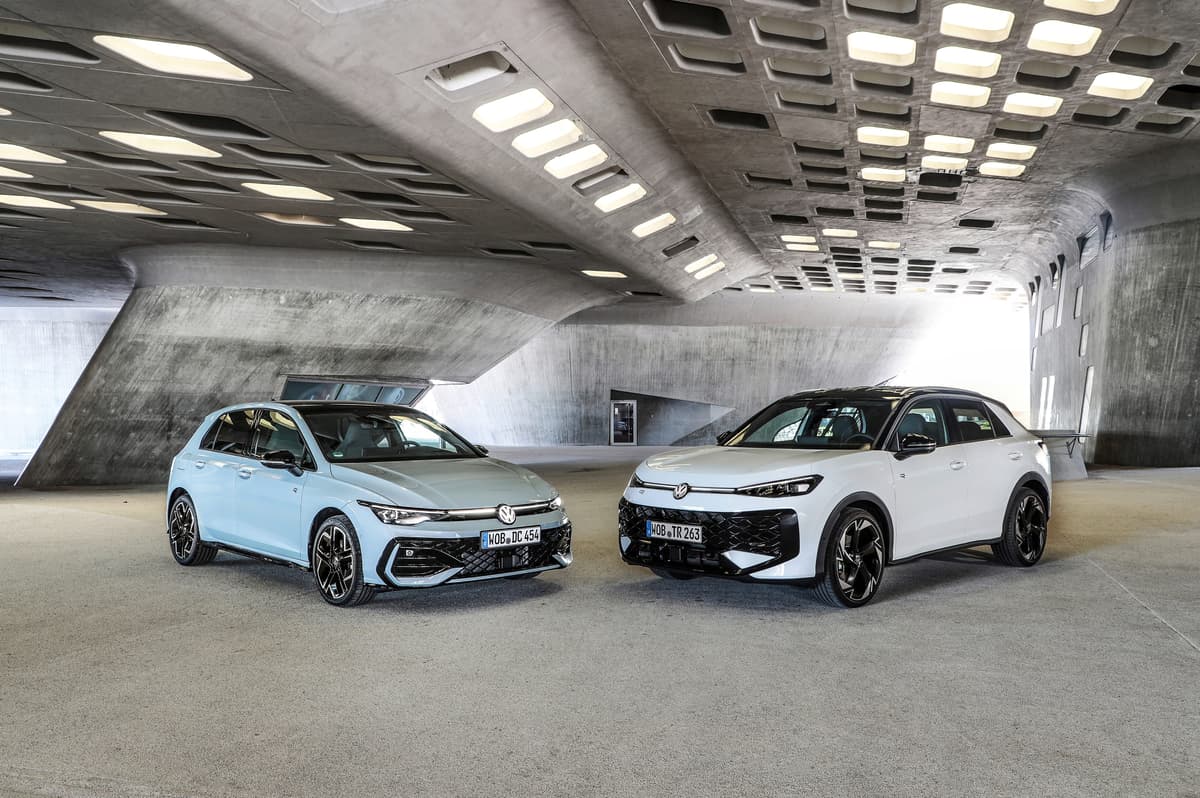
Volkswagen Reveals Hybrid Golf Hatchback for Europe
Companies Mentioned
Why It Matters
The Golf Hybrid helps VW meet Europe’s tightening emissions rules and strengthens its hybrid lineup, while U.S. customers miss out due to the model’s discontinuation stateside.
Key Takeaways
- •Golf Hybrid pairs 1.5‑L TSI engine with two electric motors
- •1.6 kWh battery sits under floor, enabling series‑parallel operation
- •Hybrid targets Euro 7 emissions limits, boosting European fuel economy
- •U.S. market will miss Golf Hybrid after 2021 model discontinuation
- •VW also unveiled hybrid T‑Roc SUV using same powertrain architecture
Pulse Analysis
Volkswagen unveiled a hybrid version of its iconic Golf for the European market, pairing a 1.5‑liter TSI evo2 four‑cylinder engine with two electric motors—one dedicated to propulsion and the other to generation. The system can operate in series, parallel, or a blended mode, mirroring the flexibility of Honda’s hybrid architecture. Energy is stored in a modest 1.6 kWh battery tucked beneath the rear floor, allowing the front motor to drive the car at low speeds while the engine takes over on the highway. Power figures remain undisclosed, but the configuration promises a noticeable jump in fuel efficiency for the compact hatchback.
The timing aligns with Europe’s impending Euro 7 emissions standards, which demand sharper CO₂ reductions across all vehicle segments. By adding a hybrid to the Golf—one of the continent’s best‑selling small cars—Volkswagen can improve fleet‑average emissions without a full redesign. The move also complements the simultaneous launch of a hybrid T‑Roc SUV that shares the same powertrain, signaling a broader strategy to electrify its core models. Competitors such as Toyota and Hyundai have already leveraged hybrids to meet regulatory pressure, so VW’s entry helps it stay competitive in a market where fuel‑economy ratings increasingly influence buyer decisions.
American buyers, however, will not see the Golf Hybrid on domestic showrooms. Volkswagen withdrew the standard Golf after the 2021 model year, leaving only performance‑focused GTI and Golf R variants for the U.S. market. This regional split reflects differing demand patterns and the company’s focus on larger SUVs and electric vehicles stateside. For U.S. enthusiasts, the hybrid’s absence underscores a gap that could be filled by future compact electrified models, while the European rollout serves as a testing ground for technology that may eventually filter back across the Atlantic.
Volkswagen Reveals Hybrid Golf Hatchback for Europe
Comments
Want to join the conversation?
Loading comments...