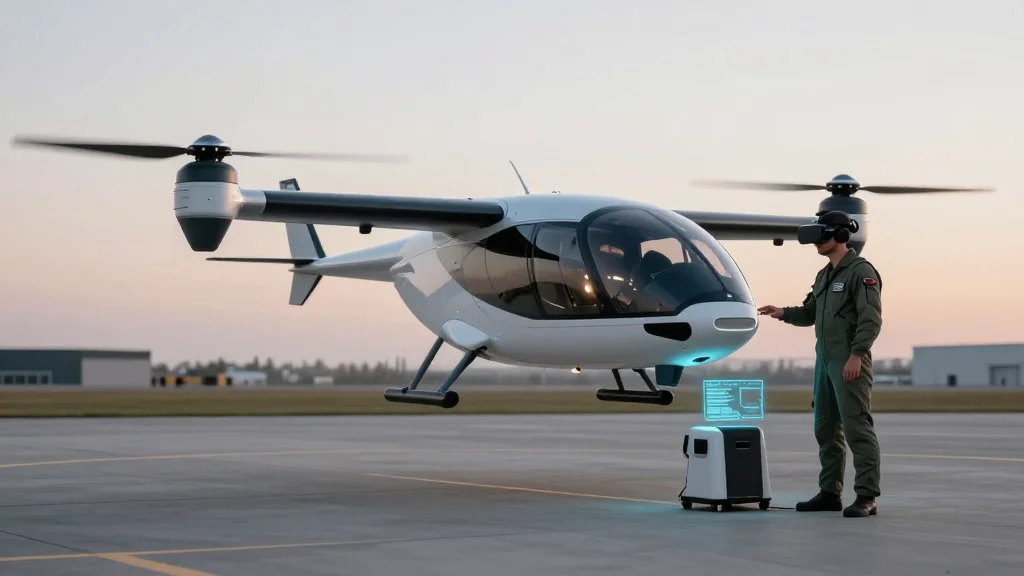
Volocopter’s “World First” EVTOL Pilot Training Aid – Flying Supported by VR Ground Station
Companies Mentioned
Why It Matters
Demonstrating that seasoned pilots can safely operate eVTOLs with VR assistance accelerates regulatory acceptance and paves the way for scalable air‑taxi services. The findings give manufacturers and operators a concrete framework for training and certification, reducing barriers to market entry.
Key Takeaways
- •ADAC Luftrettung pilots flew VoloCity eVTOL using VR ground station
- •First non‑test pilots to control eVTOL, proving operational feasibility
- •Trials evaluated pilot skill transfer, ground‑station usability, and safety feedback
- •Results will shape training curricula, procedures, and certification standards
Pulse Analysis
The eVTOL sector has long grappled with the chicken‑and‑egg problem of pilot training: aircraft manufacturers need qualified operators, yet traditional flight schools lack curricula for these novel machines. Volocopter’s SimX ground station bridges that gap by overlaying a virtual cockpit onto a physical control interface, allowing pilots to experience the aircraft’s dynamics without leaving the ground. This immersive approach reduces the need for costly flight hours while delivering high‑fidelity sensory feedback, a crucial factor for mastering the rapid acceleration and vertical flight envelopes unique to multicopters.
What sets this trial apart is the involvement of ADAC Luftrettung’s operational pilots, whose backgrounds span helicopter rescue and fixed‑wing transport. By testing skill transferability, Volocopter proved that existing aviation expertise can be repurposed for eVTOL operations, shortening the learning curve for future air‑taxi crews. The VR‑ground station also proved its own usability, delivering real‑time telemetry and situational awareness that matched, and in some cases exceeded, conventional cockpit displays. Pilot feedback highlighted the system’s stability and precise response, reinforcing confidence in its safety potential.
Industry observers see this milestone as a catalyst for broader regulatory acceptance. Data from the flight will inform the development of standardized training modules, operational procedures, and safety benchmarks that regulators can reference when certifying eVTOL services. As urban air mobility platforms move from prototype to commercial rollout, such validated training tools will be essential for scaling fleets, attracting investment, and ultimately delivering on the promise of on‑demand aerial transport. The convergence of VR technology and seasoned pilot expertise could therefore become a cornerstone of the next generation of air mobility infrastructure.
Volocopter’s “world first” eVTOL pilot training aid – flying supported by VR ground station
Comments
Want to join the conversation?
Loading comments...