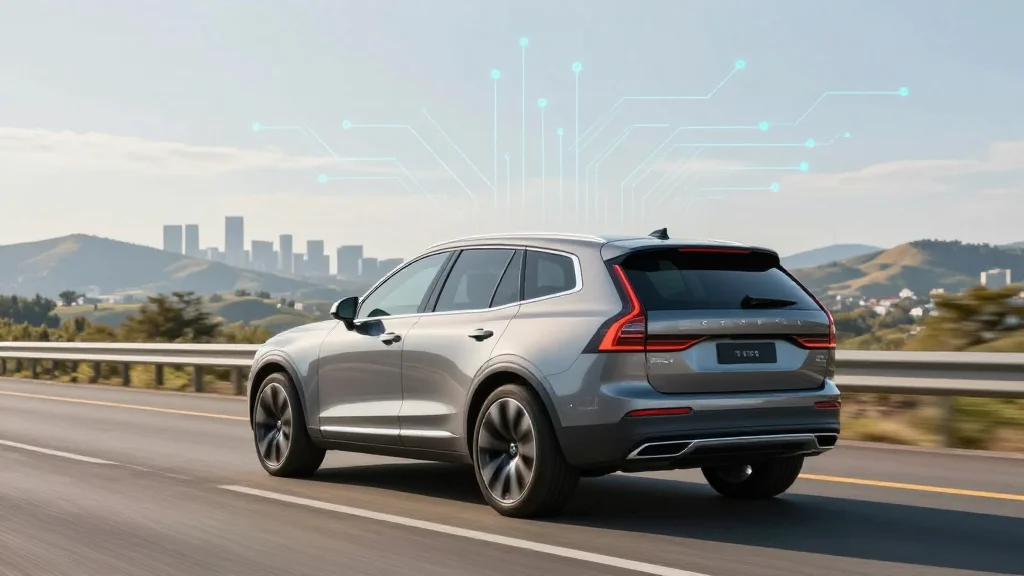
Volvo Cars Secures US Nod to Keep Selling Connected Vehicles
Companies Mentioned
Why It Matters
The decision lets Volvo maintain its U.S. sales momentum and protect significant domestic jobs, while demonstrating that Chinese‑owned automakers can navigate tightening tech‑security rules.
Key Takeaways
- •Volvo cleared to sell connected cars in US under ICTS rule
- •Authorization safeguards $1.3 bn Charleston investment and 2,000 jobs
- •Approval follows case‑by‑case review with Dept. of Commerce
- •Volvo’s US dealer network spans 281 locations in 48 states
- •Google Gemini integration debut in Volvo EX60 showcased at I/O
Pulse Analysis
The United States has tightened its oversight of vehicle software, targeting Chinese‑origin code through the ICTS Connected Vehicles Rule. By requiring a case‑by‑case assessment, regulators aim to safeguard data security while still permitting foreign‑owned manufacturers that can demonstrate robust governance. Volvo’s successful navigation of this process underscores the nuanced approach U.S. agencies are taking—balancing national security concerns with the economic realities of a market that hosts many global brands.
For Volvo, the authorization is more than a regulatory win; it protects a $1.3 bn investment in its Charleston plant, which has already created over 2,000 jobs and anchors a network of 281 dealers across 48 states. The South Carolina facility is slated for further expansion, adding two new vehicle models before 2030, reinforcing Volvo’s commitment to the U.S. market. In a competitive landscape where EV and premium brands vie for market share, maintaining uninterrupted sales of connected vehicles is critical to Volvo’s growth trajectory and its ability to meet consumer expectations for advanced digital features.
The partnership with Google adds a forward‑looking dimension to Volvo’s strategy. Demonstrating the Gemini AI‑driven camera system in the EX60 signals a shift toward real‑time, driver‑assisted perception that could redefine in‑car experiences. Coupled with immersive Google Maps navigation slated for the EX60, EX90 and ES90, Volvo positions itself at the intersection of automotive engineering and cutting‑edge AI. This collaboration not only differentiates Volvo from rivals but also aligns with broader industry trends toward integrated, cloud‑enabled vehicle ecosystems, potentially setting a new benchmark for connected car standards in the United States.
Volvo Cars secures US nod to keep selling connected vehicles
Comments
Want to join the conversation?
Loading comments...