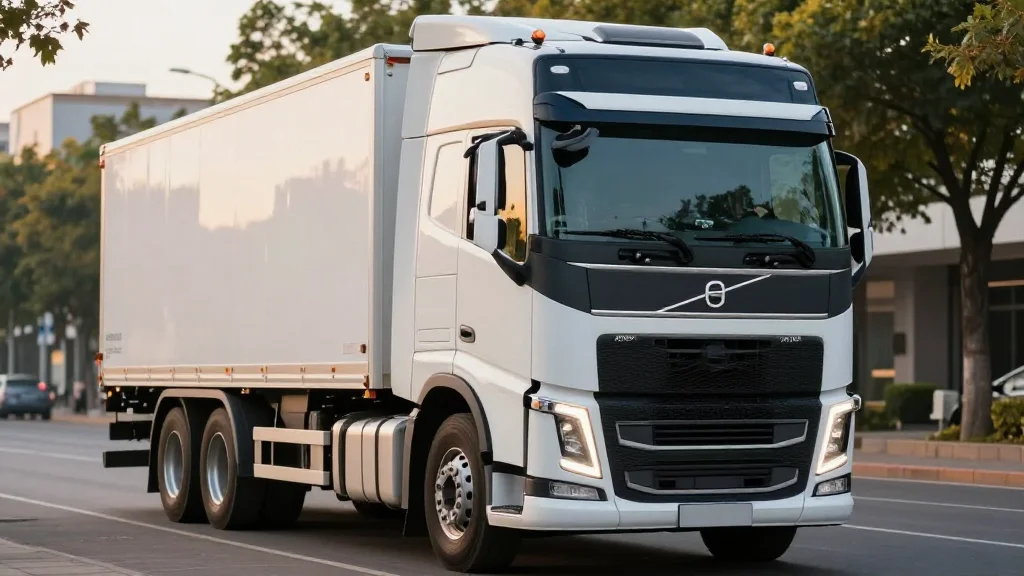
Volvo Rolls Out VNR Regional Haul Tractor in Canada, Claims 7.5% Fuel Savings

Companies Mentioned
Why It Matters
The VNR’s introduction signals a shift in Volvo’s North American strategy from a long‑haul‑centric portfolio to a more diversified offering that includes urban and regional distribution. By delivering measurable fuel savings and advanced safety tech, Volvo gives fleet owners a tool to lower operating costs while meeting stricter emissions targets. The model also raises the competitive bar for other manufacturers, accelerating the industry’s move toward more efficient, driver‑friendly trucks. In Canada’s fragmented logistics landscape—where short‑haul routes dominate in provinces like Ontario and Quebec—the VNR could reshape purchasing decisions. Operators that adopt the VNR may achieve faster ROI on fuel savings, improve driver retention through better ergonomics, and reduce accident‑related expenses thanks to the active‑safety suite. The launch therefore has the potential to influence fleet composition, dealer investment, and even policy discussions around urban freight emissions.
Key Takeaways
- •Volvo unveiled the VNR regional haul tractor at Truck World 2026 in Canada.
- •The VNR claims up to 7.5% better fuel economy versus previous models.
- •Volvo reports 1,600 VNL units already operating in Canada, with a 10% fuel‑efficiency benefit.
- •Dealers in North America have invested about US$1 billion in recent years to support new technologies.
- •Four cab options, three axle setups, and two trim levels (Core, Edge) will be available.
Pulse Analysis
Volvo’s VNR debut arrives at a moment when North American fleets are under pressure to cut fuel spend and curb emissions. Historically, Volvo has dominated the long‑haul segment with the VNL, but the regional haul market has been fragmented, with carriers often mixing older models from multiple brands. By leveraging the VNL’s proven platform, Volvo can offer a familiar reliability baseline while adding the maneuverability and safety features needed for dense urban routes. This hybrid approach reduces development risk and accelerates time‑to‑market, a tactic that rivals like Freightliner have struggled to replicate.
The 7.5% fuel‑efficiency claim, while modest on paper, becomes significant when scaled across a fleet of hundreds of trucks. Assuming a fleet of 500 VNRs, annual fuel savings could exceed US$10 million, a compelling figure for owners facing volatile diesel prices. Moreover, the active‑safety suite addresses a growing liability concern: urban collisions involving cyclists and pedestrians. Insurance providers are beginning to offer premium discounts for fleets equipped with such technologies, adding another financial incentive.
Looking ahead, the VNR could serve as a stepping stone toward electrification. Volvo’s investment in a unified electrical architecture across its North American lineup suggests that a future electric or plug‑in hybrid variant could share components with the VNR, lowering the cost barrier for a full‑electric regional truck. If Volvo can demonstrate real‑world fuel and emissions reductions, it may influence regulatory bodies to adopt more aggressive standards, further reshaping the market. The VNR’s success will likely hinge on dealer execution, driver acceptance, and the ability to deliver on its promised savings in diverse Canadian operating conditions.
Volvo Rolls Out VNR Regional Haul Tractor in Canada, Claims 7.5% Fuel Savings
Comments
Want to join the conversation?
Loading comments...