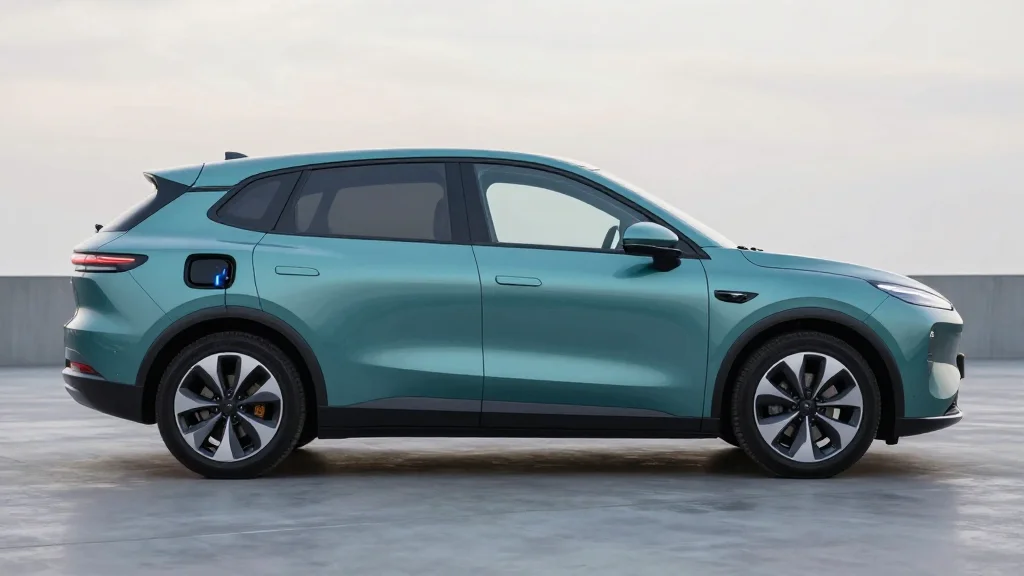
Volvo’s Parent Geely Is Selling a $15,000 Electric SUV with Massaging Seats and 600 Km of Range
Why It Matters
The EX5 demonstrates how Chinese scale can deliver high‑spec EVs at costs that undercut legacy brands, reshaping global pricing dynamics. It forces Western manufacturers to rethink margin strategies and accelerate cost‑reduction efforts.
Key Takeaways
- •EX5 starts at $15,300, offering 600 km range and luxury features
- •Geely leverages scale to undercut European EV pricing by thousands
- •Massaging seats and 1,000‑watt audio now standard in budget EVs
- •EU 20% tariff still leaves EX5 cheaper than VW ID.3
- •Geely plans US production via Volvo plant to avoid 100% tariffs
Pulse Analysis
Geely’s introduction of the EX5 marks a watershed moment for affordable electric mobility. Priced at roughly $15,300, the SUV delivers a 60.2 kWh battery with 530 km (CLTC) range, an extended 68.4 kWh pack that pushes real‑world mileage past 400 km even after WLTP adjustments, and premium touches such as five‑plus‑one‑layer cushions, massage functions and a 1,000‑watt audio system. By bundling these amenities at a price that would buy a modest supermini in Western markets, Geely showcases the depth of its supply‑chain integration and economies of scale, which have propelled it to the top of China’s monthly sales charts.
The EX5’s aggressive pricing reverberates across Europe and the United States, where tariffs have been the primary defensive tool against Chinese EV imports. Even with the EU’s 20% levy, the model undercuts the Volkswagen ID.3 and Renault Megane E‑Tech by several thousand euros, highlighting that tariff walls alone cannot neutralise China’s cost advantage. For U.S. consumers, Geely’s plan to manufacture future models at Volvo’s South Carolina facility could sidestep the 100% import duty, replicating the EX5’s value proposition domestically and intensifying competition for legacy brands still grappling with high‑cost battery procurement.
Beyond a single model, the EX5 exemplifies Geely’s broader portfolio strategy that spans mainstream (Galaxy), premium (Zeekr), and performance (Lotus) segments. Its success signals that Chinese automakers are no longer just volume players; they are delivering feature‑rich, high‑range EVs that challenge the traditional luxury narrative. As the market pivots toward affordability without sacrificing comfort, automakers worldwide will need to accelerate platform sharing, vertical battery integration, and cost‑efficient engineering to preserve margins and stay relevant in an increasingly price‑sensitive landscape.
Volvo’s parent Geely is selling a $15,000 electric SUV with massaging seats and 600 km of range
Comments
Want to join the conversation?
Loading comments...